
Human sight has long been the ultimate arbiter of truth. For millennia, the phrase seeing is believing served as the foundation for legal systems, historical records, and personal trust. However, the biological retina is not a recording device; it is a sensory input filtered through a brain that prioritizes narrative over precision. We are prone to cognitive biases, memory decay, and the subtle influence of suggestion, making the eyewitness one of the most fragile components of any evidentiary chain.
The digital age initially promised to solve this human fragility by introducing the photograph and the video. We entered a period of digital naivety, assuming that a pixel-based record was a neutral mirror of reality. This assumption held while the tools for manipulation were cumbersome and left detectable artifacts. The camera was viewed as an objective observer, a mechanical eyewitness that did not forget or lie, thereby augmenting human testimony with an perceived layer of absolute certainty.
That certainty collapsed with the arrival of high-fidelity generative synthesis. Diffusion models and neural rendering no longer simply edit existing reality; they synthesize a plausible reality from scratch. When an AI can generate a photo of a political event in the Baltics or a corporate scandal in Singapore that is visually indistinguishable from a raw capture, the image itself ceases to be evidence. The visual record has transitioned from a proof of occurrence to a mere suggestion of possibility.
The Infrastructure of Verifiable Truth
In response to this collapse, the industry is shifting toward cryptographic provenance. Rather than attempting to detect fakes—a game of cat-and-mouse that the synthesizers are winning—the focus has moved to proving authenticity at the point of origin. The Coalition for Content Provenance and Authenticity (C2PA) is leading this transition by creating a technical standard that binds metadata to the media itself using digital signatures. This creates a verifiable trail, or manifest, that documents exactly when, where, and how a piece of content was captured.
The technical execution relies on secure hardware enclaves within the camera sensor. At the moment of capture, the device creates a cryptographic hash of the image and signs it with a private key embedded in the hardware. Any subsequent edit—cropping, color correction, or AI enhancement—is recorded as a new layer in the manifest. If a single pixel is altered without a corresponding signed entry in the provenance chain, the cryptographic seal is broken, and the content is flagged as unverified.
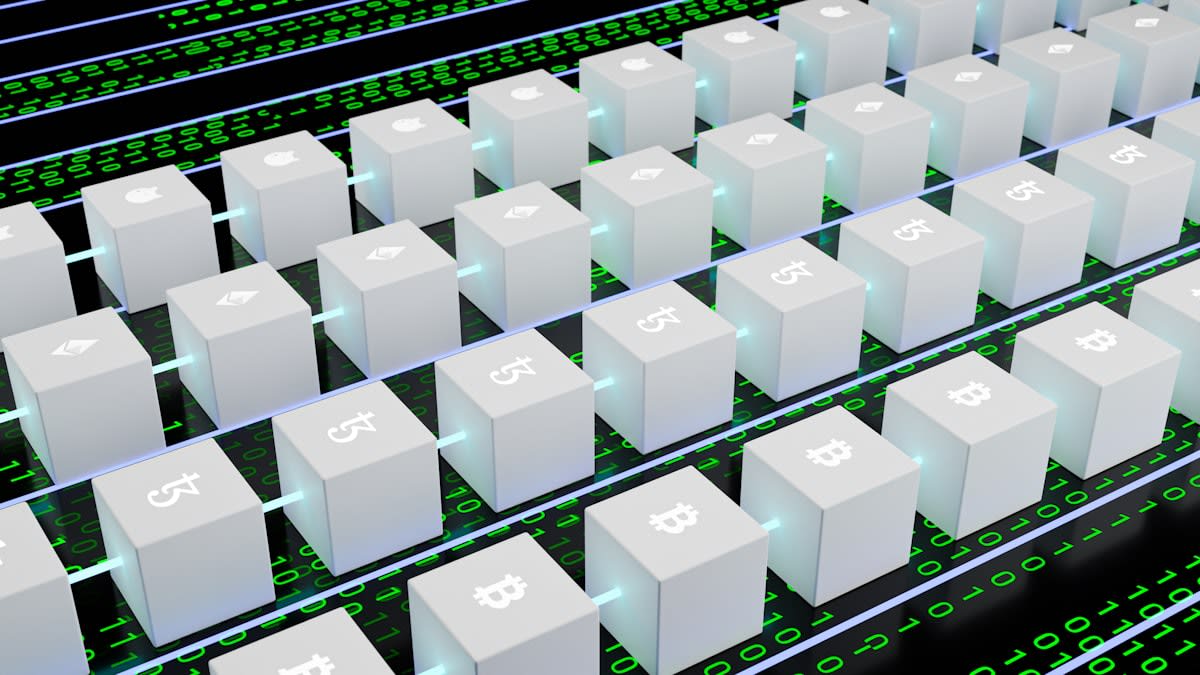
This represents a fundamental shift in epistemology. We are moving from a world of post-hoc detection to one of proactive certification. In the old model, we asked: Does this look real? In the provenance model, the question becomes: Does this possess a valid signature from a trusted origin? The burden of proof is no longer on the analyst to find a flaw, but on the content to prove its own lineage.
Does this mean the end of the human observer? Not entirely, but it radically diminishes the weight of the eyewitness. When a mathematically signed record exists, the anecdotal account of a witness becomes secondary, or even contradictory, to the cryptographic proof. We are witnessing the outsourcing of trust from human cognition to algorithmic verification.
The Systemic Displacement of the Observer
The legal implications of this shift are profound. For decades, eyewitness testimony has been the cornerstone of criminal prosecutions, despite known error rates that can exceed 70 percent in complex identifications. As cryptographic provenance becomes standard in mobile devices and professional gear, courts will likely begin to view unsigned media as hearsay and unsigned testimony as unreliable if a signed record was possible but not pursued.
We are currently in the provenance gap, a volatile transition period where the public is aware that images can be faked but lacks the tools to verify what is real. This gap is being weaponized in geopolitical conflicts. In high-tension zones, state actors can dismiss genuine evidence of atrocities as AI-generated, a tactic known as the liar's dividend. The only antidote to this strategy is a universal adoption of provenance standards that make the absence of a signature a signal of untrustworthiness.
| Attribute | Human Eyewitness | Cryptographic Provenance |
|---|---|---|
| Reliability | Subjective/Malleable | Mathematical/Immutable |
| Verification Method | Cross-examination | Public Key Infrastructure (PKI) |
| Failure Mode | Cognitive Bias/Memory Loss | Private Key Compromise |
| Scalability | Low (1:1 Interviews) | High (Automated Validation) |
| Primary Value | Context and Intent | Fact of Occurrence |
As the table illustrates, the shift is not merely a technical upgrade but a total replacement of the verification mechanism. The human eyewitness provides context and intent, which are valuable, but they cannot provide the objective fact of occurrence with the precision of a hash. The strategic advantage shifts to those who control the root of trust—the entities that certify the hardware and manage the certificate authorities.
Consider the impact on citizen journalism in Southeast Asia or Sub-Saharan Africa. For years, a smartphone video was enough to trigger international sanctions or humanitarian intervention. In the coming era, a video without a C2PA manifest may be ignored by global powers, effectively silencing those who use legacy hardware. The ability to be believed is becoming a function of the hardware you own.
This creates a new class of digital divide: the signed and the unsigned. Those with access to authenticated capture devices will possess a form of evidentiary capital. Conversely, those relying on older technology or open-source tools without standardized signing will find their testimonies relegated to the realm of speculation. Trust is being commodified and gated by technical specifications.
The death of the eyewitness is also the death of the casual observer. We can no longer afford to be passive consumers of information. Every piece of media must now be treated as a claim that requires a cryptographic audit. This requires a societal shift in literacy, where users stop looking at the content and start looking at the manifest.
Epistemological Fragility and the Future of Trust
The transition to cryptographic provenance acknowledges a grim reality: human perception is no longer a sufficient tool for navigating the modern information environment. By moving the point of trust to the sensor, we admit that the journey from the event to the eye, and from the eye to the record, is too corrupted by synthesis to be trusted. We are replacing the faith we had in people with a faith in mathematics.
This mathematical certainty comes with its own systemic risks. If a primary certificate authority is compromised or a government mandates backdoors into the signing process, the entire illusion of truth vanishes. The fragility of the eyewitness is biological; the fragility of provenance is systemic. We have not eliminated the possibility of deception; we have simply moved it to a higher level of the stack.
Ultimately, the era of the eyewitness ends because the cost of verification has become too high for the human mind to bear. We cannot mentally track the billions of possible permutations of a deepfake. We require a binary signal: Verified or Unverified. The nuance of human testimony—the hesitation in a voice, the sweat on a brow—is being traded for the clinical precision of a SHA-256 hash.
As we integrate these standards into every screen and sensor, the very definition of a fact will change. A fact will no longer be something that was seen, but something that was signed. The eyewitness, once the king of the courtroom and the heart of the news report, is becoming a footnote to the metadata.