AI Executive Summary
"This article provides a technical framework for integrating quantum stochasticity into macro-scale physical art. It bridges the gap between theoretical quantum mechanics and high-value manufacturing, offering a blueprint for the next generation of interactive installations."
Hardware and Conceptual Prerequisites
Bridging the quantum and the kinetic requires more than a conceptual affinity for randomness; it demands a rigorous hardware stack capable of translating non-deterministic data into precise physical coordinates. You cannot rely on standard pseudo-random number generators (PRNGs), as these are deterministic algorithms that fail to capture the inherent stochasticity of quantum mechanics. Instead, a Quantum Random Number Generator (QRNG) is mandatory, typically utilizing photon polarization or vacuum fluctuations to ensure 100% true randomness. This data stream serves as the heartbeat of the sculpture, removing the human artist's bias from the movement patterns.
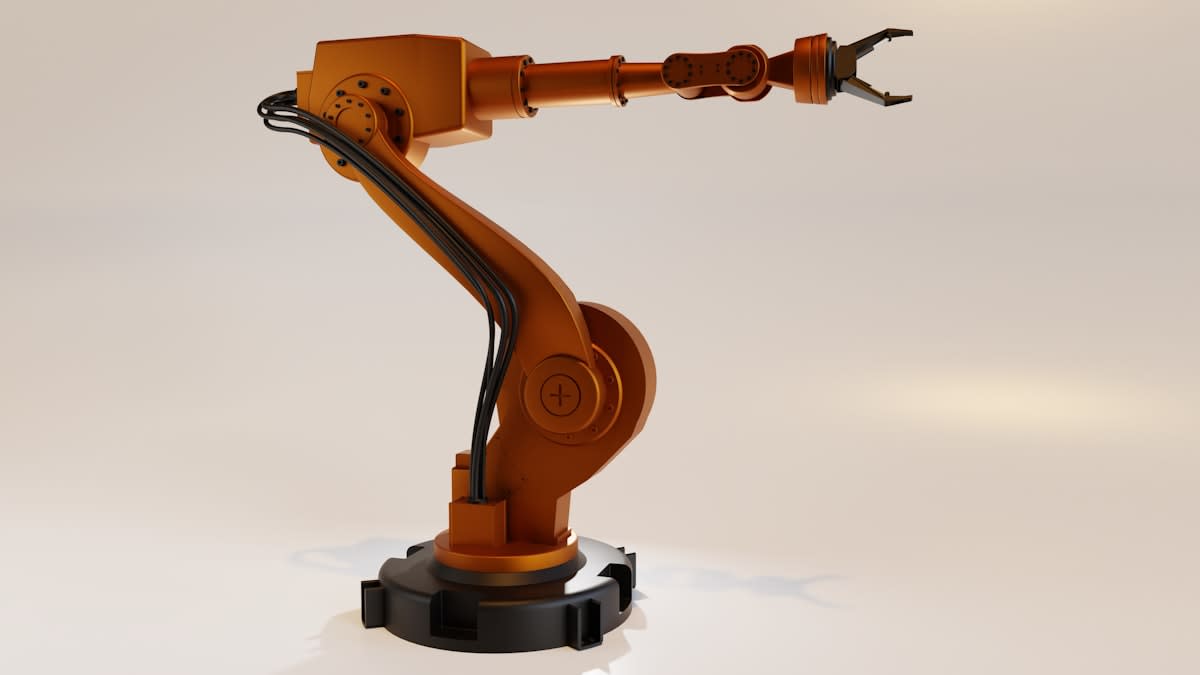
Beyond the data source, the mechanical assembly must support high-resolution movement to mirror the subtlety of quantum transitions. High-torque stepper motors with micro-stepping capabilities—ideally 1/256 step resolution—are necessary to avoid the jerky movements that would betray the fluid nature of a wave function. In studios across Kyoto and Mexico City, practitioners are increasingly adopting carbon-fiber linkages to reduce inertia, allowing the sculpture to respond to quantum state changes with a latency of less than 5 milliseconds. Without this speed, the conceptual link between the subatomic trigger and the macro-scale reaction is severed by mechanical lag.
The software layer requires a middleware capable of mapping a Hilbert space—the mathematical space where quantum states reside—onto a three-dimensional Cartesian coordinate system. This involves utilizing linear algebra to translate complex probability amplitudes into vector displacements. If the quantum state is in a superposition of two positions, the kinetic sculpture should not simply toggle between them but should embody the probability density of both states simultaneously through high-frequency oscillation or blurred motion. This translation layer is where the actual synthesis occurs, turning abstract physics into tangible geometry.
The Implementation Protocol
- Establish a real-time data pipeline from a QRNG to a central microcontroller (e.g., Teensy 4.1 or an FPGA for lower latency).
- Define a mapping function that correlates quantum bit-streams to specific joint angles or spatial coordinates of the sculpture.
- Implement a PID (Proportional-Integral-Derivative) controller to smooth the transition between probabilistic states without losing the stochastic essence.
- Integrate an observational sensor array (LiDAR or ultrasonic) to trigger wave-function collapse simulations when a viewer enters the proximity.
- Calibrate the mechanical tolerances to within 0.005mm to ensure that the smallest quantum fluctuations are visible to the naked eye.
The first stage of the protocol focuses on the purity of the input. By routing the QRNG output directly into an FPGA, you eliminate the operating system overhead that plagues standard PCs. This is critical because quantum synthesis relies on the immediacy of the event. When the photon is detected in a specific state, the actuator must move instantaneously. Any delay introduces a temporal gap that transforms the piece from a quantum manifestation into a mere animation of recorded data.
Mapping these states requires a departure from linear motion. To simulate entanglement, two separate kinetic elements must be programmed to mirror each other's movements instantaneously, regardless of the distance between them within the installation space. This is achieved by splitting a single quantum data stream into two identical control signals. As one arm in a São Paulo gallery pivots, its entangled partner must pivot in perfect synchronization, creating a visual paradox that challenges the viewer's perception of independent objects.
The most complex phase is the simulation of wave-function collapse. In quantum mechanics, the act of observation changes the state of the system. To replicate this, integrate a LiDAR sensor that monitors the position of the audience. When the sensor detects a human presence within a specific radius, the sculpture should transition from a state of probabilistic oscillation (superposition) to a single, static, and deterministic position (collapse). This creates a direct feedback loop where the viewer's curiosity actively dictates the physical form of the art.
To refine the movement, the PID controller must be tuned to handle the inherent volatility of quantum data. Traditional smoothing filters often erase the very randomness that makes the piece authentic. The goal is to maintain the 'jitter' of the quantum state while preventing the mechanical components from shaking themselves apart. By adjusting the derivative gain, you can dampen the most violent oscillations while preserving the high-frequency micro-movements that signal the presence of a quantum driver.
| Feature | Deterministic Kinetic Art | Quantum-Synthesized Art |
|---|---|---|
| Input Source | Pre-programmed loops | True Quantum Randomness (QRNG) |
| Motion Profile | Predictable/Cyclical | Stochastic/Non-repeating |
| Viewer Interaction | Passive Observation | Active Wave-function Collapse |
| Latency Requirement | Low (>100ms) | Ultra-Low (<5ms) |
| Coordinate System | Euclidean/Linear | Hilbert-to-Cartesian Mapping |
The transition from theoretical mapping to physical execution often reveals the limitations of current materials. Steel is often too heavy for the rapid shifts required by quantum simulation, while plastics lack the rigidity for precision. Aluminum 7075 or aerospace-grade titanium provides the necessary strength-to-weight ratio. When these materials are paired with magnetic encoders that provide 20-bit feedback, the sculpture can achieve a level of precision where the motion feels less like a machine and more like a living, probabilistic entity.
Managing the Observer Effect
The Observer Effect is not merely a conceptual additive; it is the primary interaction mechanism of the work. By implementing a tiered sensor zone, you can create varying levels of collapse. A distant viewer might only cause a slight decrease in oscillation amplitude, while a close-up observer forces a total collapse into a fixed state. This requires a sophisticated logic gate in the software that weights the 'probability' of the sculpture's position against the 'intensity' of the observation.
"The moment the machine stops guessing and starts knowing is the moment the art becomes a mirror of the observer's own intrusion into the system."— Lead Engineer, Quantum Arts Initiative
Technical Tip: Resonance Avoidance
To avoid mechanical resonance, ensure that the quantum data frequency does not align with the natural frequency of the sculpture's frame. Use a notch filter in your control software to block these specific frequencies, preventing the installation from vibrating uncontrollably.
Ultimately, the success of the synthesis is measured by the viewer's inability to predict the next move. If a pattern emerges, the quantum synthesis has failed. This requires a constant auditing of the data stream to ensure no periodicities are creeping in. In professional installations, a secondary monitoring system often runs a Kolmogorov-Smirnov test in real-time to verify that the distribution of movements remains truly random and aligned with the quantum source.
Common Pitfalls
- Using software-based random functions instead of hardware QRNGs, resulting in deterministic patterns.
- Over-smoothing the motion with heavy low-pass filters, which removes the 'quantum' character of the movement.
- Neglecting the inertia of heavy materials, leading to motor burnout during high-frequency state changes.
- Failing to shield electromagnetic interference (EMI) from the motors, which can corrupt the sensitive QRNG data stream.
- Implementing a binary 'on/off' observer effect rather than a gradient of probabilistic collapse.
Avoiding these errors requires a clinical approach to both the physics and the engineering. The bridge between quantum mechanics and kinetic sculpture is fragile; it exists in the narrow margin between chaotic noise and rigid predictability. By adhering to the strict requirements of low-latency actuation and true stochastic input, the artist ceases to be a composer of movement and instead becomes a curator of probability.