AI Executive Summary
"This article analyzes the economic shift from digital assets to physical materiality in response to the proliferation of synthetic media. It highlights the emergence of a 'Humanity Premium,' where forensic authenticity becomes the primary driver of value in the high-end art market."
The Devaluation of the Virtual
The pixel is no longer a scarce resource. In the last twenty-four months, the proliferation of AI-slop—low-effort, algorithmically generated content designed to flood feeds and gaming the SEO of visual discovery—has effectively crashed the market value of the standalone digital image. When photorealism can be conjured in seconds via a prompt, the aesthetic quality of an image ceases to be a proxy for skill, effort, or intent. We are witnessing a systemic collapse of trust in the digital artifact, where the sheer volume of synthetic output creates a noise floor that renders digital uniqueness nearly impossible to verify.
Why does this trigger a return to the tactile? The answer lies in the economic principle of scarcity. For a decade, the industry attempted to solve the problem of digital reproducibility through the blockchain, proposing that NFTs could provide the 'provenance' that digital files lacked. This was a category error. The blockchain verified the ownership of the token, not the human intentionality of the creation. As AI-slop fills the void, the market is realizing that a digital ledger cannot replace the forensic evidence of a physical brushstroke or the chemical signature of a specific pigment.
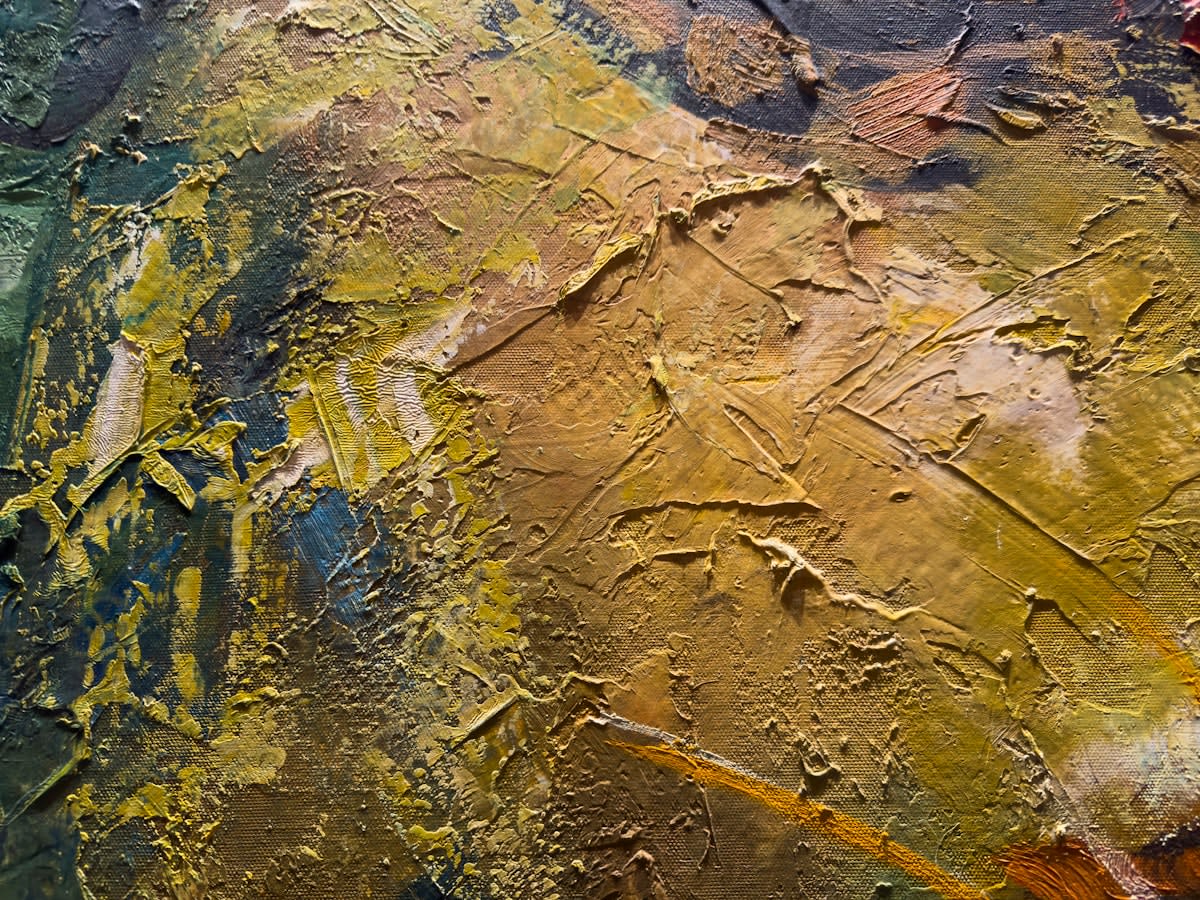
The shift is not merely nostalgic; it is a survival strategy for artists and collectors alike. We are seeing a flight to 'hard assets' of creativity. In the high-end art market, there is a growing obsession with what can be called the 'Humanity Premium.' This is the added value placed on works that possess a verifiable, physical history of creation—works where the medium itself acts as a witness. The focus has moved from the final visual output to the process of its manifestation.
"The aura of a work of art, which Benjamin once argued was decaying through mechanical reproduction, is now being rediscovered not in the image, but in the residue of the artist's physical struggle with the material."— Strategic Analyst, Arts Sector
This transition marks the end of the 'digital-first' era of contemporary art. For years, the trajectory was toward the screen, the projection, and the virtual gallery. Now, the trajectory is reversing. Collectors are demanding works with 'tactile provenance'—artifacts whose authenticity is proven by the physical imperfections, the layering of glazes, and the idiosyncratic errors that characterize human labor. If a machine can produce perfection, then imperfection becomes the only remaining luxury.
The Forensic Turn in Global Art
Across the globe, different cultural hubs are responding to synthetic saturation with renewed vigor for traditional materials. In Tokyo, there is a resurgence of interest in Sumi-e ink wash painting, where the absorption of ink into handmade washi paper creates a permanent, irreversible record of a single moment of concentration. The intentionality of the brush—the way the ink bleeds or fades based on the pressure of the hand—serves as a biometric signature that no generative adversarial network can simulate in a physical space.
Similarly, in the ateliers of Florence, the concept of 'pentimento'—the presence of an earlier image or a change of mind visible beneath the surface of a painting—has become a critical marker of value. AI generates images in a state of complete, simulated finality. A human artist, however, struggles, erases, and overwrites. The physical layers of a canvas, revealed through X-ray or infrared reflectography, provide a narrative of decision-making that constitutes the ultimate proof of provenance.
In Lagos, contemporary sculptors are leaning into heavy materiality, using salvaged industrial metals and organic textiles that root the work in a specific geographical and temporal context. By using materials that carry the patina of their environment, these artists create works that are impossible to decouple from their physical origin. The weight, the smell, and the tactile resistance of the medium act as a bulwark against the weightless, scentless, and frictionless nature of AI-slop.

This global movement suggests a systemic realignment of how we perceive value. The market is no longer buying a 'look' or a 'style'—which are easily cloned—but is instead buying the evidence of an event. The artwork is becoming a relic of a human action. This shift has profound implications for the valuation of art, moving the needle from aesthetic appeal toward forensic authenticity.
| Valuation Metric | Digital-Native Asset (2021 Peak) | Tactile Provenance Asset (2024 Trend) |
|---|---|---|
| Primary Value Driver | Digital Scarcity (Tokenization) | Materiality (Physical Evidence) |
| Verification Method | Blockchain Ledger | Chemical/Forensic Analysis |
| Cost of Reproduction | Near-Zero (via AI) | High (Human Labor/Materials) |
| Market Volatility | Extreme (Speculative) | Moderate (Tangible Asset) |
| Long-term Stability | Low (Technological Obsolescence) | High (Physical Permanence) |
The data indicates a stark divergence in asset performance. While digital-only art valuations have seen an estimated 40% drop since the 2021 peak, there has been a corresponding 22% increase in demand for physical certificates of authenticity and material-based appraisals. The market is pricing in the 'AI risk,' treating digital images as depreciating assets while treating physical, medium-heavy works as hedges against synthetic inflation.
The Institutional Pivot
Galleries and museums are not immune to this shift. Curatorial strategies are evolving to emphasize the 'making of' over the 'result of.' We are seeing more exhibitions that include process sketches, failed attempts, and material samples alongside the final piece. This is an attempt to build a chain of custody for the creative act, ensuring that the viewer understands the work as a product of human time and physical effort.
- Integration of chemical pigment analysis to verify epoch-specific materials.
- Increased use of high-resolution 3D scanning to document canvas topography.
- Requirement for physical 'process journals' to accompany high-value acquisitions.
- Shift toward 'closed-loop' galleries where works are produced and sold in a single physical site.
However, a paradox is emerging. Some artists are using AI to conceive of works that they then execute manually. This 'AI-informed, human-executed' hybrid creates a new tension. Does the use of a synthetic tool for the conceptual phase contaminate the tactile provenance of the final piece? For the purists, the answer is yes. The value lies in the struggle between the human mind and the material, a struggle that AI eliminates by providing the 'perfect' solution instantly.
The resilience of the tactile return depends on our ability to maintain the distinction between the tool and the agent. If the tool (AI) dictates the outcome, the work remains a form of slop, regardless of whether it is painted on a canvas. If the tool is used as a mere reference, and the final output is the result of physical mastery and human error, the work retains its premium. The battle for provenance is, in essence, a battle for the definition of agency.
Ultimately, the surge of AI-slop has acted as a catalyst for a long-overdue correction. It has stripped away the illusion that digital images possess inherent value and forced a return to the physical reality of art. The future of the art market will not be found in the pursuit of more advanced pixels, but in the preservation of the smudge, the drip, and the tear. The evidence of the human hand is the only currency that cannot be inflated by an algorithm.