
AI Executive Summary
"This article analyzes the migration of AI's economic value from model architects to the hardware periphery and the industrial edge. It highlights a critical geopolitical role reversal and the systemic integration challenges that define the next phase of AI adoption."
The narrative surrounding artificial intelligence has been dominated by the architects of the models. We have spent years obsessing over parameters and tokens. This is a distraction. The actual economic gravity has migrated. The wealth is no longer concentrating solely in the cloud; it is leaking into the periphery—the memory chips, the small-cap suppliers, and the industrial edge hardware that actually allows these models to function in the physical world.
The Memory Tax
AI developers and cloud providers are discovering a brutal reality: their margins are being cannibalized by the hardware layer. High-bandwidth memory (HBM) has become the ultimate bottleneck. When supply is tight and demand is inelastic, the suppliers dictate the terms. Memory chip makers are not just participating in the boom; they are taxing it.
| Component Type | Price Increase (Quarter Ending May 28) | Primary Driver |
|---|---|---|
| DRAM Memory Chips | 60%+ | AI Server Demand |
| NAND Flash Memory | 80%+ | AI Infrastructure Buildout |
| HBM Chips | High (Limited Capacity) | Data Center Scaling |
The data from Micron Technology reveals a pricing environment that is historically aggressive. This isn't a gradual climb; it's a vertical surge. As Samsung and SK Hynix outperform the broader tech sector, the industry is witnessing a transfer of power from those who write the code to those who manufacture the silicon.

This hardware squeeze is not limited to the giants. The capital is flowing downstream into the smallest players of the ecosystem.
The Small-Cap Resurrection
For decades, small-cap stocks were the forgotten children of the tech era. That changed in the first half of 2026. U.S. small-caps just experienced their best first half since 1991. Why? Because the AI trade expanded. The spending that once only benefited the hyperscalers is now rippling through a broader network of semiconductor equipment companies and niche suppliers.
Small-Cap Performance Relative to AI Infrastructure Spend
Executive Insight
+18.4%
YTD Growth
This broadening trade suggests that the market is finally pricing in the physical reality of AI. You cannot run a global intelligence layer on software alone; you need the specialized equipment that only a diverse array of smaller, agile firms can provide.
Industrial Edge and the Integration Trap
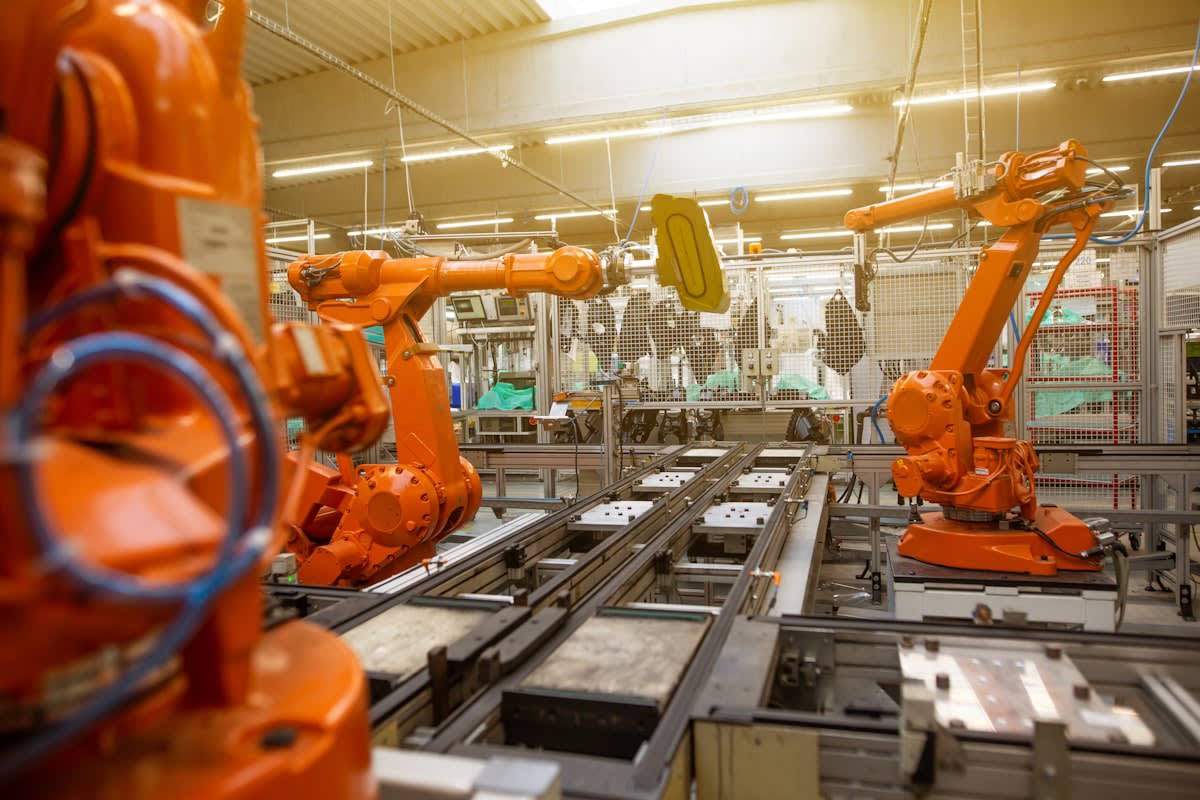
The next battleground is the edge. The move toward Industrial AI is not about larger models, but about more efficient execution on the factory floor. This is where Mobilint is making its move, partnering with Taiwan-based ADLINK Technology and Getac to deploy neural processing units (NPUs) and software development kits (SDKs) for industrial applications.
"Success in the industrial AI market depends not only on semiconductor performance but also on integrating systems and solutions."— Kim Sung-mo, Head of Business Development at Mobilint
Mobilint's strategy, including MOUs with DFI and NEXCOM's NEXCOBOT, highlights a critical insight: the hardware is a commodity; the integration is the value. The companies that can bridge the gap between a raw NPU and a functioning industrial system will own the industrial edge.
While the technology advances, the geopolitical framework supporting it is undergoing a paradoxical transformation.
The Great Geopolitical Role Reversal
We are witnessing a strange inversion. Advanced Western economies are retreating into nationalism and protectionism, driving industrial subsidies to levels not seen since the 2008 financial crisis. Meanwhile, developing economies are embracing the very liberalization and privatization that the West is currently abandoning.
Regional Divergence
In Buenos Aires, inflation has cooled as Argentina pursues a path of liberalization, contrasting sharply with the protectionist tendencies of the G7.
This creates a strategic opening. As the West builds walls, the Global South is building bridges. For the AI supply chain, this means the next wave of growth may not come from the subsidized hubs of the North, but from the liberalized markets of the South.
The Friction of Reality
Despite the hype, the implementation of these technologies remains messy. Supply chain digital transformation is often a facade for replacing legacy warehouse management systems or attempting to connect data silos that have never spoken to one another. Many firms are still running critical operations on spreadsheets while claiming to be AI-driven.
- Reliance on legacy WMS as a barrier to AI integration
- Fragmented data systems failing to share critical operational metrics
- The gap between high-level AI strategy and spreadsheet-based execution
- The need for specialized theatre supply chain capabilities, as demonstrated by Toll Government and Defence at Land Forces 2026
The reality is that AI cannot optimize a broken process. Whether it is a defense logistics operation in Australia or a factory in Taipei, the utility of AI is capped by the quality of the underlying infrastructure. The winners will not be those with the fastest chips, but those who can solve the boring problem of systemic integration.