
AI Executive Summary
"This article analyzes the transformation of Central Asia from a landlocked periphery into a critical node for global capital. It highlights the strategic interplay between the Middle Corridor, critical mineral scarcity, and institutional reforms as drivers of Eurasian trade autonomy."
The Geography of Necessity
For decades, the five republics of Central Asia were viewed through the lens of landlocked vulnerability. Their economic viability depended almost entirely on the whims of Moscow's infrastructure or Beijing's appetite for raw materials. This dependency created a systemic bottleneck that stifled diverse capital flows and kept the region in a state of perpetual periphery. However, a fundamental shift in the global order has inverted this logic. The very landlocked nature of these states has transitioned from a liability into a strategic asset as the world seeks alternatives to traditional maritime and northern rail routes.
The catalyst for this transformation is the Middle Corridor, formally known as the Trans-Caspian International Transport Route (TITR). By bypassing Russian territory, this network connects China to Europe via Kazakhstan, the Caspian Sea, Azerbaijan, and Georgia. It is not merely a logistical adjustment; it is a geopolitical arbitrage. Capital is flowing into this corridor not because it is the cheapest route, but because it is the most resilient one in an era of systemic decoupling. The investment is moving from simple road-building to the creation of sophisticated logistics hubs and digital customs interfaces that reduce the friction of transcontinental trade.
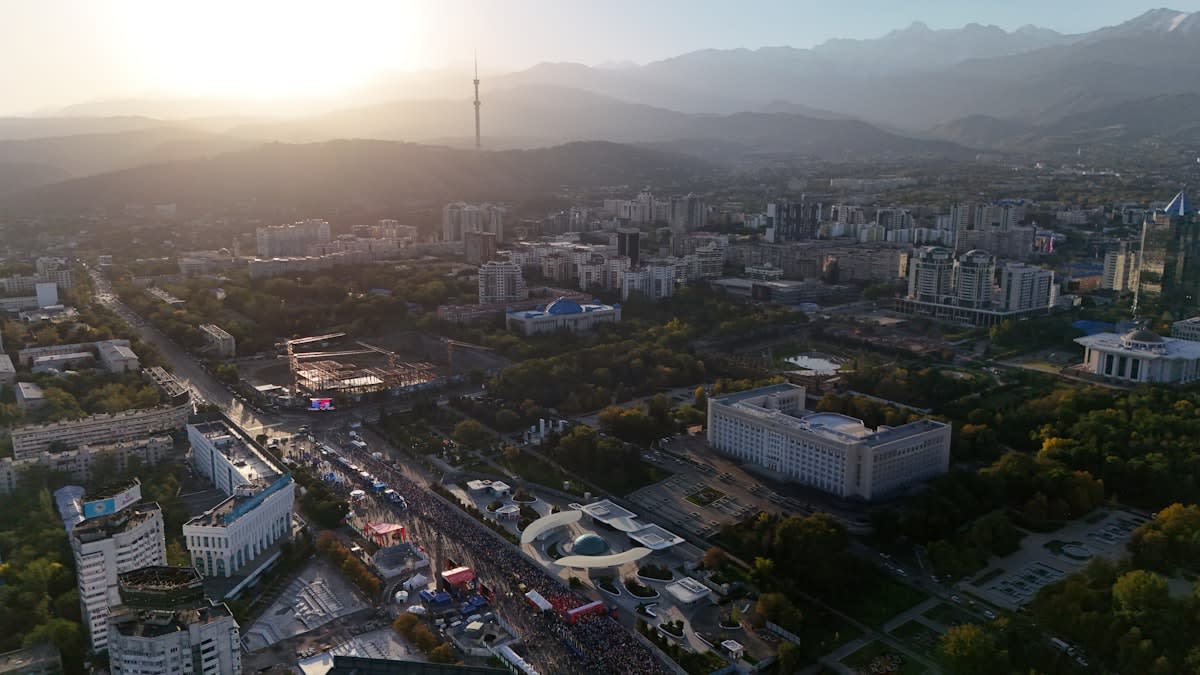
Why does this matter for global capital? Because infrastructure is the precursor to financialization. As the physical flow of goods stabilizes, the financial architecture required to support that trade—insurance, currency hedging, and trade finance—must follow. We are seeing a surge in the establishment of special economic zones (SEZs) that operate under international law rather than local statutes. This legal decoupling allows global investors to enter the region with a reduced risk profile, effectively treating Central Asia as a neutral zone for capital deployment between competing hegemonic powers.
The Critical Mineral Arbitrage
The global energy transition has fundamentally revalued the soil of Central Asia. The region sits atop a treasure trove of critical raw materials essential for the green economy, from lithium and cobalt to rare earth elements. Kazakhstan, in particular, has leveraged its position as the world's largest producer of uranium, accounting for roughly 43% of global supply. This creates a unique leverage point; the West's desire to diversify its nuclear fuel supply away from Russia has turned Kazakhstan into an indispensable partner for the EU and the United States.
This is not a simple extraction play. The current wave of investment is focused on value-addition. Instead of exporting raw ores, there is a concerted effort to build domestic processing facilities. By moving up the value chain, Central Asian states are capturing a larger share of the capital flow and forcing foreign investors to transfer technology. This shift from a rent-seeking economy to an industrializing one is attracting a different class of capital—private equity and venture capital firms targeting the intersection of mining tech and sustainable energy.
| State | Strategic Asset | Primary Capital Driver | Geopolitical Objective |
|---|---|---|---|
| Kazakhstan | Uranium & Oil | Western Energy Diversification | Multi-vector Independence |
| Uzbekistan | Gold & Natural Gas | EU Market Integration | Institutional Liberalization |
| Turkmenistan | Natural Gas | Chinese Energy Demand | Export Diversification |
| Kyrgyzstan | Gold & Rare Earths | BRI Infrastructure | Regional Connectivity |
The result is a competitive bidding war for access. China continues to pour billions into the Belt and Road Initiative (BRI), but the arrival of the European Union's Global Gateway and the US-led partnerships has introduced a necessary friction. This competition prevents any single power from achieving total dominance, allowing Central Asian leaders to play the superpowers against one another to secure the most favorable financing terms. It is a masterclass in strategic autonomy, where the scarcity of minerals is used as a shield against political coercion.
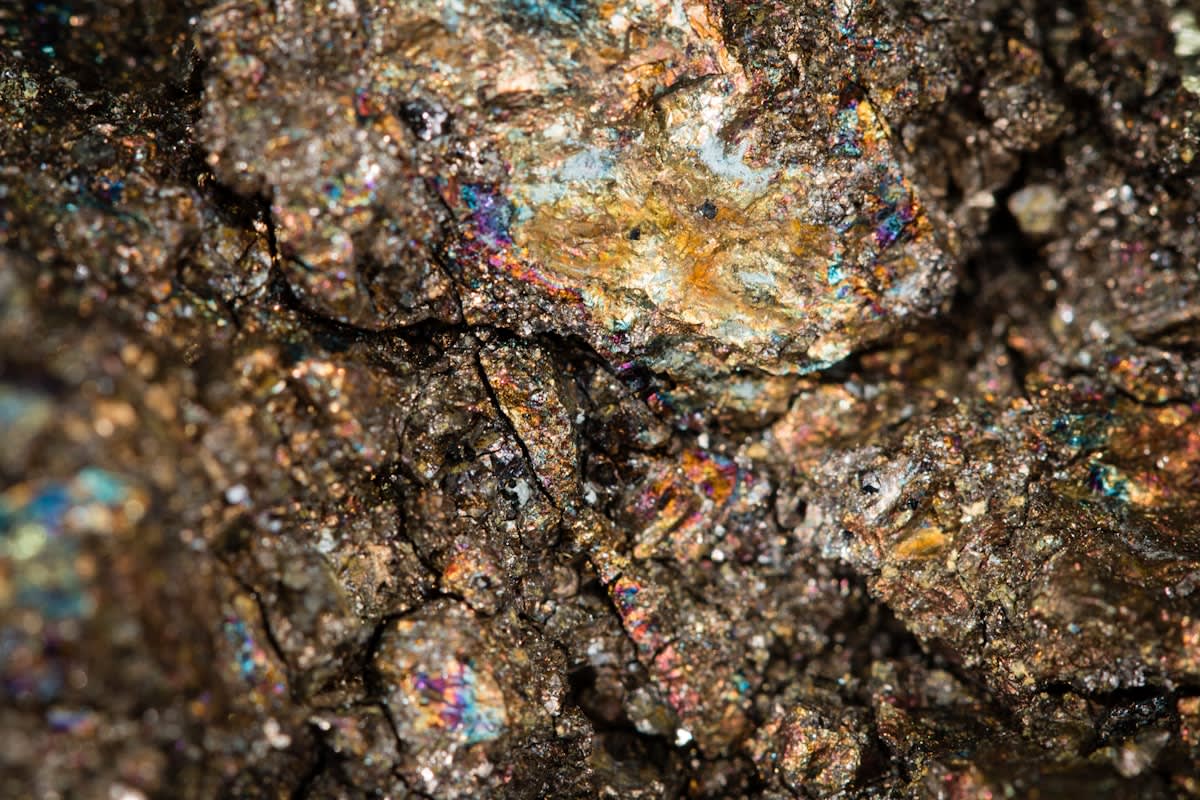
Does this mineral boom create a new Dutch Disease? The risk is real, but the response has been an aggressive push toward institutional reform. The creation of sovereign wealth funds designed to sterilize commodity windfalls suggests a level of macroeconomic maturity that was absent in previous decades. By channeling resource wealth into diversified portfolios, these states are attempting to decouple their long-term fiscal health from the volatility of commodity prices.
Institutional Decoupling and Financial Hubs
The most significant shift, however, is not in what is being pulled from the ground, but in how the money is being managed. The Astana International Financial Centre (AIFC) in Kazakhstan is a prime example of institutional engineering. By establishing a jurisdiction based on English Common Law, the AIFC provides a legal sanctuary for investors who are wary of local courts. This allows global capital to flow into the region with the same legal protections found in London or Singapore, effectively creating a financial island of stability in a volatile region.
"The goal is no longer just to attract investment, but to institutionalize trust. By importing a foreign legal system, we are signaling that the rules of the game are predictable, regardless of who is in power."— Strategic Analyst on Eurasian Financial Architecture
Similarly, Uzbekistan has undergone a radical economic liberalization since 2016. The dismantling of currency controls and the privatization of state-owned enterprises have opened the floodgates for foreign direct investment (FDI). Uzbekistan is positioning itself as the region's manufacturing hub, leveraging a young population and lower labor costs to attract companies looking to diversify their supply chains away from China. This is the 'China Plus One' strategy manifesting in the heart of Eurasia.
Strategic Framework
The Multi-Vector Strategy: A diplomatic approach where a state maintains balanced relations with multiple global powers to avoid becoming a satellite of any single hegemon. In Central Asia, this is the primary mechanism for maintaining sovereignty while maximizing capital inflow.
This institutional evolution is creating a feedback loop. Better legal frameworks attract higher-quality capital, which in turn demands further transparency and reform. We are witnessing the professionalization of the Central Asian state. The move toward digitalization of government services and the adoption of international accounting standards are not just administrative tweaks; they are prerequisites for the region's integration into the global financial system.
The Systemic Implications for Global Liquidity
As we look at the broader trajectory, Central Asia is emerging as a neutral conduit for global liquidity. In a world fragmented by sanctions and trade wars, the ability to move capital and goods through a politically agile region is invaluable. The region is essentially providing a service of geopolitical neutrality. This makes it an attractive destination for 'dark' capital as well as legitimate institutional investment, creating a complex ecosystem where transparency and opacity coexist.
The long-term bet is that the center of gravity for Eurasian trade is shifting. The traditional North-South axis is being replaced by an East-West corridor that is more diverse and less susceptible to the political whims of a single capital. If the Middle Corridor reaches full capacity, the economic center of gravity for the continent will shift toward the Caspian basin, fundamentally altering the trade dynamics of the 21st century.
Ultimately, the ascent of Central Asia is a symptom of a multipolar world. Capital is no longer flowing toward the most stable environments, but toward the most strategically positioned ones. The region's ability to maintain its balance while absorbing massive inflows of capital will determine whether it becomes a permanent engine of global growth or a temporary refuge for opportunistic investment. For now, the momentum is undeniable.