
AI Executive Summary
"This article analyzes the strategic shift toward private nuclear energy grids as a hedge against public utility failures in India's industrial sectors. It highlights the intersection of US regulatory shifts, SMR technology, and the critical need for power stability in software-defined manufacturing."
Public grids are failing. This failure is not a theoretical risk but a documented reality in the Mid-Atlantic region where PJM Interconnection has been forced to curtail large users, including data centers, during heat waves. While a brownout in Kinshasa represents a lack of basic infrastructure, the curtailment in the United States represents a failure of advanced infrastructure to meet modern demand. Indian industrial hubs, particularly in Bengaluru, face a similar trajectory as they scale their digital manufacturing capabilities. The incentive for private energy sovereignty has now outweighed the cost of independent generation.
The Regulatory Catalyst
Regulatory barriers are dissolving. The Nuclear Regulatory Commission (NRC) recently proposed a 553-page overhaul that bundles 17 distinct modernization measures into a single rule. This move targets the legal definition of construction and emergency preparedness to accelerate the deployment of commercial nuclear plants. Such a change removes the bureaucratic inertia that previously made private nuclear power a non-starter for industrial conglomerates. By aligning Part 50 and Part 52 frameworks with the new risk-informed Part 53, the NRC is effectively subsidizing the speed of deployment for private actors.
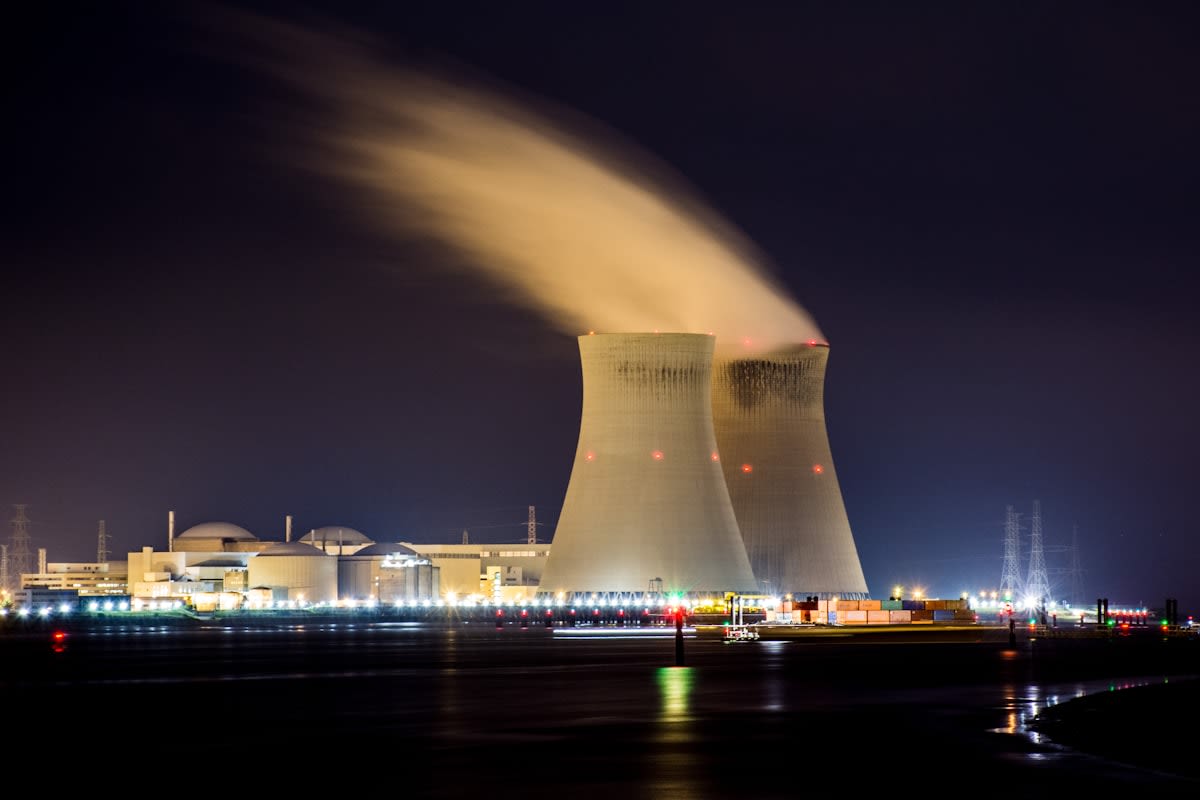
Capital is already moving. The Polish group SGE has targeted the installation of 14 Small Modular Reactors (SMRs) in the UK with a total investment of $46.5 billion. This project, aiming for first power by 2034, proves that the SMR model is no longer a laboratory experiment. It is a financial instrument for energy independence. Large-scale industrial players in India are observing this UK model as a blueprint for bypassing the instabilities of state-managed electricity.
The Policy Trigger
The NRC's 553-page rulemaking is the most consequential reactor-licensing overhaul in a generation, specifically designed to support additional generation to the electrical grid by reducing prescriptive requirements.
Industrial demand in India is accelerating. N.A.N. GreenMet is currently developing large-scale industrial platforms in strategic sectors for the energy transition. Their joint venture with Enaex to expand explosives and blasting capabilities into India indicates a move toward heavy, energy-intensive infrastructure. These activities cannot tolerate the intermittent nature of renewables or the instability of a strained public grid. Stability is the only currency that matters in high-stakes manufacturing.
The Automation-Energy Nexus
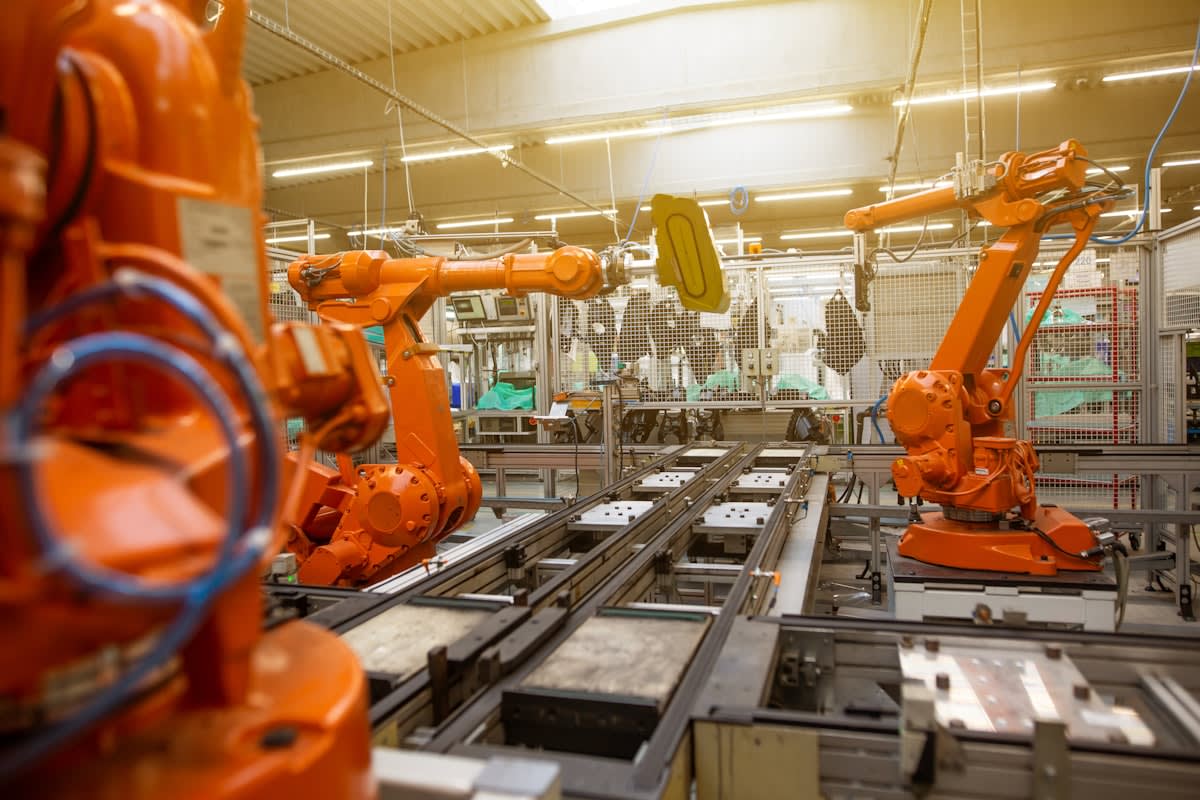
Software-defined manufacturing requires absolute power consistency. Rockwell Automation and Cisco have partnered to launch a Full-Stack Software-Defined Manufacturing reference design in India. Their focus on digital skills and cybersecurity for modern industrial environments assumes a baseline of power stability that public grids cannot guarantee. A single millisecond of power fluctuation can corrupt a firmware update in a Taipei semiconductor plant or halt a robotic line in Gurugram. Private nuclear grids eliminate this risk by decoupling the factory from the public utility.
| Feature | Public Utility Grid | Private Nuclear Grid (SMR) |
|---|---|---|
| Reliability | Subject to curtailment/brownouts | Constant baseload output |
| Regulatory Path | State-managed procurement | NRC-style streamlined licensing |
| Cost Structure | Variable tariffs/Operational risk | High CapEx / Low OpEx |
| Scale | Macro-regional distribution | Site-specific industrial clusters |
Decentralization is the inevitable outcome. The Asia Clean Energy Forum (ACEF) 2026 emphasized that no country can manage its energy transition in isolation. AI-driven grid management and decentralized energy systems are now the working assumptions for the region. This trend favors the wealthy industrialist who can afford a private reactor over the municipality that must balance the needs of millions. The result is a tiered energy society where industrial stability is bought, not provided.
Hidden incentives drive this migration. By owning the power source, corporations avoid the political volatility of state energy pricing. They also bypass the 'emergency orders' that allow grid operators to shut down large users during heat waves, as seen in the PJM Interconnection. This is not about environmental stewardship. It is about the cold calculation of risk mitigation.
The Cost of Failure
Failure in power stability leads to immediate capital loss. In Texas and Illinois, regulators have already warned that fast-growing data center loads are creating future cost pressures. When the grid fails, the backup generation is a temporary bandage, not a solution. Nuclear SMRs provide a permanent solution that matches the load profile of a high-tech industrial park. The investment is steep, but the cost of a total production halt is higher.
"We must build a power system that connects our economies, strengthens our resilience, and delivers energy across the region."— Asia Clean Energy Forum (ACEF) 2026
India's path is now clear. The combination of N.A.N. GreenMet's industrial platforms and the digital infrastructure of Rockwell and Cisco creates a massive energy sink. State grids are incapable of filling this void without compromising residential stability. Private nuclear grids are the only logical conclusion for an economy that refuses to let power be the bottleneck of growth.
Strategic analysts must recognize the pattern. The bundling of 17 NRC rules is the signal. The $46.5 billion SGE investment is the proof. The curtailment of US data centers is the warning. Bengaluru's industrial stability will not come from the government; it will come from the boardroom.