AI Executive Summary
"This analysis examines the global shift toward critical mineral independence, highlighting the transition from raw extraction to strategic processing. It outlines how diversified feedstocks and state-led initiatives are neutralizing the geopolitical leverage of single-source monopolies."
The End of Resource Monopolies
Markets are reacting to a new reality. This movement indicates a rejection of traditional mining dependencies. The US Department of Energy recently allocated $75 million for five specific projects. These initiatives target coal feedstocks to extract rare earth elements, germanium, gallium, and aluminum. Such funding serves as a catalyst for domestic independence.
West Virginia is no longer just about coal. The region now serves as a laboratory for mineral recovery. GreenMet has committed $150 million in private investment to build a processing hub in Rupert. This facility will extract rare earth elements from coal tailings. Such an approach converts environmental liabilities into strategic assets.
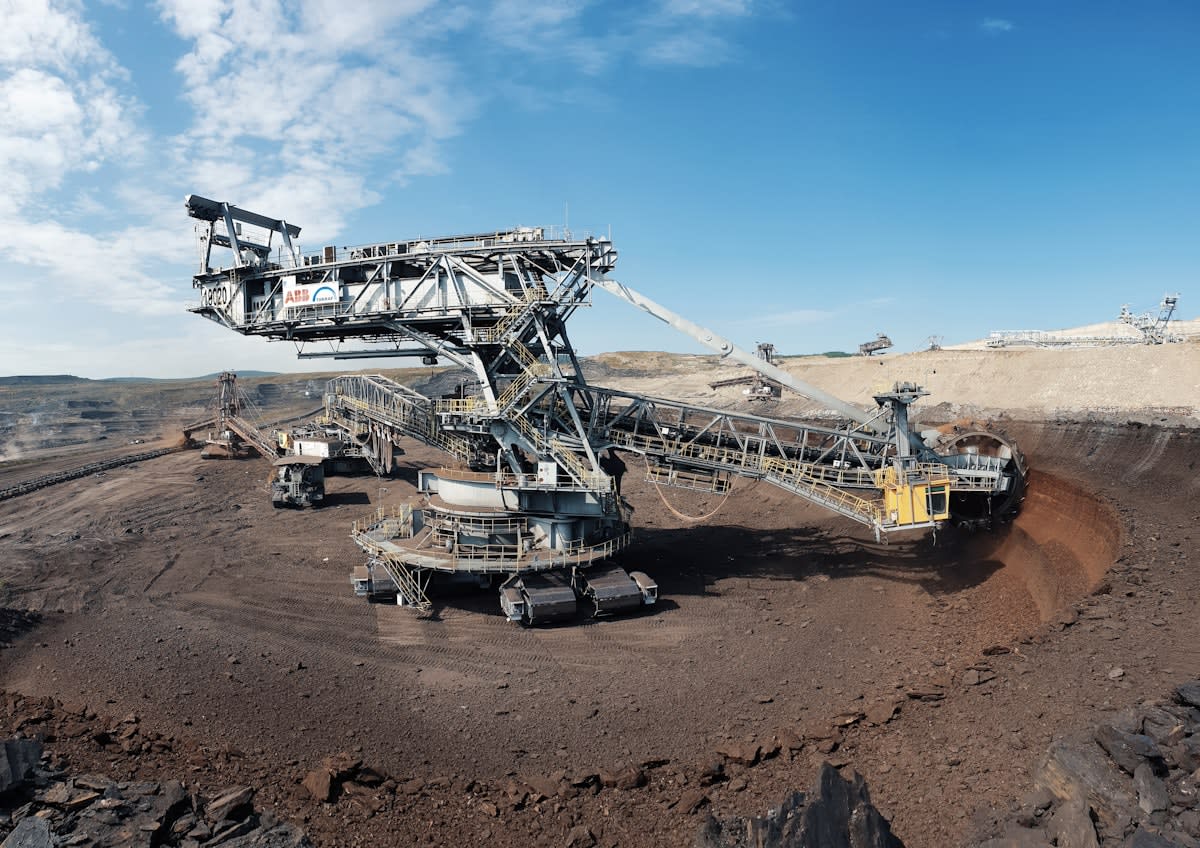
Political incentives drive these technical advancements. The Trump Administration has committed nearly $700 million for coal infrastructure and operations. This capital ensures that the coal sector remains viable while it transforms into a mineral source. Such a strategy aligns industrial survival with national security. It removes the leverage previously held by foreign monopolies.
Strategic Trigger
The US Department of Energy's focus on 'Mines & Metals Capacity Expansion' represents a calculated move to treat industrial waste as a primary ore body.
GreenMet is implementing a hub-and-spoke network. This model centralizes processing in Rupert while drawing materials from various sites. Flash Metals USA and AmForge Corporation provide the necessary technical expertise. Such collaboration reduces the cost of scaling. It creates a domestic loop that bypasses international shipping bottlenecks.
Contrast this American approach with the bureaucratic inertia often seen in global trade. While a firmware bug in Taipei might stall a semiconductor line, a brownout in Kinshasa can halt an entire mine. These physical constraints are why the US is betting on waste recovery. It is a hedge against the volatility of foreign extraction.
African State-Backed Resource Nationalism
Cape Town will host the African National Mining Companies Forum in October 2026. State-owned enterprises are taking the lead. These entities aim to unlock $8.5 trillion in untapped mineral resources. Roughly 30 percent of the world's critical reserves reside across the continent. Such a concentration of wealth is now being weaponized for domestic gain.
Liberia is advancing plans for a national mining company. This entity will target iron ore and critical minerals. Similarly, Guinea's Nimba Mining Company is integrating into the Simandou 2040 strategy. These nations are refusing to be mere exporters of raw dirt. They are demanding domestic processing to capture more value.
Global investors are watching these state-backed moves closely. The risk of nationalization is high. However, the reward is access to the largest untapped reserves on earth. Such a trade-off is becoming acceptable as the cost of monopoly dependence rises. It is a cold calculation of necessity.
Processing hubs are the new battleground. Africa seeks to reduce its dependence on raw mineral exports. This requires massive capital for refineries. Without these facilities, the $8.5 trillion valuation remains a theoretical number. Real power lies in the ability to refine, not just dig.
| Strategy Vector | Primary Feedstock | Financial Trigger | Strategic Goal |
|---|---|---|---|
| US Recovery | Coal Tailings | $75M DOE / $150M Private | Domestic Independence |
| African SOEs | Untapped Reserves | $8.5T Potential | Value Maximization |
| Australian Offtake | Goschen Project | 18-Year Contract | Supply Certainty |
These three vectors create a pincer movement against existing monopolies. The US provides the technology for recovery. Africa provides the raw volume. Australia provides the long-term stability. Together, they render the previous monopoly model obsolete.
The Australian Long-Game
Australia is locking in decades of supply. Iluka Resources recently signed an 18-year agreement with VHM. This contract secures 146,000 tonnes of concentrate. Within that volume, 86,000 tonnes of rare earth oxides are expected. Such long-term certainty removes the volatility associated with spot-market pricing.
Right of first refusal is the key clause here. Iluka has this right for any additional material from the Goschen project. It also extends to the Cannie and Nowie projects. This ensures that one company controls the flow from multiple sites. It is a corporate version of the state-owned strategy.
"American industrial facilities have the potential to produce valuable critical materials from coal and coal byproducts."— Audrey Robertson, Assistant Secretary of Energy
Pricing mechanisms are now linked to refinery output. The Eneabba refinery serves as the benchmark for the VHM deal. This creates a closed loop where the producer controls the value. Such integration prevents middlemen from skimming profits. It is a lean, aggressive approach to resource management.
Global Critical Mineral Reserve Distribution
Executive Insight
+18.4%
YTD Growth
Failure to secure these contracts is a terminal mistake. Companies that rely on just-in-time delivery from a single source are exposed. The Iluka deal proves that the market is moving toward long-term, locked-in supply. This is the only way to survive in a world of resource nationalism.
Resource security is now a matter of industrial chemistry. Whether it is extracting gallium from coal or refining oxides in Australia, the goal is the same. It is about breaking the monopoly. The tools are no longer just diplomacy, but metallurgy and state capital.
- US coal tailings convert waste into strategic minerals.
- African SOEs prioritize domestic processing over raw exports.
- Australian 18-year contracts eliminate spot-market volatility.
- Hub-and-spoke networks reduce the cost of domestic scaling.