AI Executive Summary
"This article analyzes the critical divergence between retail market sentiment and the strategic reallocation of sovereign wealth toward energy security. It provides high-level strategic insights into the fragility of the dollar-centric financial order against a backdrop of increasing physical global unrest."
The Illusion of Stability
Wall Street loves a victory lap. According to a Yardeni Research note, the so-called Dollar Debasement Trade has largely run its course. The narrative is simple: investors aren't abandoning US assets. The evidence? The yen has plummeted to levels not seen since 1986, and Bitcoin has crashed from a peak of over $120,000 late last year to roughly $61,000. On paper, the dollar looks like the only adult in the room.
Treasury Department data supports this facade. Foreign investors poured more than $1.4 trillion into US assets during the 12 months ending April 2026. Deutsche Bank notes that the US equity market still accounts for nearly half of global stock-market capitalization. It is easy to mistake this for strength. In reality, it is often just a lack of viable alternatives.
But look closer. If the dollar were truly the undisputed champion, why are the world's most sophisticated capital allocators sweating? The gap between retail market sentiment and sovereign strategy is widening.
The $29 Trillion Quiet Exit
While the headlines scream about dollar dominance, sovereign wealth funds and central banks managing $29 trillion in assets are rewriting their playbooks. An Invesco survey reveals a deepening anxiety. We are seeing a calculated migration toward energy security and transition infrastructure, which 80% of polled respondents identified as the most credible path to portfolio resilience.
| Metric | 2022/2024 Baseline | 2026 Status |
|---|---|---|
| Central Banks flagging US debt as a negative for reserve status | 20% | 61% |
| Belief that dollar reserve status will be weaker in 5 years | 12% | 29% |
| Infrastructure share of SWF assets | Not specified | 9% |
"The lack of a credible dollar alternative is likely to make any shift away from it incremental."— Invesco Survey Analysis
This isn't a sudden panic; it is a slow-motion reallocation. The smart money is trading digital promises and debt for physical energy assets. They aren't betting against the US; they are betting on the physical requirements of survival.
This reallocation happens against a backdrop of a world that is physically fraying at the edges.
Chaos as a Catalyst
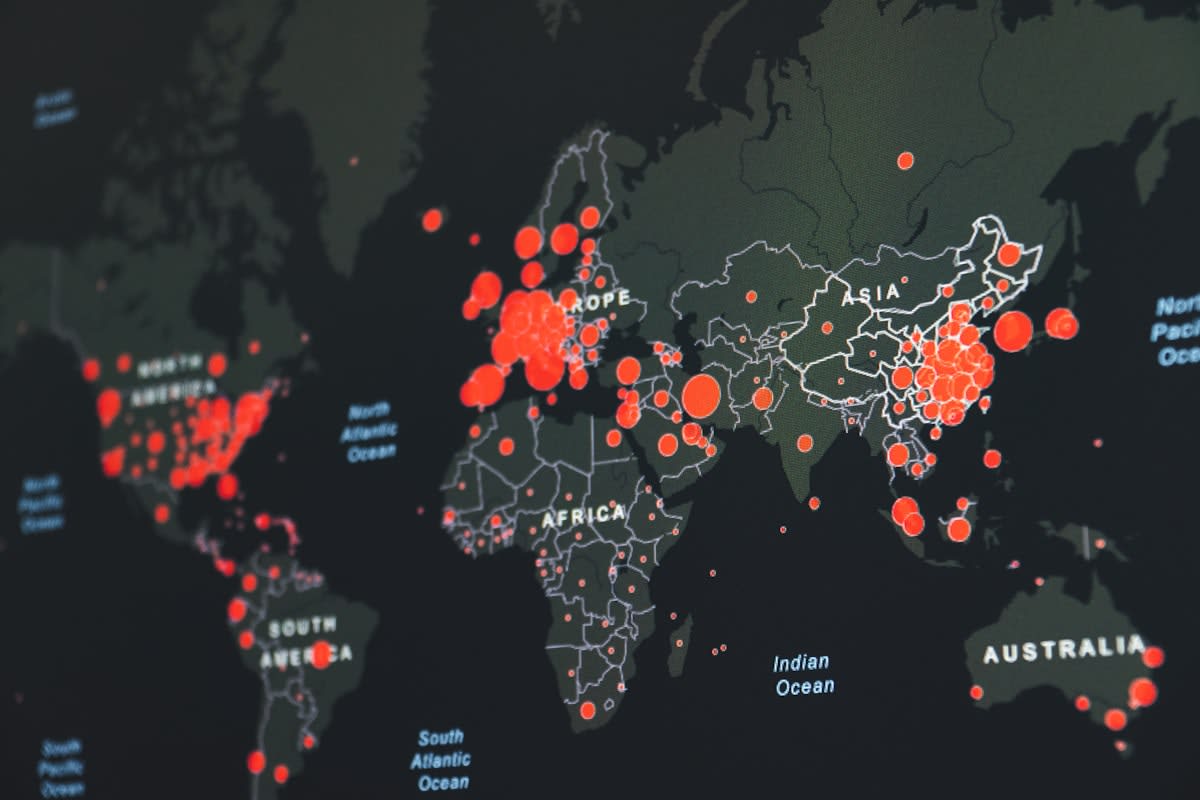
Financial metrics are useless if the pipes burst. Verisk Maplecroft’s Civil Unrest Index shows global instability hitting a six-year high. The numbers are staggering: protest activity in Iraq jumped 671% in the second quarter of 2026. The US isn't immune, with its own activity rising 458% to over 636,000 events. When you add India's 119% climb and Brazil's 108% increase, you see a global pattern of volatility.
Torbjorn Soltvedt of Verisk Maplecroft warns that inflationary pressures from shipping disruptions and damaged energy infrastructure will persist through the end of 2026. This is why the $29 trillion move toward energy assets makes sense. In a world of burning bridges and blocked ports, a reserve currency is less valuable than a secure power grid.
Some suggest stablecoins could fill the void, but the Bank for International Settlements (BIS) isn't buying it. Their 2026 Annual Economic Report argues that stablecoins fall short of being actual money due to failures in singleness, elasticity, and integrity. The BIS warns of stablecoin dollarization in emerging economies, which only further ties these volatile regions to a dollar that sovereign funds are already questioning.
The BIS Alternative
The BIS is pushing for a tokenized unified ledger anchored in central bank money. It is an attempt to modernize the system before the physical world renders the digital ledger irrelevant.