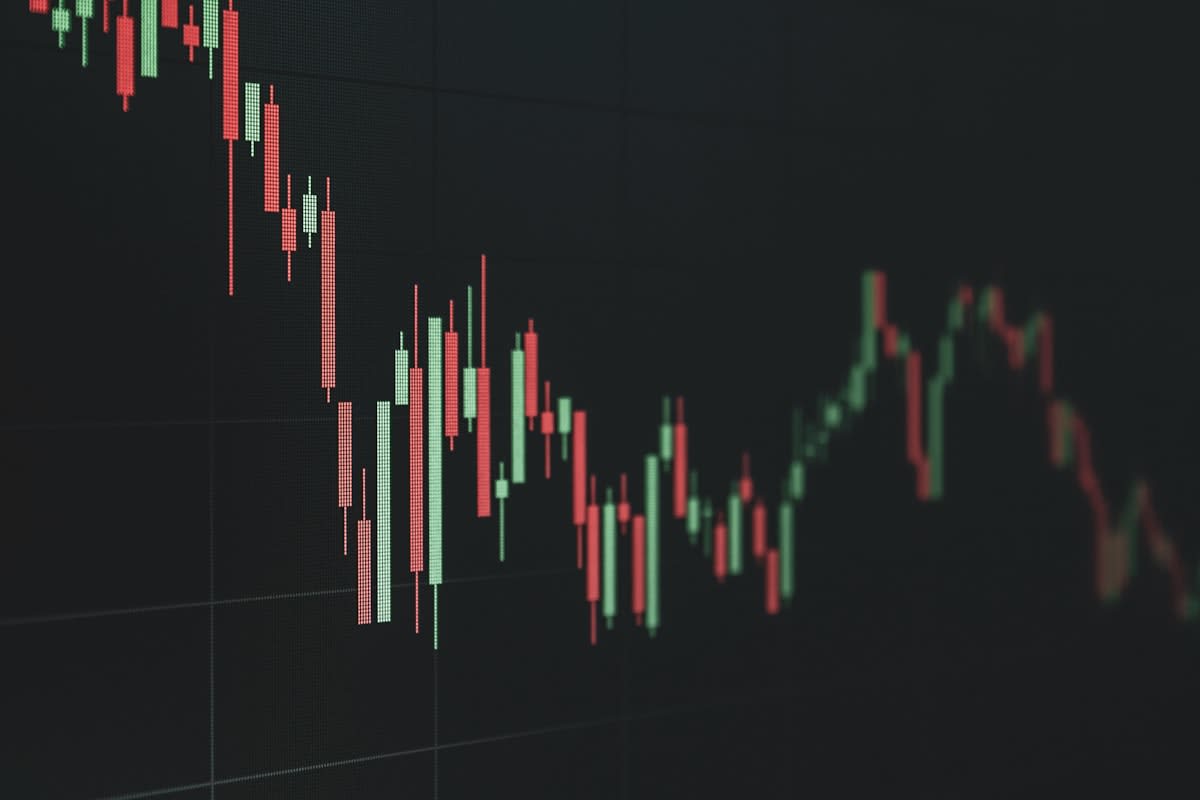
Walk onto the floor of the New York Stock Exchange in June 2026, and you will see the physical manifestation of a psychological crisis. The AI frenzy has birthed a new class of market cap trillionaires, driving a global equity surge that feels less like an industrial revolution and more like a collective fever. For the average investor, the strategy has become dangerously simple: buy what is already winning. This is the reign of FOMO, where the fear of missing out overrides the fundamental laws of valuation, creating a precarious environment where momentum is the only currency that seems to hold value.
But beneath this surface of irrational exuberance lies a different game entirely. A small cadre of strategic investors is practicing what can be termed Emotional Arbitrage. They aren't looking at the P/E ratios of the next big LLM provider; they are measuring the gap between the market's emotional reaction and the systemic reality of the asset. When the crowd chases a 12-month high, the arbitrageur looks for the structural floor. They recognize that the most profitable trades occur not when the data is clear, but when the emotional noise is loudest.
The Momentum Trap and the PTH Fallacy
The danger of the current AI-driven market is best illustrated by the divergence between Price Trend High (PTH) and High Trend Price (HTP) strategies. Analysis from Reuters indicates a chilling trend: most of the negative performance in momentum strategies in the United States is generated by stocks closest to their 12-month highs. These are the exact assets that PTH strategies prioritize, effectively baking a crash into the portfolio. The crowd buys the peak because the peak is the most visible signal of success, ignoring the fact that the higher the climb, the more violent the eventual correction.
"Investors have developed a severe case of FOMO, leading many to plough more funds into equity leaders even as momentum crash warnings flash red."— Reuters Analysis
Contrast this with the HTP approach, which prioritizes longer-term price appreciation and intentionally cuts out the stocks sitting at their absolute ceiling. Why does this work? Because it removes the emotional variable of the 'hype cycle.' By avoiding the assets that have become psychological magnets for the masses, HTP investors avoid the inevitable 'momentum crash.' This is the first lesson of emotional arbitrage: the most crowded trade is usually the most dangerous, regardless of the underlying technology.
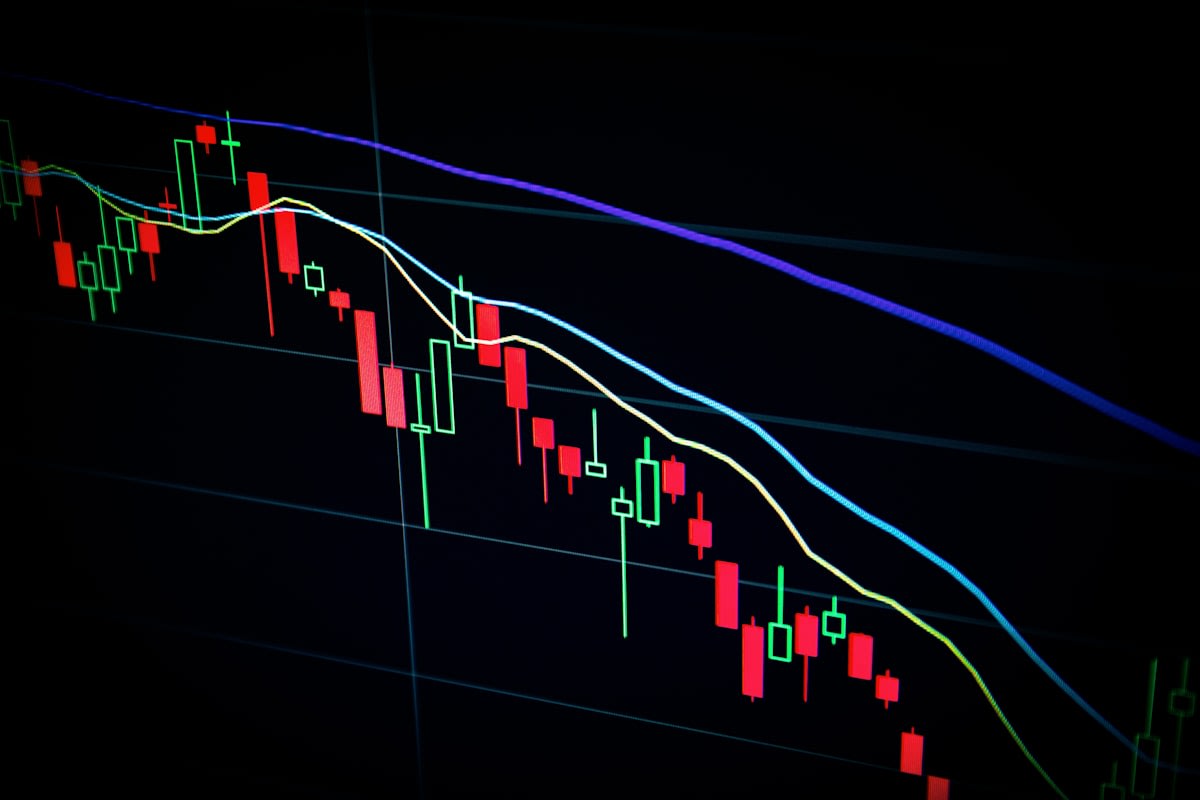
This systemic shift suggests that the 'alpha' of 2026 is no longer about identifying the best company, but about identifying the most mispriced emotion. When the market perceives a 'sure thing,' the risk is actually at its peak. The strategic analyst doesn't ask 'Will AI grow?' but rather 'How much of this growth is already priced in by people who are afraid to be left behind?'
The Hormuz Paradox: Physical Scarcity vs. Psychological Surplus
Nowhere is emotional arbitrage more evident than in the current energy markets. Consider the situation at the Strait of Hormuz. In a rational world, a supply disruption that reduces flow to about a third of pre-war levels would trigger a global price spike. The physical reality is a severe constraint. Yet, market pricing has recently reflected a perceived surplus. This contradiction is a masterclass in psychological distortion, driven largely by perceived demand destruction in Asia.
While the physical pipes are constricted, the market's emotional state is one of skepticism toward demand. This creates a bizarre scenario where the probability of crude oil reaching a new all-time high declines, even as the supply chain remains broken. Investors are trading the 'feeling' of a surplus rather than the 'fact' of a disruption. This gap—the distance between 33% capacity and a 'surplus' price—is where the professional arbitrageur operates.
The Political Hedge
The market is currently pricing in a stabilization of the Middle East and the easing of U.S. sanctions on Iran, effectively betting on a political outcome to solve a physical supply crisis.
When OPEC+ prepares to increase production quotas, they are responding to a market that has already psychologically discounted the risk of conflict. The stabilization of the region and the reopening of the Strait of Hormuz are not just geopolitical events; they are the triggers that resolve the emotional arbitrage. Those who bet on the physical scarcity while the world feared demand destruction are the ones who capture the delta when the reality finally aligns with the price.
Does this mean data is irrelevant? No. It means data is the baseline, but emotion is the multiplier. If you only trade the data, you are fighting the trend. If you trade the emotion, you are anticipating the trend's exhaustion.
From Hype to Hardware: The Four Powers Pivot
As the AI noise reaches a crescendo, the strategic pivot is moving away from the 'application' layer—the flashy software and bots—and toward the 'critical investment anchors.' This is the shift from chasing the high to securing the foundation. The market is beginning to realize that the software is useless without the physical infrastructure to support it. This realization is moving through the investor class in waves, creating a new opportunity for those who can see the network effect before it becomes a consensus.
| Investment Layer | Emotional Driver | Systemic Reality | Arbitrage Opportunity |
|---|---|---|---|
| AI Applications | FOMO / Speculation | High saturation, PTH risk | Short-term momentum / Long-term exit |
| AI Infrastructure | Underestimation | Critical power/storage needs | Long-term structural growth |
| Energy (Oil) | Demand Skepticism | Physical supply constraints | Mean reversion to scarcity |
| Digital Assets | Sentiment-Driven Gains | High volatility / Low utility | Psychological cycle trading |
The 'Four Powers'—computing power, transport power, storage power, and electrical power—now form the actual network supporting the AI ecosystem. While the general public is distracted by the latest AI-generated video or chatbot, the institutional money is flowing into the grid. This is a clinical move. It is a transition from the emotional 'what if' of AI to the electrical 'how' of AI. By focusing on the resources that are non-negotiable for the system's survival, investors insulate themselves from the volatility of the hype cycle.

This approach mirrors the logic of the HTP strategy. Instead of buying the 'winner' of the week, the investor buys the 'requirement' of the decade. The electrical grid doesn't care about the stock price of a specific AI startup; it only cares about the load. By investing in the load, you are essentially shorting the market's ignorance of the physical constraints of technology.
Can we apply this same logic to the most fundamental asset of all: human capital? The parallel is striking.
Resilience as the Ultimate Hedge
In a surprising intersection of economics and psychology, the concept of building self-esteem in children is being framed not as a parenting preference, but as an essential investment in future resilience. If we view a child's emotional development through the lens of a strategic analyst, fostering self-esteem is the equivalent of building the 'Four Powers' for a human life. It creates the foundation that allows an individual to embrace challenges and engage in social settings without being paralyzed by the same FOMO or panic that destroys portfolios.
The correlation is clear: whether you are managing a sovereign wealth fund or a household, the ability to operate independently of collective emotional swings is the ultimate competitive advantage. Resilience is the hedge against volatility. An investor who has mastered their own emotional responses can look at a 12-month high and see a warning sign, while others see a green light. They can look at a disrupted strait and see an opportunity, while others see a surplus.
The global economy in 2026 is no longer a battle of information. Information is instant and ubiquitous. It is now a battle of temperament. The winners are those who can decouple their decision-making process from the prevailing mood of the market. They don't chase the high; they build the foundation. They don't follow the noise; they listen for the silence of the systemic shift.
Emotional arbitrage is not about being a contrarian for the sake of it. It is about the clinical application of psychology to finance. It is the recognition that the human mind is the most volatile asset in any portfolio, and the only way to profit from that volatility is to step outside of it.