AI Executive Summary
"This article analyzes India's strategic transition from a services-dependent economy to a resilient 'dual-engine' model combining high-tech manufacturing and AI. It highlights how initiatives like the C-295 project and NPCI's AI integration create a systemic hedge against global economic volatility."
For decades, the global narrative on India centered on the 'back office'—a services-led miracle that powered the world's IT needs. But is that model hitting a ceiling? Morgan Stanley recently signaled a warning: India's services sector is slowing, leaving the current account deficit exposed. The solution isn't more of the same; it is a radical acceleration of manufacturing to offset this decline and ignite employment. This isn't just a policy tweak; it is a survival strategy.
The Hard Asset Hedge
The pivot manifests most clearly in the skies. Prime Minister Narendra Modi recently highlighted the maiden flight of the made-in-India C-295 military transport aircraft. This isn't just about one plane; it is about an ecosystem. With 40 such aircraft being built domestically, India is forcing a transition from procurement to production, dragging a constellation of MSMEs into the high-precision aerospace supply chain.
"As many as 40 such aircraft are being built right here in India and this is giving new strength to MSMEs and the aerospace sector."— Prime Minister Narendra Modi
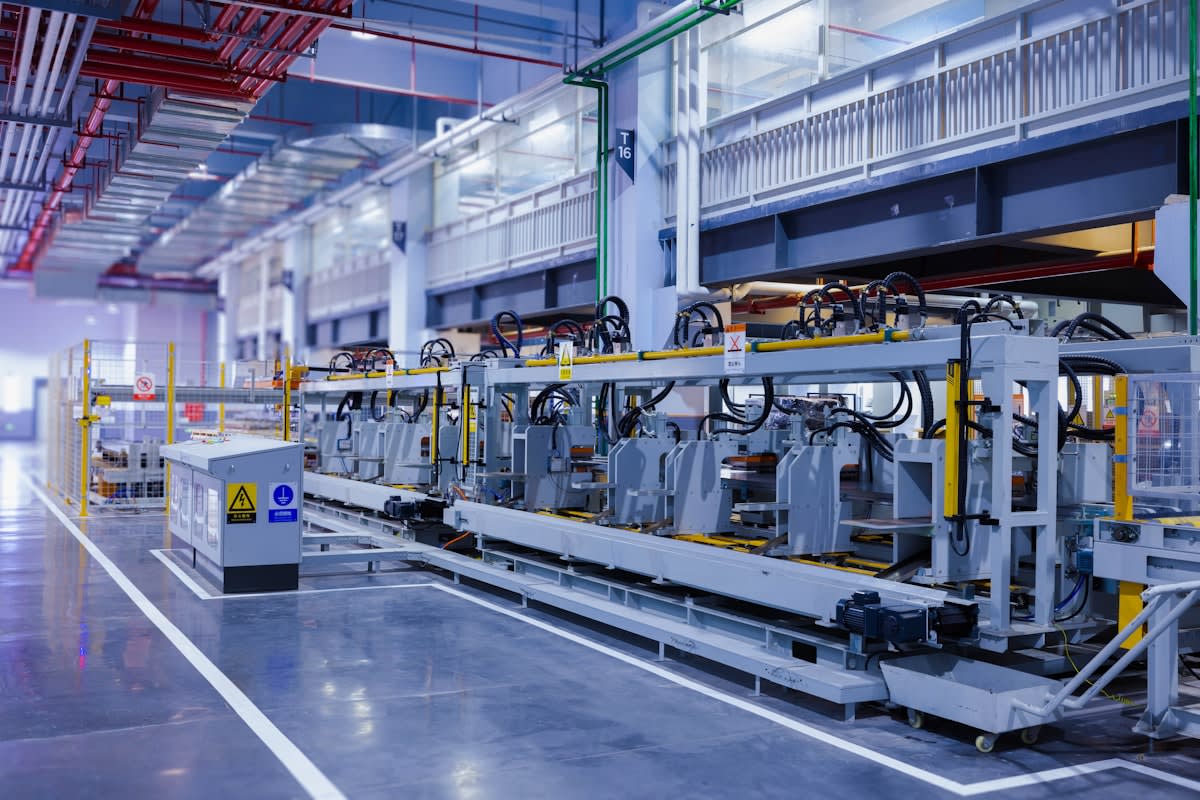
While the federal government focuses on defense, the states are fighting their own battles for industrial dominance. Rajasthan provides a stark example of this localized aggression. Chief Minister Bhajan Lal Sharma recently rolled out the Rajasthan Industrial Development Policy, a framework designed to transform the state into a global manufacturing hub.
| Metric | Rajasthan Target/Action | Strategic Objective |
|---|---|---|
| Economic Scale Target | USD 350 Billion by 2028-29 | Establish state as premier global destination |
| Immediate Capital Injection | Exceeding Rs 13 Crore | Accelerate MSME and electronics growth |
| Core Focus Sectors | Electronics, Handicrafts, Startups | Diversify commercial landscape |
This aggressive state-level push complements the national drive toward self-reliance. But hard assets alone cannot sustain a modern economy. The real magic happens when you layer intelligence over infrastructure.
The Intelligence Layer: AI and the Next Billion
Digital payments in India have already achieved scale, but the National Payments Corporation of India (NPCI) is not resting on its laurels. Dilip Asbe, MD and CEO of NPCI, views AI not as a luxury, but as the primary engine for the next phase of growth. The goal is staggering: move from 750 million daily UPI transactions to over one billion.
The AI Growth Lever
NPCI is leveraging AI to onboard half a billion new users. The strategy relies on multilingual interfaces and voice assistants to break the literacy and language barriers that historically excluded rural populations from the digital economy.
UPI Daily Transaction Trajectory
Executive Insight
+18.4%
YTD Growth
Why does this matter for the average entrepreneur? Because AI is redefining risk. By utilizing digital footprints, AI is simplifying the lending process for users and small businesses, effectively democratizing access to capital in a way that traditional banking never could.
This internal transformation is happening just as global capital is looking for new homes. The recent Vienna Summit of the Arab Coordination Group (ACG) underscores this. The ACG, the second-largest alliance of development finance institutions, is unlocking hundreds of billions for global development.

When you connect the dots—the ACG's capital deployment, Rajasthan's industrial policy, the C-295's aerospace ripple effects, and NPCI's AI-driven scale—a pattern emerges. India is no longer content being the world's service provider. It is building a fortress of tangible assets and intelligent systems to ensure that when the next global shift hits, it isn't just surviving, but leading.