AI Executive Summary
"This article analyzes the strategic shift from globalized outsourcing to industrial nationalism in the semiconductor and renewable energy sectors. It highlights how India and South Korea are aggressively building domestic compute infrastructure to mitigate geopolitical risks and secure AI supremacy."
The Architecture of Dependency
For decades, the global economy operated on a simple premise: manufacture where it is cheapest. That logic has collapsed. In June 2026, we are seeing the emergence of industrial citadels designed to insulate national economies from external shocks. India is not merely building factories in Jewar; it is attempting to surgically remove a Rs 40,000 crore import dependency on Printed Circuit Boards (PCBs). This is a cold, calculated move to secure the nervous system of modern electronics.
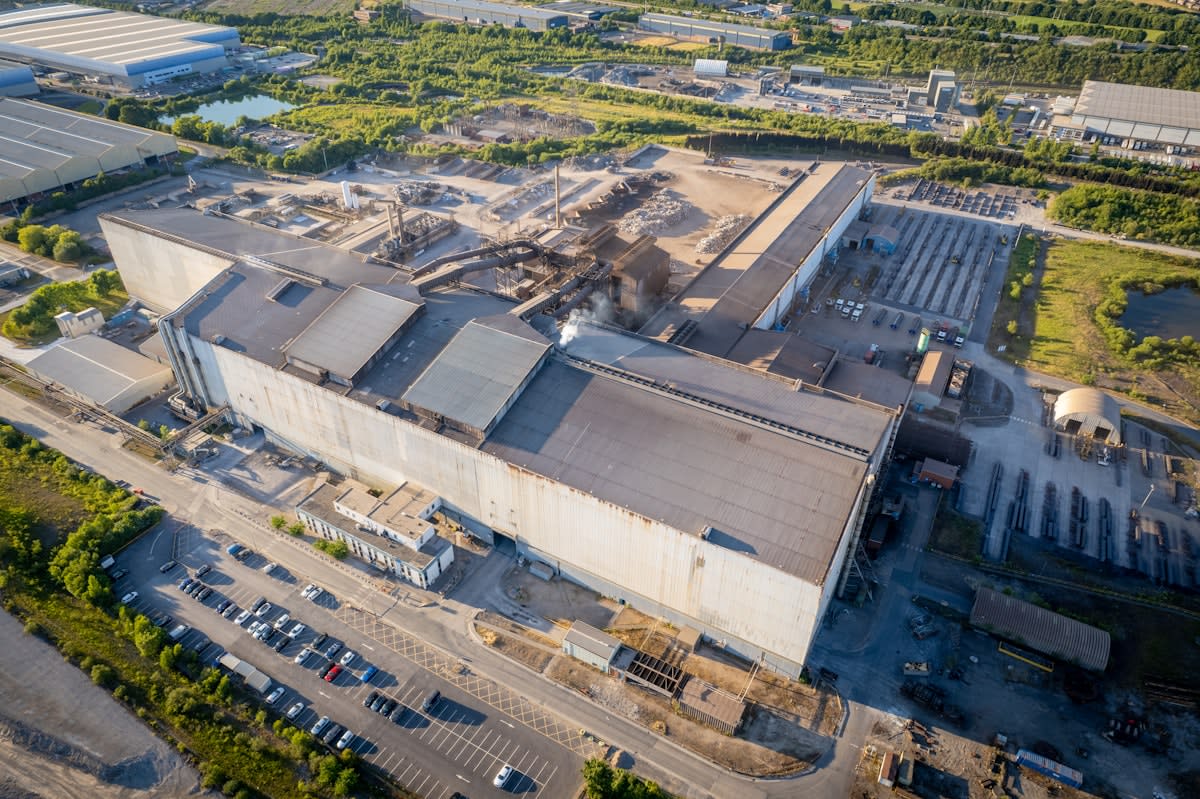
"Jewar is poised to emerge as one of India's leading hubs for electronics and semiconductor manufacturing in the coming years."— Ashwini Vaishnaw, Union Minister for Electronics & IT
Why the sudden urgency? Because the cost of reliance has become higher than the cost of construction. The foundation stones laid on June 27 in Yamuna City, involving an initial investment of Rs 6,750 crore, are the first bricks in a wall meant to keep foreign supply chain volatility at bay.
The Solar Cell Paradox
India's renewable energy ambitions have long been a house of cards. The numbers are staggering: 172 GW of approved solar module capacity, yet only 10 GW of domestic cells. This is a critical failure of vertical integration. While the country could assemble panels, it could not produce the actual energy-generating cells. The Approved List of Models and Manufacturers (ALMM) List-II, effective June 1, finally forces the issue by mandating domestic cells for government-backed projects.
The Technical Choke Point
TOPCon technology accounts for nearly 89 percent of India's approved module output, yet only 10 GW of domestic cell capacity covers this specific technology. The gap is not just quantitative; it is technical.
SAEL Industries is attempting to bridge this void with a Rs 8,200 crore investment in a 10 GW integrated photovoltaic complex. By targeting the cell shortage, they aren't just building a plant; they are attempting to repair a broken supply chain that previously left India exposed to international price swings and geopolitical leverage.
| Strategic Asset | Investment/Capacity | Core Objective | Existing Vulnerability |
|---|---|---|---|
| India Solar (SAEL) | 10 GW / Rs 8,200Cr | Cell-Module Integration | 10 GW cells vs 172 GW modules |
| India Electronics (Jewar) | Rs 6,750Cr (Initial) | PCB Domesticity | Rs 40,000Cr import reliance |
| Samsung (Korea) | 400 Trillion Won | Gwangju Fab Expansion | Global chip capacity volatility |
| SK Group (Korea) | 2,100 Trillion Won (Total) | AI & Semiconductor Dominance | AI infrastructure bottlenecks |
While India focuses on filling gaps, South Korea is playing a game of absolute dominance. The scale of capital deployment in Seoul is almost incomprehensible.
Seoul's Trillion-Won Gamble
On June 29, 2026, South Korea unveiled three mega projects that dwarf almost any other industrial effort globally. Samsung is committing 400 trillion won (approximately $259.25 billion) to new fabs in Gwangju. Simultaneously, SK Group is outlining plans for semiconductor production worth 1,100 trillion won and AI data centers worth another 1,000 trillion won. This is not growth; it is a fortification of the state's economic engine.
South Korean Semiconductor & AI Investment (Trillions of Won)
Executive Insight
+18.4%
YTD Growth
SK Hynix is adding another 400 trillion won to a new chip production base in the southwest. The sheer volume of money—averaging over 100 trillion won annually from SK alone over the next decade—suggests a belief that the future of AI is not in software, but in the physical hardware that powers it. If you own the fabs, you own the intelligence.
The New Industrial Realism
Does this mean the end of trade? No. But it means the end of naive trade. The strategy in both India and South Korea is the same: build the critical components at home, then export the finished excellence. India's goal of an Atmanirbhar Bharat is being operationalized through the creation of 20,000 jobs at the SAEL plant and the localization of PCB production. It is a transition from being a consumer of global tech to being a sovereign producer.
- Strategic localization of PCBs to replace Rs 40,000 crore in imports.
- Closing the 162 GW gap between solar module and cell capacity in India.
- Multi-trillion won investments in Korea to secure AI hardware supremacy.
- Regulatory mandates (ALMM List-II) driving domestic industrialization.
The real story is not the foundation stones or the press releases. It is the recognition that in a world of fragmented geopolitics, the only true security is a domestic supply chain that actually works.