
AI Executive Summary
"This article examines the geopolitical shift from raw mineral extraction to high-value downstream processing. It contrasts the US strategy of synthetic recovery from industrial waste with Nigeria's push for domestic lithium refining to secure industrial sovereignty."
The New Geography of Mineral Value
Coal tailings are the new frontier. This strategy replaces traditional extraction with the recovery of rare earth elements from industrial waste. Washington is funding this transition via a $75 million award from the Department of Energy. Five projects now aim to produce market-ready germanium and gallium from coal feedstocks. Such efforts reflect a desperate attempt to secure domestic supplies. Capital flows are targeting the Rust Belt to avoid foreign dependence.
Private capital is augmenting government grants. GreenMet has committed $150 million to a processing hub in Rupert, West Virginia. Their hub-and-spoke network intends to centralize the recovery of critical minerals. Local access to Mid-Vol coking coal makes this site strategically viable. AmForge Corporation and Flash Metals USA provide the necessary technical expertise. This arrangement creates a closed loop of domestic supply.

The Nigerian Processing Gambit
West Africa is pursuing a different trajectory. Vice President Kashim Shettima recently commissioned Nigeria's largest lithium processing plant in Nasarawa State. This facility marks a departure from the simple export of raw ores. Local value addition is the central goal of the Diamond New Energy Projects. Government officials claim this will create jobs and expand the productive base. Industrialization here depends on the ability to maintain power and security.
Manufacturing hubs are appearing in unexpected corridors. Femi Akinkuebi is betting on the Ore Industrial Park in Ondo State. His approach focuses on industrial clustering to reduce import dependency. Logistics inefficiencies have long plagued the Nigerian economy. This park aims to transform trade routes into productive corridors. Success remains contingent on mitigating governance risks.
| Actor | Strategic Focus | Capital Injection | Target Minerals |
|---|---|---|---|
| US DOE | Waste Recovery | $75 Million | REEs, Germanium, Gallium |
| GreenMet | Hub-and-Spoke Recovery | $150 Million | Rare Earth Elements |
| Nigeria (Gov) | Downstream Processing | Diamond New Energy | Lithium |
| Ongwe Minerals | Direct Exploration | $23.3 Million | Gold |
"The solid minerals sector has become a strategic pillar of the administration's economic transformation agenda."— Kashim Shettima, Vice President of Nigeria
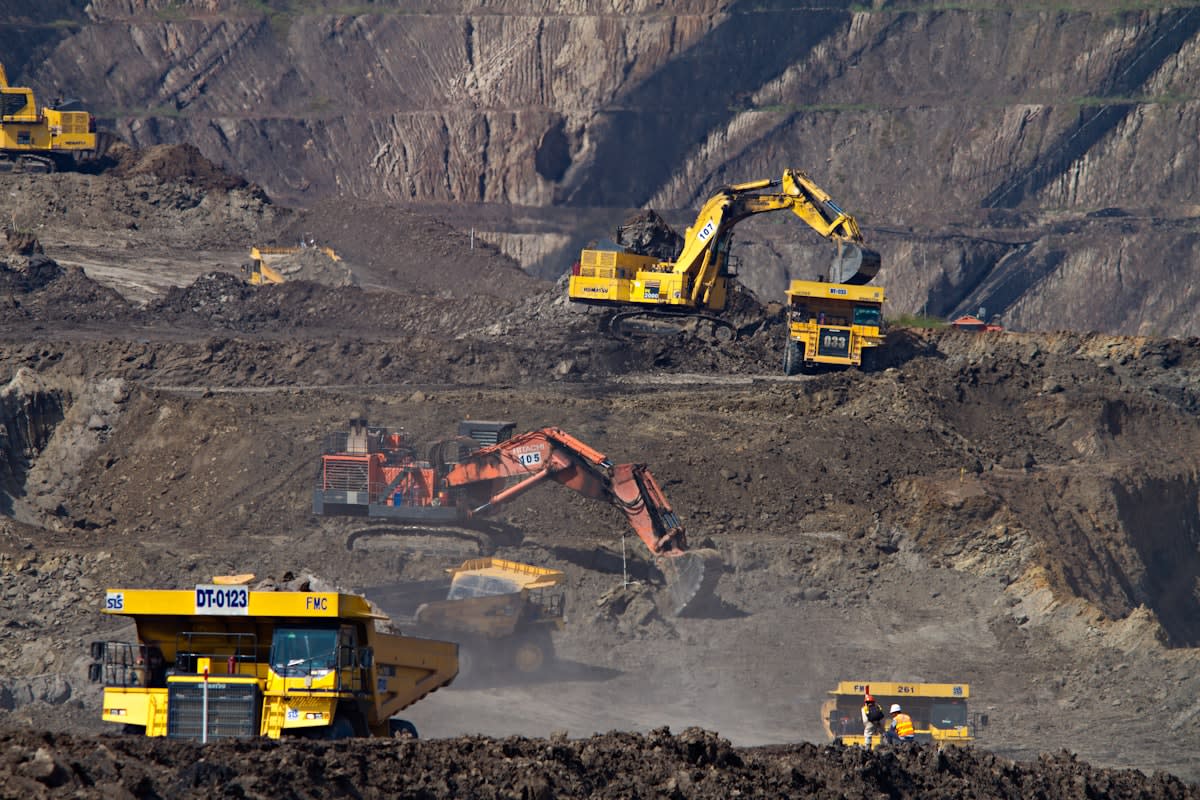
Gold exploration continues to follow the old model. Ongwe Minerals recently raised $23.3 million for a push into Namibia. This capital is used for drilling and discovery. Pure exploration focuses on the asset rather than the process. Mining companies in this mode export the raw concentrate. Contrast this with Nigeria's insistence on local processing.
Strategic Divergence
The divergence in strategy is clear: the US is mining its past (tailings), while Nigeria is building its future (processing plants).
Chemistry is the actual weapon of choice. These recovery projects in West Virginia rely on complex leaching and separation. Each project must prove it can produce market-ready materials at scale. Recovery from coal is chemically intensive and costly. This creates a new set of environmental liabilities. Failure to scale these pilots would render the $75 million DOE investment a waste of capital.
Power stability is the primary bottleneck in West Africa. While a firmware bug in Taipei can halt global chip production, a power outage in Nasarawa can render a multi-million dollar lithium plant a silent monument to ambition. Nigeria is attempting to bypass the export trap. Such a move requires a level of infrastructure consistency that has historically been absent. These plants are only as useful as the grid that feeds them. Only then does value addition become a reality.
Architectures of Industrial Efficiency
Centralization is the core of the GreenMet strategy. This hub-and-spoke model concentrates processing in Rupert, West Virginia. GreenMet intends to feed multiple spoke sites into one central refinery. Such a structure reduces the need for multiple expensive processing plants. Efficiency is gained by scaling the chemical recovery of REEs. Costs are moved from capital expenditure to logistics.
Clusters create a multiplier effect for industrial growth. Femi Akinkuebi applies this logic to the Ore Industrial Park. This initiative seeks to reposition Ondo State as a logistics hub. Industrial clustering reduces the distance between raw material and finished product. Proximity allows for shared infrastructure and reduced transport costs. Risk is mitigated by diversifying the types of manufacturing present.
Gallium and germanium are essential for high-end semiconductors. Germanium is critical for fiber optics and infrared sensors. These minerals are often byproducts of other mining operations. US funding of $75 million specifically targets these materials. Dependence on foreign sources for these elements is a strategic liability. Strategy now mandates that waste becomes a resource.
Namibia represents the traditional extraction model. Ongwe Minerals recently raised $23.3 million for gold exploration. This capital is used for drilling and discovery. Pure exploration focuses on the asset rather than the process. Mining companies in this mode export the raw concentrate. Contrast this with Nigeria's insistence on local processing.
Resource hegemony is being contested through processing power. The US is scrubbing its past to secure its future. Value is no longer found in the ground but in the refinery. Markets now reward those who control the purification step. Future industrial dominance depends on this chemical mastery. Reality dictates that the hub with the most stable power wins.