
AI Executive Summary
"This article provides a strategic analysis of the transition from low-skill labor to specialized technical oversight in Nigeria's industrial sector. It examines global risks of AI displacement and the institutional role of digital-first education in creating an 'Automation Administrator' class to mitigate the skills gap 2027."
Lagos is automating. This process replaces simple tasks with complex hardware. Corporate interests prioritize precision over payroll. The result is a narrowed labor funnel where only the technically proficient survive. Such a transition is not about progress but about risk mitigation.
Seoul deploys robotic baristas to fight wage hikes. Lagos utilizes programs like HumanManager's NextGen HR at UNILAG to prepare for a digital-first world. These differ in application but share a core goal: removing human error. Reliance on trust in Korea contrasts with the rigid compliance frameworks being taught in Nigeria. Local realities dictate the speed of adoption.
The Labor Displacement Calculus
Global data reveals a grim trajectory for the unskilled. Bangladesh faces a scenario where 40 percent of its workforce could be disrupted by automation and AI. Women and those in informal employment are the primary targets of this displacement. It is a mathematical certainty that labor-intensive manufacturing cannot compete with algorithmic precision. The cost of human error is simply too high for modern margins.
United States data offers a different but equally cold perspective. Goldman Sachs economist Joseph Briggs warns that AI will displace 9 percent of the US workforce, roughly 15 million jobs. Financial and information sectors are already bleeding, losing an average of 28,000 jobs monthly in 2026. This bleeding reflects a faster adoption rate than other industries. Only those who can manage the AI survive the cull.
"If we look back over the last 80 years, around 85% of job growth has been driven by the technological creation of new positions."— Joseph Briggs, Goldman Sachs Economist
Optimism regarding new job creation is a dangerous gamble. While a 5 percent increase in job creation could offset AI losses, the nature of these new roles is fundamentally different. They are not replacements for the assembly line but extensions of the server room. The barrier to entry has moved from physical stamina to cognitive agility. Most of the displaced workforce cannot make that jump.
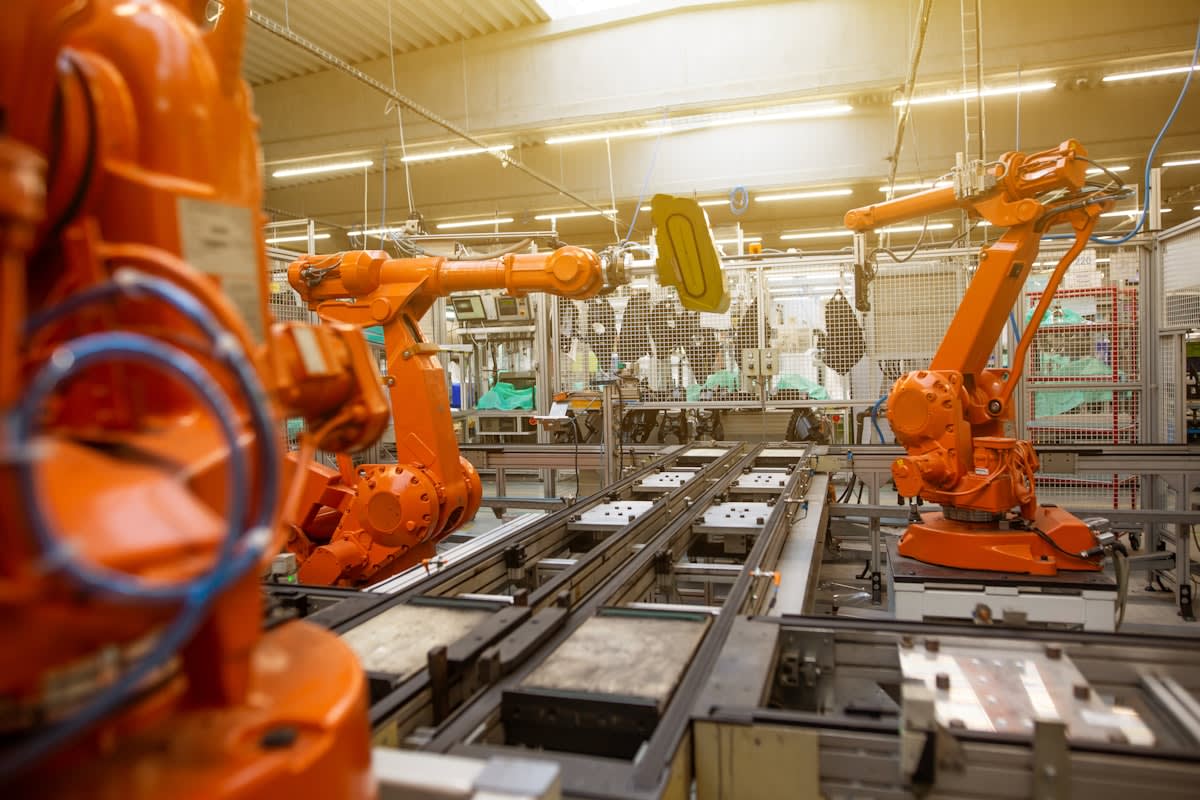
Industrial hardware is the next frontier of this displacement. Robotic welding equipment demand is projected to expand at a compound annual rate of 9 to 12 percent between 2026 and 2035. This growth is propelled by structural labor shortages and quality mandates in metal fabrication. It is a direct response to the instability of human labor. Machines do not tire, and they do not negotiate wages.
Maintenance becomes the only viable employment sector. A robotic arm in a Taipei facility might fail due to a firmware bug, requiring a remote software patch. In contrast, a similar unit in Lagos must withstand power surges and dust infiltration. This physical reality creates a demand for hyper-specialized maintenance technicians. These workers are not welders; they are hardware surgeons.
| Region/Sector | Automation Risk/Growth | Primary Driver |
|---|---|---|
| Bangladesh | 40% Workforce Risk | LDC Graduation/Global Competition |
| USA (General) | 9% Workforce Displacement | AI Integration |
| Robotic Welding | 9-12% CAGR | Labor Shortages/Quality Mandates |
| US Tech/Finance | 28k Jobs Lost Monthly | Fast AI Adoption |
The data highlights a stark divergence in risk profiles. Bangladesh's vulnerability is tied to its reliance on low-cost, labor-intensive manufacturing. The US experience shows that even high-skill sectors like finance are not immune to the algorithmic axe. Nigeria is attempting to position itself in the middle. It is seeking to build a workforce that manages the machines rather than competing with them.
Nigeria's Digital Buffer Strategy
Institutional interventions are now the primary defense. HumanManager has implemented the NextGen HR Initiative at the University of Lagos (UNILAG). This program focuses on digital HR workflows, automation, and employee data management. It is a calculated attempt to bridge the gap between classroom theory and workplace practice. Students are being trained in compliance and reporting through live simulations.
Digital-first training is the only way to avoid the Bangladesh trap. By focusing on automation and technology-driven processes, UNILAG is creating a layer of administrative technicians. These individuals will oversee the automated systems that replace the clerks. Their value lies in their ability to troubleshoot the software that manages the humans. It is a move toward a management-heavy labor structure.
Strategic Analysis
The focus on digital HR workflows at UNILAG suggests a strategic move to automate the overhead of labor management before the physical labor itself is fully automated. This creates a specialized class of 'Automation Administrators'.
Hardware constraints remain the biggest hurdle. Software training at a university is a controlled environment. Real-world deployment in Lagos involves navigating unreliable infrastructure. A technician who can manage a digital workflow in a lab may struggle when a robotic welder loses calibration due to a brownout. The gap between digital practice and physical reality is where the real cost of failure resides.
Maintenance is the only secure harbor in the automation storm. While the 9-12 percent growth in robotic welding equipment eliminates the need for manual welders, it creates a desperate need for calibration experts. These roles require a blend of mechanical engineering and software proficiency. This is the hyper-specialization required to survive the next decade.

Corporate entities are driving this requirement. They no longer want a flexible, low-skill workforce. They want a rigid, high-skill maintenance crew. This reduces the total number of employees but increases the cost per head. It is a trade-off that favors the balance sheet over social stability.
The social cost is often ignored in these reports. Displacement in Bangladesh is framed as a risk to women and persons with disabilities. In Nigeria, the risk is a growing divide between the UNILAG-trained elite and the informal laborer. Those without access to digital-first training are effectively erased from the economic equation. The new economy has no room for the marginally skilled.
Conclusion is inevitable. The automation of Lagos is not a gradual process but a series of abrupt replacements. Low-skill labor is being pushed out by robotic welding and AI-driven HR systems. Only the specialized maintenance class will find a place in this new hierarchy. The cost of entry is a degree in digital practice and a willingness to serve the machine.