AI Executive Summary
"This analysis examines the strategic shift from global interdependence to resource sovereignty, highlighting how critical minerals are redefining national security. It provides a blueprint for understanding the transition to 'hard diplomacy' where material leverage outweighs traditional treaties."
The Industrialization of National Defense
The traditional boundary between military readiness and industrial production is evaporating. In a move that signals a desperate urgency for domestic resilience, the US Army has begun leasing its own bases to four private companies for critical minerals processing. This is not a mere administrative adjustment. By allowing private entities to design, finance, and operate processing plants on military land, Washington is admitting that the open-market supply chain is no longer a reliable guarantor of national security.
"This is proving the Secretary of the Army’s theory that we can operate in a different way that benefits both the Army and industry — as well as gets the Army the things that it needs critically on a timeline that would have been unthinkable 18 months ago."— US Army Official
While the US weaponizes its land, Australia is weaponizing its midstream capabilities. The Federal Government's $45 million commitment to Sicona Battery Technologies at Port Kembla is a calculated bet on silicon-based anode technology. The goal is not just production, but a 300-fold increase in capacity to move from pilot scale to commercial reality. Australia is attempting to escape the trap of being a mere quarry for the world, seeking instead to capture the high-value processing stage of the battery lifecycle.
| Nation | Strategic Mechanism | Primary Objective | Key Asset/Investment |
|---|---|---|---|
| United States | Military Land Leasing | Domestic Supply Security | 4 Processing Facilities on Army Bases |
| Australia | Direct Capital Injection | Sovereign Midstream Capability | $45M for Sicona Silicon Anodes |
| Nigeria | Geological Identification | Economic Diversification | Kaduna Polymetallic Province |
These movements are not isolated incidents of industrial policy; they are symptoms of a global retreat from the efficiency of globalism toward the security of sovereignty.
The Repricing of Regional Security
In the Middle East, the security umbrella provided by Washington is being treated as a depreciating asset. Gulf states are no longer waiting for US directives to manage their borders. Saudi Arabia's decision to host a reconciliation summit with Iran is a clear signal: regional actors are now shaping their own security environment through direct engagement. This is a fundamental repricing of regional stability, where the US is viewed less as a protector and more as a volatile variable.
The Financial Leash
The concept of conditional sovereignty is emerging. In states like Iraq and Lebanon, autonomy is tied to externally defined benchmarks in finance and security. Because a significant share of Iraq's oil revenues flow through US financial systems, dollar clearance functions as a tool of political discipline.
However, this new diplomacy is fragile. On June 28, 2026, the tension peaked when Iran launched attacks on Kuwait and Bahrain. This aggression followed US strikes on 10 Iranian military targets near the Strait of Hormuz, which Washington claimed were responses to a drone attack on the Kiku oil tanker. The resulting chaos proves that while regional deals are being cut, the legacy of superpower intervention continues to trigger violent externalities.
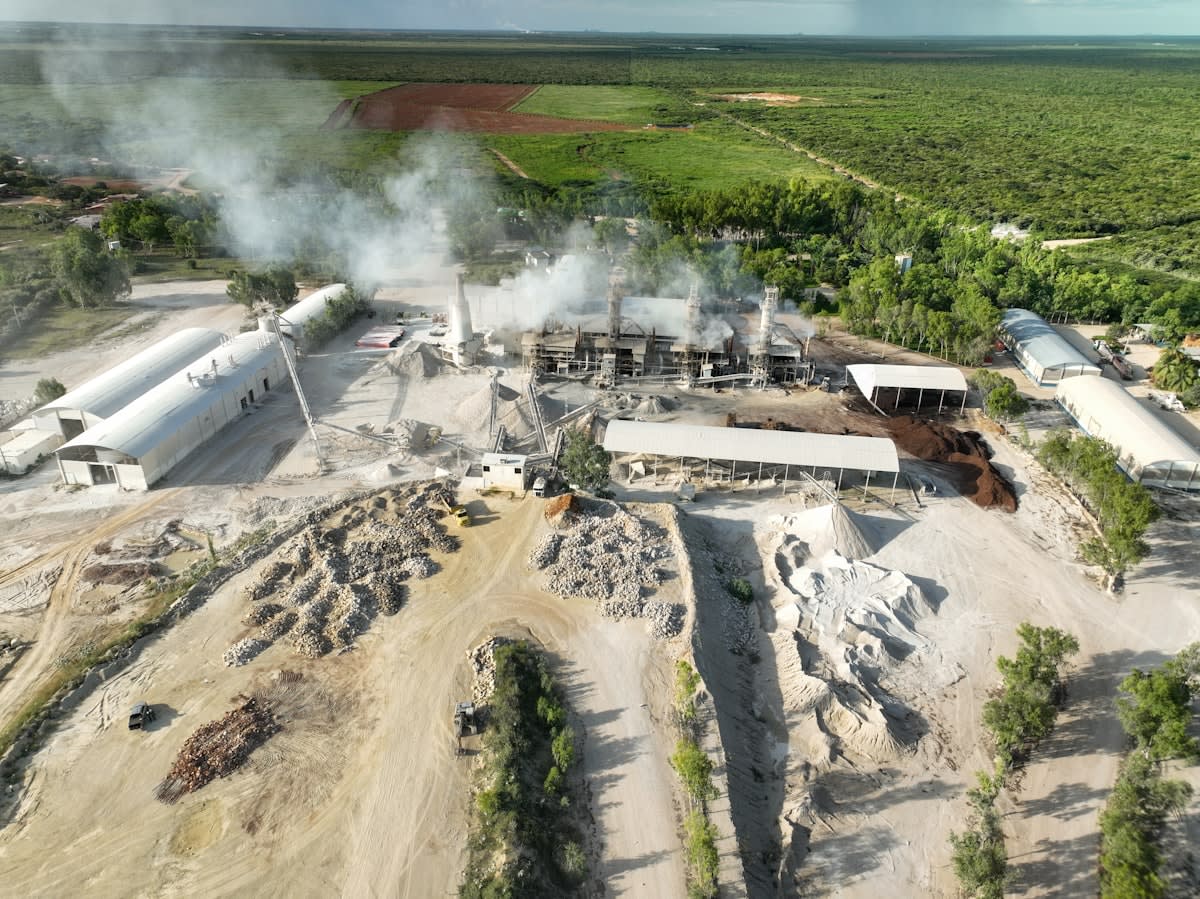
While the Middle East navigates this volatility, West Africa is positioning itself as the next indispensable node in the energy transition.
The Kaduna Discovery and the New Resource Map
Nigeria is attempting to break its dependence on oil by pivoting toward the 'world-class' mineral province identified in Kaduna state. This region contains high-grade deposits of platinum group metals, gold, nickel, copper, lithium, and rare earth elements. For Nigeria, this is not just about mining; it is about becoming a key supplier for the global energy transition and diversifying an economy historically tethered to a single commodity.
Sicona Production Capacity Target
Executive Insight
+18.4%
YTD Growth
The convergence of these trends—the US Army's industrialization, Australia's midstream aggression, and Nigeria's geological windfall—reveals a world where diplomatic goodwill is being replaced by material leverage. We are entering an era of 'hard' diplomacy, where the ability to process a mineral or control a financial clearing house outweighs the value of a formal treaty.