
AI Executive Summary
"This article analyzes the strategic migration of $29 trillion in sovereign assets from US debt to tangible hard assets and autonomous AI infrastructure. It highlights a global shift toward 'geological sovereignty' and computational independence to mitigate systemic financial risk."
The Mirage of Paper Stability
The dollar is not dying. It is simply becoming an inconvenient habit. For decades, the global financial architecture rested on the assumption that US Treasuries were the ultimate safe haven. That assumption is currently being dismantled by the very entities that maintain it. Sovereign wealth funds and central banks managing $29 trillion in assets are now recalibrating their portfolios, moving away from the perceived fragility of US debt and toward the tangible certainty of energy assets.
The numbers are damning. According to an Invesco survey, 61% of central banks now believe US debt levels are actively harming the dollar's long-term role as a reserve asset. This is a staggering jump from just 20% in 2024. When the world's largest custodians of capital begin to view the reserve currency as a liability, the systemic risk is no longer theoretical. It is operational.
| Metric | 2022/2024 Baseline | 2026 Current State |
|---|---|---|
| Central Banks citing US debt as a risk to USD | 20% (2024) | 61% |
| Expectation of weaker USD reserve status (5yr) | 12% (2022) | 29% |
| Total Assets under Sovereign Reassessment | N/A | $29 Trillion |
Is there a viable alternative? Not yet. The lack of a credible successor makes the exit incremental rather than abrupt, but the trajectory is clear. The goal is no longer growth for growth's sake; it is the preservation of purchasing power through physicality.
Geology as the New Diplomacy
If the dollar is the old world's currency, critical minerals are the new world's collateral. We are seeing a frantic scramble for geological sovereignty. In Nigeria, the government recently unveiled a polymetallic mineral province in Kaduna state. This is not just a local win; it is a strategic play. The discovery of high-grade platinum group metals, gold, nickel, copper, lithium, and rare earth elements positions Africa's largest oil producer as a critical node in the global energy transition.
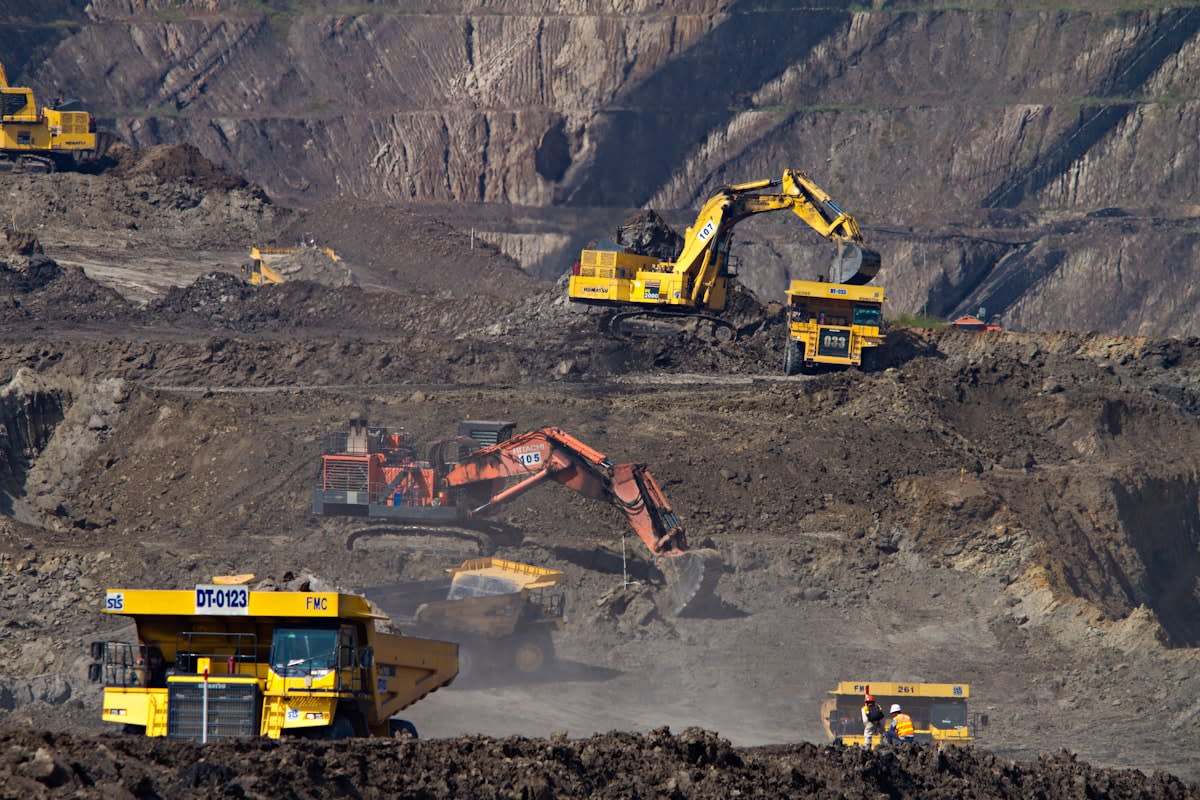
This hunger for tangible assets extends to the fringes of the map. Arkadian Strategic Metals is pushing forward with the Motzfeldt Critical Metals Project in Greenland, with environmental baseline studies slated for August 2026. Simultaneously, the Clogau-St David's Gold Mine in Wales is seeing a resumption of processing. From the Arctic to the UK, the strategy is identical: secure the raw materials that cannot be printed into existence.
The Hard Asset Paradox
The paradox of the current era is that as we move toward a digital-first economy, the most valuable assets are becoming increasingly analog. Lithium, nickel, and gold are the only hedges that don't require a functioning central bank to hold value.
The Sovereignty of Intelligence
Computational power is the second pillar of this new sovereignty. For too long, nations have outsourced their intelligence to closed-box proprietary models. This creates a dangerous dependency. The recent alliance between Palantir and NVIDIA to deploy Nemotron open models in sovereign environments is a direct response to this vulnerability.
"Combining Palantir infrastructure with NVIDIA's AI and Nemotron models will allow the U.S. government to unleash the full power of LLMs while removing the underlying security risks and rational concerns around proprietary insights migrating into the weights of closed models."— Alex Karp, CEO of Palantir Technologies
The Financial Times notes that sovereign funds are increasingly moving from public markets to private ones to ride the AI wave. They aren't buying stocks in AI companies; they are investing in the infrastructure and the private equity that controls the hardware. They are building fortresses of data and compute that are insulated from the volatility of public exchanges.

The Retail Echo
While the $29 trillion whales move first, the retail current is beginning to follow. The rise of self-directed IRAs, as highlighted by American IRA's focus on alternative assets, suggests a growing skepticism toward traditional retirement portfolios. Investors are no longer content with a 60/40 split of stocks and bonds. They are looking at real estate, private lending, and private placements.
This is the democratization of the sovereign strategy. Whether it is a central bank in Tokyo or a business owner in South Dakota, the impulse is the same: move the capital from the ledger to the land, and from the public market to the private stronghold.
The result is a world where power is measured not by the size of a currency reserve, but by the depth of a lithium vein and the autonomy of a neural network. The era of paper trust is ending. The era of tangible control has arrived.