
AI Executive Summary
"This article analyzes the strategic pivot of sovereign wealth funds from reserve currencies to physical energy infrastructure as a hedge against systemic instability. It highlights the critical role of next-gen storage technologies and AI's power demands in redefining global wealth anchors."
The Hard Asset Hegemony
Stop listening to the narrative about saving the planet. The real story is about survival. Sovereign wealth funds and central banks managing a staggering $29 trillion in assets are quietly rewriting their playbooks. According to a recent Invesco survey, the move isn't driven by environmental altruism, but by a deepening distrust of the US dollar and a desperate need for energy security.
The numbers tell a grim story for the greenback. In 2024, only 20% of polled central banks viewed U.S. debt levels as a threat to the dollar's long-term position. By June 2026, that number has rocketed to 61%. When the world's largest treasuries stop trusting the reserve currency, they don't just sit on cash. They buy things that actually work. They buy the grid.
| Metric | 2022 Status | 2024 Status | 2026 Status |
|---|---|---|---|
| Dollar Reserve Pessimism (%) | 12% | 20% | 29% |
| Central Bank Debt Concerns (%) | Unknown | 20% | 61% |
| SWF Infrastructure Allocation (%) | Below 9% | Increasing | 9%+ |
| Energy Security Priority | Secondary | Growing | 80% (Top Priority) |
This isn't a sudden panic; it is a calculated migration toward resilience. Roughly 80% of these investors now view energy security and transition infrastructure as the most credible ways to protect their portfolios. They are trading paper promises for copper, lithium, and silicon.
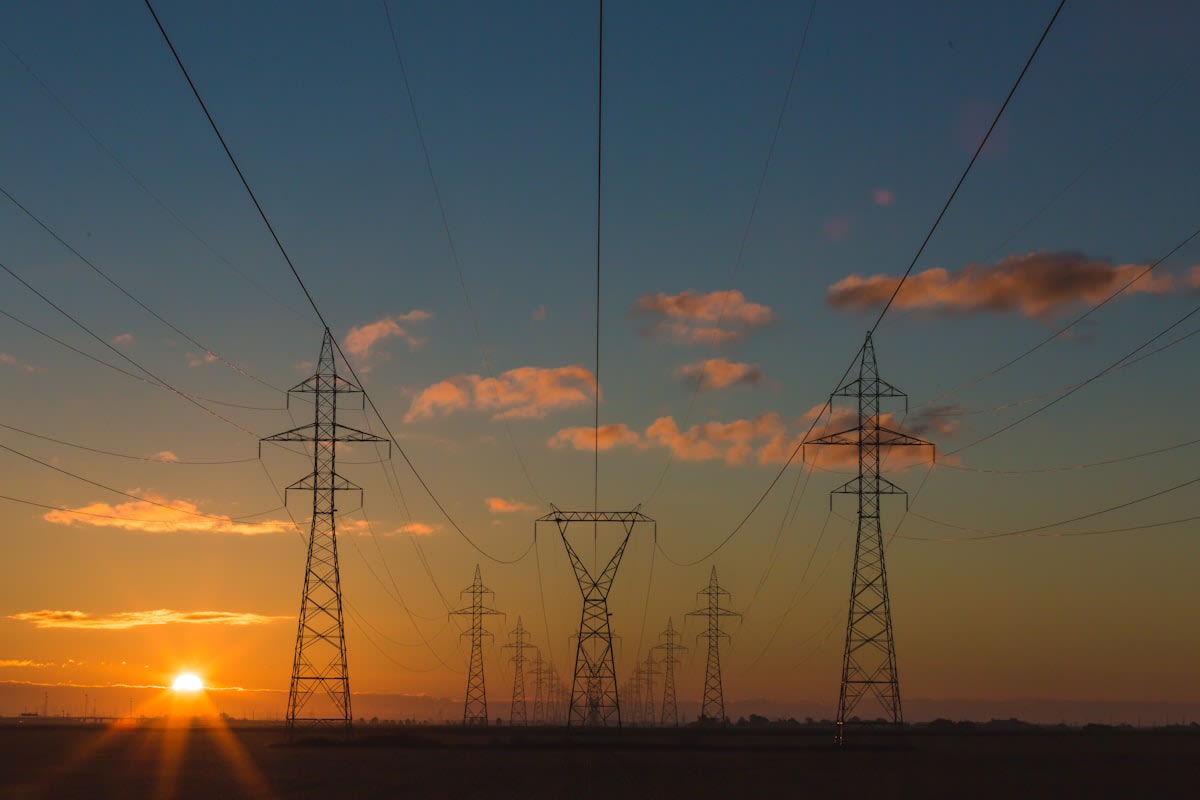
This redistribution of capital is manifesting in a frantic race to solve the storage problem. If you can't store the power, the asset is useless.
Beyond Lithium: The Quest for Storage Sovereignty
The industry is exhausted by the volatility of lithium. Enter the sodium-ion and silicon-carbon alternatives. In the US, the American Battery Leadership Coalition is pushing sodium-ion technology to decouple energy storage from fragile global supply chains. Sodium is abundant. It is cheap. More importantly, it allows for long-duration storage—defined by the US Department of Energy as 10 hours or more.
"Sodium offers the potential for long-duration energy storage at the grid-scale level... which the US Department of Energy defines as at least 10 hours, ideally much longer."— CleanTechnica Report
Look at Australia. Sicona Battery Technologies just secured a $45 million grant from the Australian Renewable Energy Agency (ARENA) to build a commercial-scale silicon-carbon anode facility in Wollongong. This isn't just about electric vehicles. Sicona is targeting AI data centers, robotics, and defense. They are building a vertical stack of performance that doesn't rely on the whims of a single commodity market.
Meanwhile, in India, Lineage Power is securing its flank with a 3 GWh LFP battery supply agreement with China's Rongjie Energy Tech. The goal here isn't innovation—it's stability. By locking in gigawatt-hours of capacity, they are ensuring that their energy storage systems (BESS) can actually be deployed without waiting for a shipping container that may never arrive.

But while the billionaires and central banks buy the grid, the regulators are still fighting over the small stuff.
The Friction of the Last Mile
There is a jarring disconnect between $29 trillion in sovereign energy bets and the bureaucratic reality on the ground. In the US, the Consumer Product Safety Commission (CPSC) is proposing new mandatory safety requirements for e-bikes and hoverboards. While this is necessary to prevent lithium-ion fires in living rooms, it highlights a fragmented approach: we are building continental-scale energy reserves while struggling to regulate a scooter.
The AI Connection
The real catalyst for this energy hunger isn't just the 'green' transition—it's the AI explosion. Capital is flowing toward infrastructure that can sustain the massive power demands of data centers, making energy the ultimate bottleneck for the digital economy.
Even the oil markets are reflecting this new reality. WTI crude recently dipped below $70 for the first time since March as the market stripped away the 'war premium' from Hormuz flows. But don't mistake this for a crash. The market is simply normalizing. The focus has moved from 'Will the oil flow?' to 'How do we integrate this into a diversified energy portfolio?'
The world is not ending, and the dollar is not disappearing overnight. But the era of trusting a single currency as the sole anchor of wealth is over. The new anchor is the ability to generate and store a kilowatt of power, regardless of who is in the White House or what the Fed decides next Tuesday.