
AI Executive Summary
"This article analyzes the systemic transition from cash-based liquidity to 'computational collateral,' highlighting how AI infrastructure and energy grids are becoming the new primary units of value. It provides strategic insights into the gap between tokenized asset migration and actual utility in the digital economy."
For decades, the global financial system operated on a simple, if flawed, premise: capital is cash, or the promise of cash. We measured power by the size of a balance sheet or the creditworthiness of a sovereign state. But a quiet, systemic mutation is occurring. We are moving into an era where the primary unit of value is no longer the currency itself, but the infrastructure that processes data and the energy that sustains it. This is the data-collateral shift. It is not a mere technological upgrade; it is a fundamental rewriting of what constitutes a store of value in a world dominated by artificial intelligence.
Consider the current state of institutional finance. We see a strange paradox where Wall Street has successfully migrated $31 billion of alternative and fixed-income assets onto blockchain rails, yet the vast majority of this capital remains static. According to research from DWF Labs, only 10 percent of these tokenized real-world assets—roughly $3 billion—is actually active within decentralized finance (DeFi) protocols. Why is this capital sitting idle? Because the industry has mastered the ledger migration but failed to build the productivity layer. The assets are on-chain, but they lack the algorithmic utility to be used as dynamic collateral.
The Infrastructure Pivot: From Mining to Computing
The shift is most visible where energy meets computation. For years, companies like CleanSpark (CLSK) built their empires on the back of Bitcoin mining, treating electricity as a raw material for digital gold. Now, the strategy is pivoting. CleanSpark is reworking its business around AI and hyperscale data centers, repurposing existing power capacity to serve high-performance computing (HPC) customers. This is a calculated move away from the volatility of a single asset toward the systemic demand of the AI revolution. It signals a broader realization: the real value isn't in the token being mined, but in the capacity to process the data that drives the global economy.
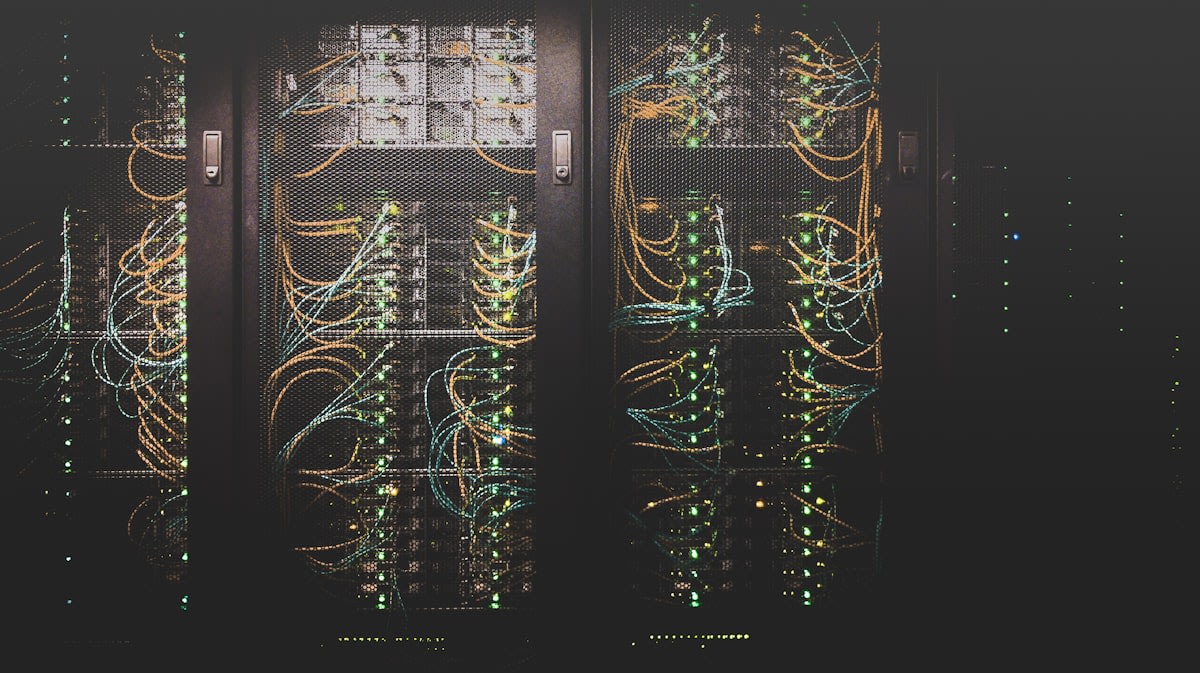
This evolution is not limited to the West. In China, GCL is taking this integration a step further by planning to integrate AI data centers directly with the electricity grid. By introducing virtual power plant (VPP) solutions during the construction phase, GCL is treating the data center not as a consumer of energy, but as a functional component of the grid itself. This strategy is expanding into beachhead markets across Australia, Southeast Asia, and Europe. When a data center can balance a grid and provide AI compute simultaneously, it ceases to be a cost center and becomes a strategic asset—a form of physical collateral that underpins both energy security and digital intelligence.
Strategic Insight
The transition from 'Bitcoin mining' to 'AI infrastructure' is more than a business pivot; it is a shift from speculative asset production to the provision of essential systemic utility.
Is this the new blueprint for sovereign wealth? If the ability to generate and manage compute becomes the primary driver of GDP, then the traditional metrics of economic health—like the job numbers provided by the U.S. Bureau of Labor Statistics—begin to look obsolete. We already see a growing distrust in these legacy metrics. Wall Street analysts have recently questioned the validity of U.S. government job reports, noting a glaring contradiction: the leisure and hospitality sector reportedly lost 61,000 jobs in June, despite the U.S. hosting the World Cup, the largest sporting event on earth. When the official data diverges so sharply from physical reality, the market begins searching for more reliable, real-time indicators of value.
The Tokenization Gap and the Productivity Problem
The mismatch between tokenized capital and its actual utility is the most significant bottleneck in modern finance. We have moved commodities past $4.8 billion and equities past $1 billion on-chain, yet these assets remain largely zero-yield. They are digital certificates of ownership, but they are not yet 'money' in the functional sense. The real opportunity lies in the infrastructure layer capable of layering yield onto these assets. Until then, tokenization is merely a more efficient way to hold a static asset.
| Asset Category | Tokenized Volume | DeFi Activity Rate | Primary Status |
|---|---|---|---|
| Total RWA | $31 Billion | 10% | Mostly Static |
| Commodities | >$4.8 Billion | Low | Ledger Migration |
| Equities | >$1 Billion | Low | Ledger Migration |
| Active DeFi RWA | $3 Billion | 100% | Productive |
This static capital represents a massive inefficiency. In the old world, the ultra-wealthy managed this through securities-backed loans—borrowing against stock to fund a lifestyle without triggering capital gains tax. This is the original 'collateral shift': transforming an appreciating asset into liquid cash without relinquishing ownership. The goal of the new data-collateral economy is to democratize this mechanism. Imagine a world where your digital footprint, your contribution to a compute grid, or your tokenized share of a vegetable export hub in Sylhet, Bangladesh, can be used as instant, algorithmic collateral for a loan.
Algorithmic Governance: The Case of Bangladesh
This shift toward data-driven value is already manifesting in state-level governance. In Bangladesh, the government is introducing an AI-based market monitoring system for agriculture and trade. This system is designed to analyze production data, weather forecasts, and international market trends to facilitate timely policy decisions. By focusing on Sylhet as a vegetable export hub and implementing traceability systems, the state is essentially converting agricultural output into a data-verified asset. This reduces risk for exporters and creates a transparent trail of value that can be audited in real-time.

When a government moves from reacting to market forces to predicting them via AI, the nature of economic stability changes. The 'collateral' here is the data itself—the traceability of the produce and the accuracy of the forecast. This reduces the reliance on traditional credit guarantees and replaces them with algorithmic certainty. It is a micro-scale version of the same shift happening with GCL's energy grids: the integration of intelligence directly into the production layer.
But we must ask: who controls the oracle? In the U.S., the BLS provides the 'truth' on employment, and when that truth feels implausible, the market reacts with volatility. In a data-collateral economy, the 'oracle' is the AI system monitoring the grid or the crop. The systemic risk shifts from political manipulation of numbers to the technical integrity of the data pipeline. The resilience of the new economy depends on the transparency of these algorithmic monitors.
The New Global Currency: Compute and Connectivity
We are witnessing the convergence of three distinct trends: the tokenization of real-world assets, the integration of AI into energy infrastructure, and the move toward algorithmic state governance. Together, these form a new financial architecture. In this system, the most valuable assets are those that provide the highest utility to the AI ecosystem. A data center that stabilizes a grid is more valuable than a pile of gold; a tokenized asset that can be used as DeFi collateral is more valuable than a static stock certificate.
The contrarian view is that the 'currency' of the future isn't a coin or a token, but access to compute. If you own the power, the chips, and the data-verified assets, you hold the keys to the new global economy. The traditional debt cycle—where money is borrowed and spent—is being replaced by a utility cycle, where compute is allocated and optimized. The 'digital footprint' is no longer just a trail of consumer behavior; it is the ledger of your contribution to this computational engine.
As we move forward, the divide will not be between the rich and the poor in terms of cash, but between those who possess 'productive' digital assets and those who possess 'static' ones. The $31 billion in idle tokenized capital is a warning. Migration is not enough. To survive the data-collateral shift, assets must be made active, integrated into the grid, and verified by AI. The era of the passive ledger is over; the era of the active infrastructure has begun.