
AI Executive Summary
"This article analyzes the systemic shift from passive investment to state-directed industrialism, highlighting how governments secure strategic optionality. It examines the role of sovereign wealth funds and government initiatives in redefining the physical economy through targeted ownership and supply chain control."
The era of the passive investor is dead. For decades, the global narrative praised the efficiency of the invisible hand, suggesting that capital would flow naturally toward the highest return. That illusion has evaporated. In its place, we see the emergence of a calculated, state-driven industrialism where governments and sovereign wealth funds no longer just regulate markets—they build them.
This is not a minor adjustment. It is a systemic reconfiguration. Whether it is the United States leveraging the Small Business Administration to secure space hardware or Saudi Arabia hunting for critical minerals in Africa, the goal is the same: strategic optionality. The objective is no longer just profit, but the guaranteed survival of the industrial base.
The Lunar Command Economy
On June 29, 2026, NASA and the U.S. Small Business Administration (SBA) launched the SBIC-NASA Initiative. On the surface, it looks like a funding program. In reality, it is a blueprint for a government-directed supply chain. By using the new NASA Office of Strategic Capital to identify technology priorities and connect them to funding, the U.S. government is effectively picking the winners of the space economy to ensure a sustained presence on the Moon and Mars.
"Trump's second term in the White House has seen dramatic economic interventions and new forms of state ownership."— Ilias Alami & Thea Riofrancos
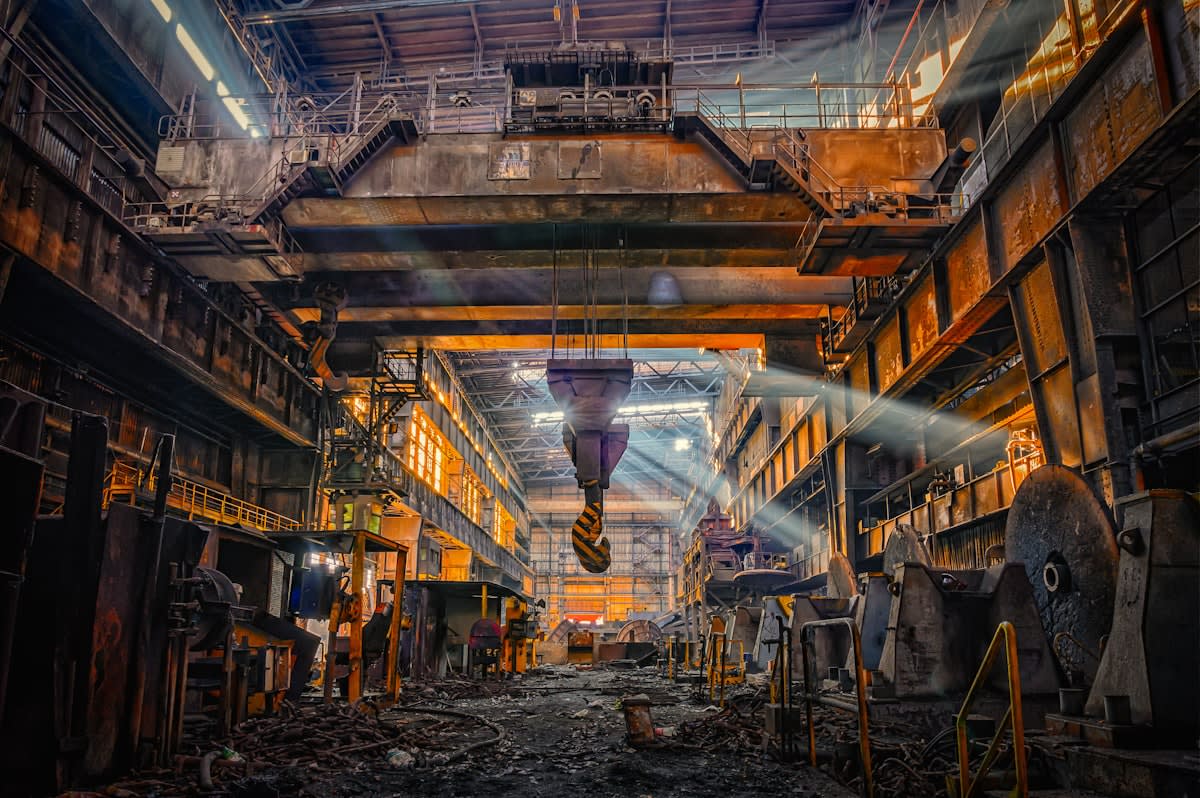
This 'Trumpian State Capitalism' manifests as a preference for direct intervention over market optimism. We see this logic extending to the ground level in the American Midwest. In Dayton, Ohio, the acquisition of a 11.5-acre industrial site by the IRG and PREP Funds team to transform a 160,000-square-foot vintage facility into a corporate hub reflects a broader desire to reclaim abandoned industrial capacity for modern strategic use.
While the U.S. secures its domestic footprint, the battle for resources has gone global, turning the map into a chessboard of sovereign interests.
Resource Warfare and Strategic Optionality
The Gulf states have abandoned the role of the silent financier. Saudi Arabia is aggressively eyeing African critical minerals to feed its electric vehicle and clean energy ambitions. This is not mere diversification; it is a hedge against the volatility of the US-China competition. Gulf sovereign wealth funds are operating with a mandate to maximize returns while maintaining the ability to act independently of Western or Eastern hegemony.
| Intervention Type | Primary Driver | Example Entity | Strategic Target |
|---|---|---|---|
| Direct Capital Injection | Supply Chain Security | NASA/SBA | Lunar/Mars Components |
| Sovereign Acquisition | Energy Transition | Saudi Arabia | African Critical Minerals |
| Minority Equity Stake | R&D Acceleration | Tessenderlo Group | Agro-sciences (FMC Corp) |
| Industrial Redevelopment | Domestic Capacity | IRG/PREP Funds | Ohio Industrial Hubs |
Even the private sector is adopting this state-like precision. On June 30, 2026, FMC Corporation agreed to a $400 million minority equity investment from the Belgian-based Tessenderlo Group. At $13.30 per share, this was not a hostile takeover but a strategic cornerstone investment. It allows FMC to remain independent while gaining the capital necessary to accelerate its R&D pipeline.
Why does this matter to the professional in Bangalore or the investor in Tokyo? Because the cost of capital is no longer determined solely by interest rates, but by strategic alignment. If your business provides a critical component for a state-mandated goal, your valuation is no longer tied to a spreadsheet—it is tied to national security.
The New Logic
The traditional VC model of 'growth at all costs' is being superseded by 'resilience at any cost'. The state is now the primary architect of industrial priority.
The Realist's Path Forward
We must stop asking when the market will return to 'normal'. This is the new normal. The fusion of sovereign wealth, state mandates, and strategic minority stakes creates a landscape where agility is secondary to alignment. The winners will be those who can position their operational capabilities within these state-led corridors.
Optimism in this environment requires realism. It requires recognizing that the state has returned to the center of the economic engine. The opportunity lies in the gaps between these giants—the small businesses that NASA is now actively funding, and the regional hubs like Dayton that are being rebuilt for a new era of corporate utility.