
AI Executive Summary
"This article analyzes the critical misalignment between modern renewable energy generation and legacy utility infrastructure. It provides a strategic comparison of regional approaches—from the UK's industrial struggle to China's AI-integrated VPPs—highlighting the shift toward energy orchestration."
The Industrial Friction Point
The narrative of the green energy transition often focuses on the plummeting cost of solar panels and wind turbines. This is a dangerous simplification. The real battleground is not the generation of electrons, but the movement and pricing of them. In the United Kingdom, this friction has reached a breaking point. Manufacturers are currently warning of a potential 85 billion pound hit to the economy if industrial electricity prices are not reduced, according to a report by Make UK and Ecotricity. This is not a mere request for subsidies; it is a signal that the underlying utility architecture is structurally incapable of supporting an electrified industrial base.
The failure is systemic. Despite the growth of renewables, the UK electricity system remains tethered to a legacy pricing model where gas often sets the wholesale price of power. This creates a paradox where a country with increasing wind capacity still sees its industrial costs dictated by volatile fossil fuel markets. When 90 percent of manufacturers report that energy bills have increased at least moderately since 2022, the issue is no longer about market fluctuations. It is about a structural misalignment between how energy is produced and how it is billed.
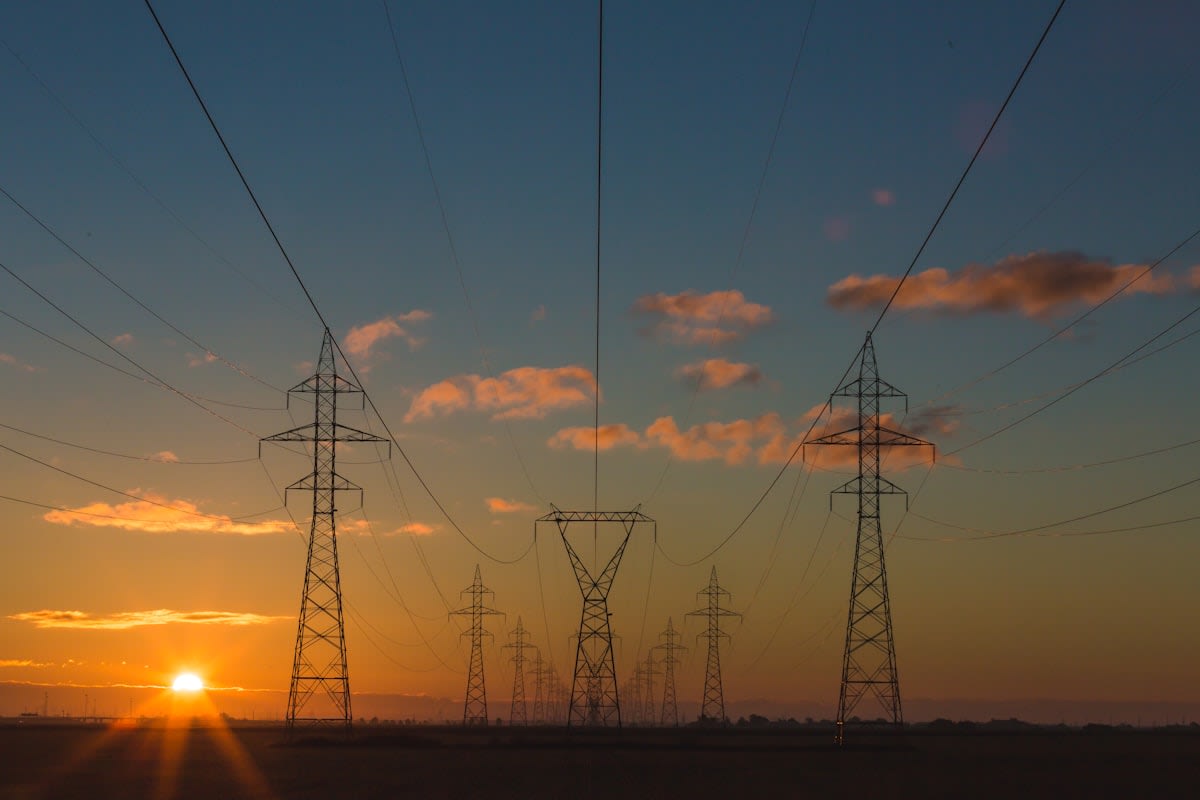
Beyond pricing, the physical constraints of the grid are becoming the primary bottleneck for decarbonization. Ageing infrastructure and slow grid connections are actively stalling the transition. For a manufacturer, the ability to switch to electric furnaces or heat pumps is irrelevant if the local substation cannot handle the load or if the wait time for a connection extends into years. These are the hard utility constraints that no amount of venture capital in 'cleantech' can solve overnight.
The Policy Tax
The UK's industrial energy challenge is compounded by inefficient post-Brexit energy trading arrangements and policy levies loaded directly onto electricity bills, further eroding the competitiveness of domestic manufacturing.
This situation forces a critical question: is the transition failing, or is the utility model simply obsolete? The current model treats the grid as a passive pipe—a one-way street from a large power plant to a passive consumer. But a green grid requires an active, bidirectional ecosystem. The UK's struggle suggests that attempting to overlay 21st-century renewables onto a 20th-century utility framework creates a friction that threatens industrial viability.
Decentralization as a Stability Mechanism
While the UK grapples with legacy constraints, other regions are experimenting with the grid as a flexible asset rather than a rigid pipe. In California, the integration of Vehicle-to-Grid (V2G) technology is transforming electric school buses from mere transport into mobile battery reserves. The Fremont Unified School District and the Oakland Unified School District are leading this shift. By utilizing bi-directional charging, these fleets can pump power back into the grid during peak demand, effectively acting as a decentralized shock absorber for the utility.
The scale of this potential is significant. Data from the World Resources Institute’s Electric School Bus Initiative indicates that just 230 electric school buses can provide approximately 8 megawatt-hours of power at any given time. In Oakland alone, a fleet of 74 buses is estimated to generate 2.1 gigawatt-hours of electricity annually. This converts a liability—the high cost of battery procurement—into a utility asset that stabilizes the grid and potentially lowers costs for all users.
"The transition requires shifting from a model of centralized generation to one of distributed resilience, where every connected device is a potential grid stabilizer."— Strategic Analysis of V2G Deployment
This shift represents a fundamental change in the 'hard utility' logic. Instead of building massive, expensive peaking plants that sit idle most of the year, the grid leverages existing distributed assets. However, the adoption of V2G is not just a technical challenge; it is a regulatory one. It requires utilities to rewrite their contracts to allow for bidirectional flow and to compensate asset owners for the stability they provide. This is the 'soft' infrastructure that must evolve alongside the 'hard' wires.
The contrast between the UK's industrial struggle and California's V2G experiments highlights a divergent path. One is fighting the ghost of the centralized gas-indexed model, while the other is prototyping a symbiotic relationship between transport and energy. The question for global industry is which model will scale faster.
The Integrated Model: China's VPP Strategy
China is pursuing a different, more integrated approach to the utility crisis. GCL is currently advancing a strategy that integrates AI data centers directly with the electricity grid. This is not merely about powering the data centers; it is about using them as hubs for Virtual Power Plants (VPPs). VPPs allow the grid to aggregate various distributed energy resources—solar, wind, and storage—and manage them as a single, controllable power plant.
This integration solves the intermittency problem that plagues renewable energy. By embedding VPP solutions directly into the construction of AI data centers, GCL creates a system where the high energy demand of AI is balanced by the intelligent management of clean energy assets. This model is now being exported to beachhead markets in Australia, Southeast Asia, and Europe, suggesting a strategic move to define the global standard for 'smart' utility infrastructure.
The financial markets are already pricing in this pivot. In Hong Kong, the IPO pipeline is heavily fueled by a strategic shift toward robotics and new energy. Analysts from KPMG note that while the market is digesting share lockup expiries, the long-term outlook remains bullish because of this pivot toward high-growth, energy-integrated sectors. The market recognizes that the winners of the next decade will not be those who simply produce green energy, but those who manage the utility interface.
This integrated approach treats energy as a data problem. When the grid is managed by AI and coordinated through VPPs, the 'hard utility' crisis of congestion and volatility is mitigated by software. This represents the final stage of the transition: moving from the era of the Utility Company to the era of the Energy Orchestrator.
Comparing Regional Utility Paradigms
To understand the systemic shift, we must compare how different regions are handling the friction between legacy systems and new energy demands. The UK represents the risk of inertia, where the failure to decouple from gas-indexed pricing threatens industrial survival. In contrast, the US and China are testing the boundaries of decentralization and integration.
| Region | Primary Utility Strategy | Key Bottleneck | Systemic Lever | Outcome/Risk |
|---|---|---|---|---|
| United Kingdom | Legacy Centralized | Gas-indexed pricing & ageing grids | Government price reform | Potential £85bn industrial hit |
| United States (CA) | Distributed Asset (V2G) | Regulatory bidirectionality | EV fleet integration | 8MWh stability from 230 buses |
| China | Integrated Orchestration (VPP) | Intermittency of renewables | AI Data Center integration | Exportable smart-grid standard |
The data suggests that the 'hard utility' crisis is essentially a lag in adaptation. The technology to stabilize the grid exists—whether it is V2G in school buses or VPPs in data centers—but the institutional framework for deploying these tools varies wildly. The UK's risk is that it remains a passive recipient of energy costs, while other regions become active managers of energy flows.
Ultimately, the green transition is not a project of installation, but a project of redesign. The friction currently felt by manufacturers in the UK is a symptom of a system trying to run new software on old hardware. The path forward requires a clinical dismantling of the gas-indexed pricing model and a rapid pivot toward the orchestrated, bidirectional grids being prototyped in the US and China. Without this shift, the transition will remain a series of isolated successes overshadowed by systemic fragility.