AI Executive Summary
"This article analyzes the strategic shift from resource acquisition to processing dominance in the green energy transition. It highlights the geopolitical leverage created by mineral refining bottlenecks and India's efforts to achieve industrial autonomy."
Digging a hole in the ground is a brute-force exercise. It requires immense capital, tedious permitting, and a staggering amount of diesel. But the real power in the transition to a low-carbon economy does not lie in the dirt itself. It lies in the laboratory and the industrial refinery. Most analysts mistakenly focus on where the lithium or cobalt is located, pointing to the salt flats of Bolivia or the mines of the DRC, while ignoring the chemical transformation that makes those minerals useful.
Raw spodumene or brine is useless to a gigafactory. To build a battery, a manufacturer needs battery-grade lithium carbonate or lithium hydroxide, materials with a purity level often exceeding 99.5%. The gap between a raw rock and a refined chemical is where value is created and where geopolitical leverage is exerted. If a nation owns the mine but lacks the refinery, it is merely a landlord collecting rent while the refinery owner dictates the price and the flow of the finished product.
Chemical Moats Create Geopolitical Leverage
Refining is an inherently toxic and energy-intensive process. It involves sulfuric acid leaching, high-heat furnaces, and the management of massive quantities of hazardous wastewater. For three decades, Western economies outsourced this environmental burden to avoid domestic regulatory friction and public outcry. China did the opposite, aggressively subsidizing the most polluting stages of the supply chain to ensure they became the world's primary processor. This was not an accident of geography, but a calculated industrial strategy to build a bottleneck.
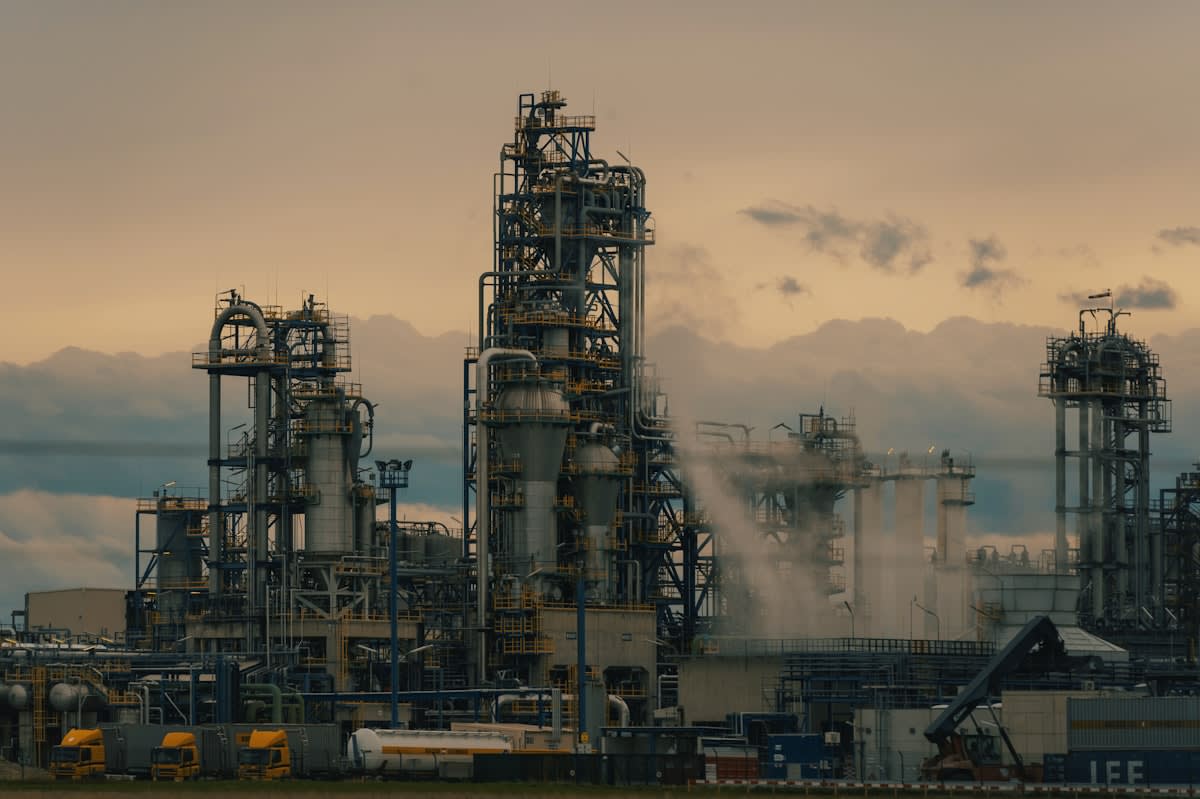
Why does this matter now? Because the world is suddenly desperate for the very materials that China spent thirty years learning how to refine. When a country attempts to start its own refining capacity today, it discovers that the intellectual property and the operational expertise are concentrated in a few coastal provinces in East Asia. You cannot simply buy a refinery; you have to build a workforce that understands the nuance of chemical purity at scale. This creates a barrier to entry that is far higher than the cost of buying a mine.
"The world is treating the energy transition as a resource grab, but it is actually a processing war. Whoever controls the purity of the molecule controls the speed of the transition."— Senior Energy Strategist, Global Markets
This reality transforms the traditional concept of resource security. In the 20th century, oil security meant protecting shipping lanes and maintaining alliances with producers. In the 21st century, mineral security means diversifying the refining stage. If 80% of the world's refined lithium and cobalt passes through a single jurisdiction, that jurisdiction possesses a kill-switch for the global automotive industry. The mine is the source, but the refinery is the valve.
| Mineral | Raw Ore Value (Relative) | Refined Material Value (Relative) | Processing Complexity | Refining Concentration |
|---|---|---|---|---|
| Lithium | Low | Very High | High | Extreme |
| Cobalt | Medium | High | Very High | Extreme |
| Rare Earths | Low | Extreme | Critical | Total Monopoly |
| Nickel | Medium | High | Moderate | High |
Beyond the logistics of chemistry, there is the issue of scale. Refining plants operate on thin margins but massive volumes. Once a dominant player achieves scale, they can drive down prices to make it economically unviable for new competitors to enter the market. This predatory pricing ensures that even if a new mine opens in Canada or Australia, the ore is still shipped to China because that is where the cheapest refining exists. It is a self-reinforcing loop of dominance.
The Indian Subcontinent and the Race for Autonomy
India finds itself in a precarious position, possessing a massive appetite for green energy but a limited domestic refining base. The Indian government has recognized that merely importing raw minerals is a strategic failure. Through initiatives like Khanij Bidesh India Ltd (KABIL), New Delhi is attempting to secure equity in foreign mines. However, the real battle is happening within the Production Linked Incentive (PLI) schemes, which aim to incentivize the domestic manufacture of advanced chemistry cells.
The challenge for India is the environmental trade-off. To build a domestic refining industry, the state must balance its aggressive climate goals with the localized pollution generated by mineral processing. Can a nation claim to be leading the green revolution while establishing sulfuric acid plants in its industrial corridors? This tension is the central conflict of the energy transition. The desire for a clean end-product often blinds policymakers to the dirty reality of the mid-stream process.

If India succeeds in developing its own refining capabilities, it will shift the balance of power in the Global South. By offering refining services to other mineral-rich nations in Africa or Southeast Asia, India could position itself as a neutral processing hub. This would break the binary choice between Western standards and Chinese speed, creating a third pole of industrial influence. But this requires a level of technical expertise and capital investment that takes decades, not years, to cultivate.
The Hidden Cost
The Great Green Paradox: The minerals required to eliminate carbon emissions from the atmosphere are processed using methods that often produce significant local toxic waste and carbon footprints. You cannot have a zero-emission vehicle without a high-emission refinery.
We are seeing a rush toward vertical integration. Car manufacturers are no longer content to buy batteries; they are signing deals directly with mining companies and, more importantly, investing in refining startups. They have realized that the battery cell is just a package; the actual value is the refined precursor material inside. The industry is moving toward a model where the brand that controls the chemistry controls the margin.
This vertical movement is a response to the fragility of the current system. A single policy change in Beijing or a trade dispute in the South China Sea could freeze the production of millions of electric vehicles globally. The reliance on a single refining hub is a systemic vulnerability that no amount of mining in the Americas or Australia can fix. Until the mid-stream is diversified, the energy transition remains hostage to a single point of failure.
Ultimately, the dominance of the green energy era will not be decided by who has the most lithium in the ground. It will be decided by who can process that lithium most efficiently and at the lowest cost. The transition is not a race to find resources, but a race to master the industrial chemistry of the 21st century. Those who ignore the refinery in favor of the mine are playing a game from the 19th century.