
AI Executive Summary
"This article provides a rigorous technical framework for upgrading irrigation infrastructure in water-stressed arid zones. It strategically addresses the intersection of hydraulic engineering, soil chemistry, and edge computing to ensure food security in Central Asia."
The systemic failure of the Amu Darya and Syr Darya basins is not merely a consequence of climate volatility; it is a legacy of design flaws. For decades, the region has relied on open-channel flood irrigation, a method where conveyance losses frequently exceed 40% before a single drop reaches the root zone. This brute-force approach to water management has resulted in catastrophic soil salinization and the near-total collapse of the Aral Sea ecosystem. To reverse this trajectory, the operational philosophy must shift from volume-based distribution to precision delivery, treating water as a high-value input rather than an infinite resource.
Precision irrigation in Central Asia is not a plug-and-play solution. It requires a fundamental restructuring of the relationship between the farm and the water source. The objective is the optimization of Water Use Efficiency (WUE), shifting the primary metric from hectares irrigated to kilograms of yield per cubic meter of water. This transition demands a technical stack that integrates real-time soil moisture data, automated solenoid valves, and crop-specific evapotranspiration (ET) models to eliminate the waste inherent in traditional furrow systems.
Technical Prerequisites for Deployment
Before deploying a single emitter, a practitioner must establish a comprehensive baseline of the site's pedological and topographic characteristics. In regions like Karakalpakstan, high soil salinity is the primary antagonist; salts can clog emitters and fundamentally alter the hydraulic conductivity of the soil. Without a detailed soil map, the placement of sensors and the calculation of leaching fractions become guesswork, which often leads to the accumulation of salts at the perimeter of the wetting bulb, eventually choking the root system.
- High-resolution topographic mapping (GIS) to determine pressure compensation requirements.
- Comprehensive water quality analysis to identify concentrations of calcium and magnesium that cause scaling.
- Pedological profiling to determine field capacity and permanent wilting point for different soil horizons.
- Stable energy infrastructure or integrated solar-PV arrays to power pumping stations and telemetry.
- Secure land tenure or water rights agreements to justify the high CAPEX of precision hardware.
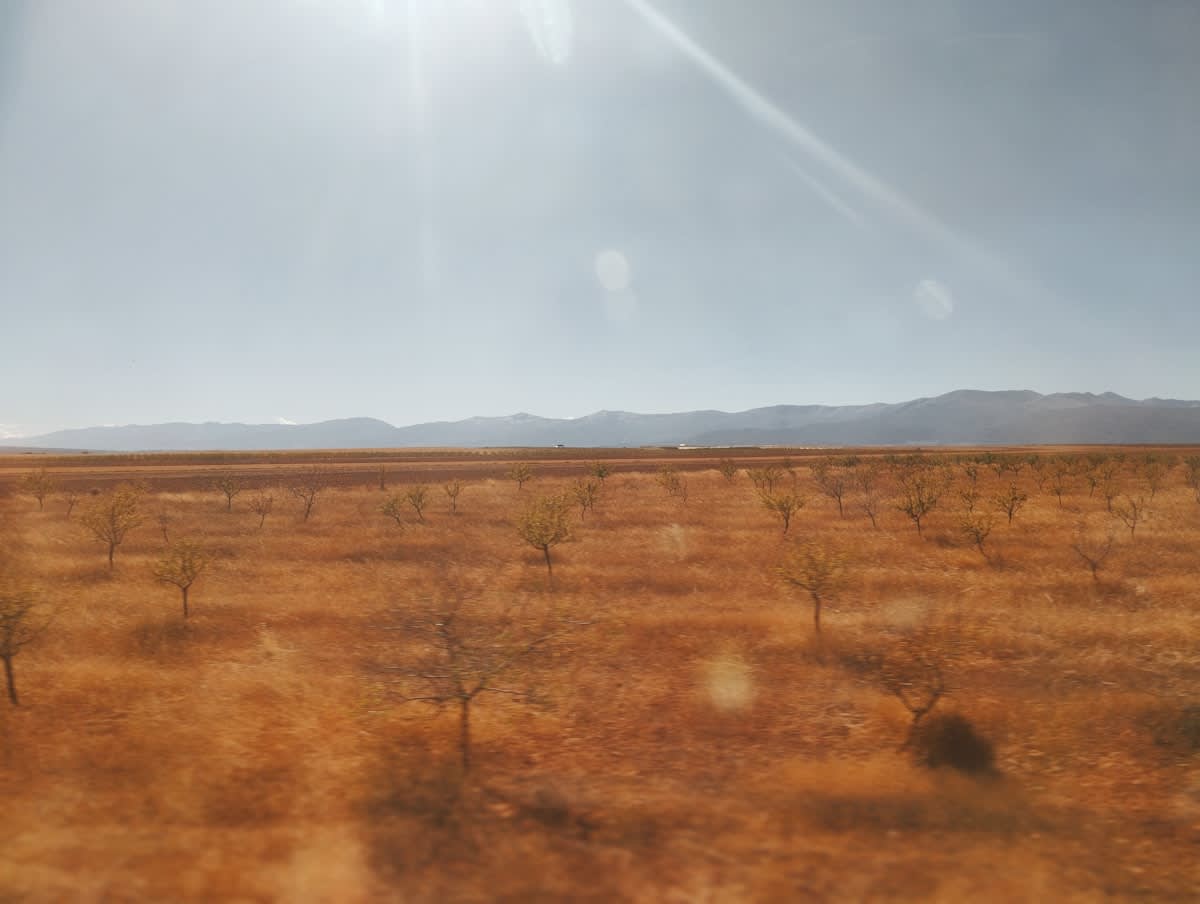
The energy-water nexus in Central Asia is particularly fraught. Precision systems, unlike gravity-fed furrows, require pressurized water, which necessitates a reliable power source. In rural Tajikistan or Uzbekistan, where grid stability is intermittent, the failure of a pump for even six hours during a peak heat event can lead to permanent crop wilting. Consequently, the prerequisite phase must include a power audit to determine if the system requires redundant battery storage or direct-drive solar pumps.
Once the environmental baseline is established, the focus shifts to the physical and digital architecture of the delivery system.
The Implementation Protocol
- Hydraulic Audit and Zoning: Divide the field into hydro-zones based on soil texture and crop type. Calculate the Total Dynamic Head (TDH) to ensure pumps can maintain the required pressure across the furthest emitters, utilizing pressure-compensating (PC) drippers to eliminate flow variance.
- Sensor Array Deployment: Install Time Domain Reflectometry (TDR) sensors at multiple depths (e.g., 20cm, 40cm, and 60cm) to monitor the wetting front. These sensors must be placed in representative 'sentinel' zones that mirror the average soil conditions of each hydro-zone.
- Infrastructure Retrofitting: Replace open ditches with closed-pipe conveyance. Install primary filtration systems—specifically disc filters and sand media filters—to remove the high sediment loads typical of Central Asian canal water, preventing emitter clogging.
- Control Logic Integration: Deploy a Programmable Logic Controller (PLC) or a cloud-based irrigation controller. Program the system to trigger irrigation based on a combination of soil moisture thresholds and real-time ET data from an on-site weather station.
- Calibration and Leaching Cycles: Establish a baseline for the leaching fraction—the extra water applied to flush salts below the root zone. This is critical in arid regions to prevent the 'salinity trap' associated with low-volume drip irrigation.
The integration of TDR sensors allows the operator to move from scheduled irrigation to demand-based irrigation. In the extreme heat of the Fergana Valley, the evaporative demand can spike unpredictably. By monitoring the volumetric water content in real-time, the system can apply small, frequent doses of water that maintain the soil at an optimal tension, preventing the stress cycles that typically reduce yield in flood-irrigated plots.
Efficiency Delta
The transition to precision irrigation can reduce water consumption by 30% to 60% while simultaneously increasing crop yields by 20% through the reduction of anaerobic stress in the root zone.
| Metric | Flood Irrigation | Standard Drip | Precision Sensor-Driven |
|---|---|---|---|
| Conveyance Loss | 40-60% | 10-15% | 2-5% |
| Water Use Efficiency | Low | Medium | High |
| Salinity Risk | High (Waterlogging) | Medium (Accumulation) | Low (Managed Leaching) |
| Labor Requirement | High (Manual) | Medium (Technical) | Low (Automated) |
Technical superiority is irrelevant if the system fails under the pressure of local operational realities. The most sophisticated PLC is useless if the filtration system is neglected or if the sensors are misplaced during tilling. The human element—the transition from a 'water-manager' to a 'system-operator'—is the most frequent point of failure in these deployments.
Common Pitfalls and Systemic Failures
The most dangerous pitfall is the Salinity Trap. In traditional flood irrigation, the massive volume of water naturally pushes salts deep into the subsoil. Drip irrigation, by contrast, applies water only to a small bulb. If the operator does not periodically apply a 'leaching fraction'—a heavy application of water to flush the salts—the salts will accumulate at the edge of the wetting zone. Eventually, this saline crust migrates into the root zone, leading to sudden and total crop failure.
Another frequent error is the underestimation of biological clogging. The water sources in Central Asia are often rich in organic matter and minerals. Without a rigorous filtration protocol and periodic acid injection to dissolve mineral scales, emitters will fail unevenly. This creates 'dry spots' in the field, which are often undetected until the crop shows visible signs of stress, by which time the yield loss is already locked in.
"Precision irrigation is not about saving water; it is about managing the soil-water-plant interface with surgical accuracy. Any approach that ignores the chemistry of the soil is merely delaying the inevitable collapse of the field."— Lead Hydraulic Engineer, Arid-Zone Research Initiative
Finally, there is the risk of 'technological over-reach.' Deploying an AI-driven, fully autonomous system in a region with zero local technical support for the hardware is a recipe for disaster. The most resilient systems are those that utilize high-tech sensing but maintain manual overrides and use standardized parts that can be serviced by local technicians. The goal is a robust, maintainable system, not a fragile showcase of cutting-edge engineering.