AI Executive Summary
"This article bridges the gap between industrial circularity and domestic living by applying systemic resource loop models to the household. It provides a rigorous framework for transitioning from waste management to resource recovery, emphasizing the strategic importance of mono-materials and regional recovery networks."
Why do we treat our homes as the final destination for products rather than hubs for resource recovery? For decades, the domestic standard has been a linear trajectory: buy, use, discard. This 'take-make-waste' philosophy is a design flaw. To build a circular home, you must stop thinking about 'waste management' and start thinking about 'resource loops.' This shift isn't about feeling good; it's about engineering a system where every output becomes a feedstock for another process. When we look at global industrial shifts—like Thailand's Bio-Circular-Green (BCG) economic model aimed at net-zero by 2050—we see the blueprint for what the modern household should look like: a closed system that balances growth with sustainability.
Prerequisites for Circularity
Before implementing physical loops, you need a mental shift regarding value. Circularity often demands a trade-off between immediate cost and long-term resilience. As seen in the apparel industry, where small brands prioritize recycled nylon and domestic manufacturing over higher margins, the circular home requires an acceptance of slower sourcing and potentially higher upfront costs for quality. You cannot build a loop using disposable materials. The goal is to move away from the cheapest possible option toward the most durable and recoverable one.
- A comprehensive audit of current household waste streams (organics, plastics, textiles, e-waste).
- Dedicated sorting infrastructure to prevent cross-contamination.
- A commitment to 'slow procurement'—prioritizing longevity over price.
- Access to local recovery networks, whether municipal FOGO bins or community composting hubs.
Once these foundations are in place, the transition happens in phases. You cannot flip a switch to become zero-waste overnight; you must build the loops one material stream at a time. This systematic approach ensures that the system doesn't collapse under the weight of its own complexity.
Step 1: Establishing the Sorting Protocol
Sorting is the most critical point of failure in any circular system. In Indonesia, waste-to-energy (WtE) projects led by companies like Denera have highlighted a fundamental truth: advanced processing technology is useless without a culture of sorting at the household level. If your materials are mixed, they are waste; if they are sorted, they are resources. The challenge often lies in the characteristics of the waste itself, particularly organic matter with high moisture content, which can contaminate dry recyclables and render them useless for recovery.
The Contamination Risk
Avoid the 'wish-cycling' trap. Putting a non-recyclable plastic in a recycling bin doesn't help the planet; it contaminates the entire batch, turning a potential resource into landfill. If you aren't sure, keep it out of the loop until you verify the local recovery path.
To implement this, create a multi-stage sorting station. Separate your 'clean' dry recyclables from 'wet' organics. This mirrors the industrial approach used by PETValue and Republic Cement in the Philippines, where PET bottles are separated from caps and labels. While the bottles go back into food-grade PET, the residual plastics—the bits that cannot be recycled into new bottles—are diverted as alternative fuel for cement manufacturing. Your home should mirror this: find the highest value loop first, then find a secondary recovery path for the residuals.
Now that the streams are separated, we can focus on the most voluminous part of the domestic waste stream: the organics.
Step 2: Closing the Organic Loop
Organic waste is often viewed as a nuisance, but in a circular home, it is 'garden gold.' In Victoria, Australia, communities are fighting the narrative of green waste by utilizing FOGO (Food Organics and Garden Organics) bins and home composting. Currently, about 62% of organic waste in some regions is already diverted from landfills to be turned into mulch or compost. This is a prime example of a resource loop: food scraps leave the kitchen, are processed by microbes, and return to the earth to grow more food.
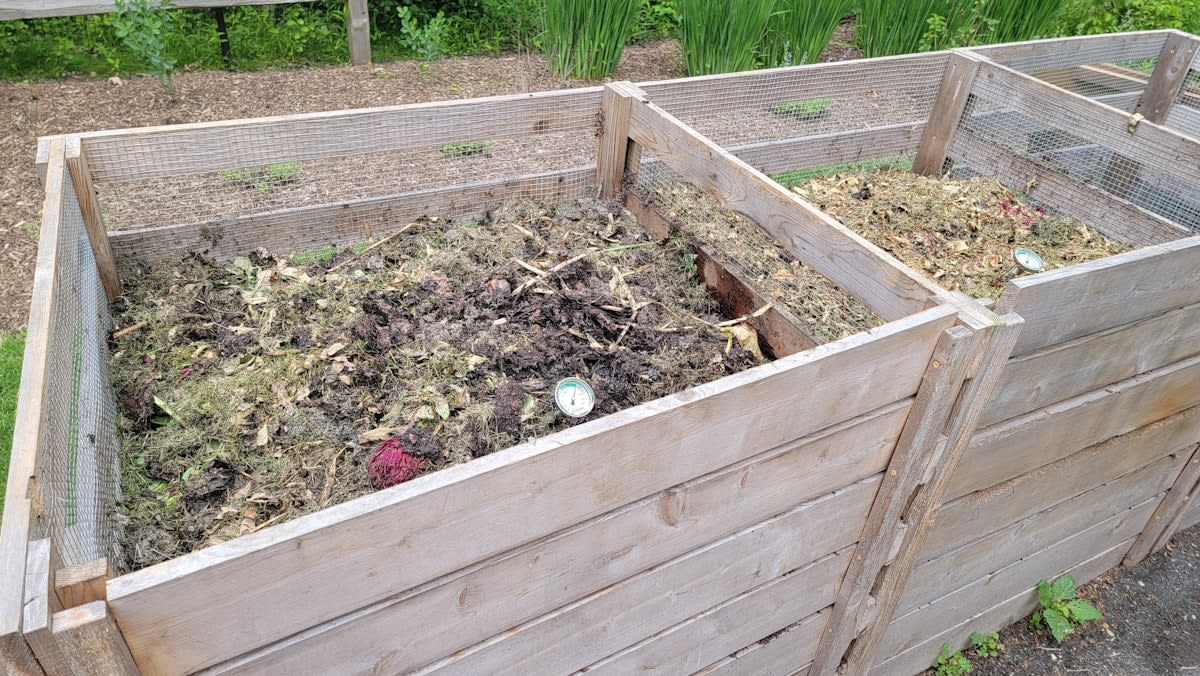
- Identify your organic stream: Separate food scraps (nitrogen-rich 'greens') from yard waste (carbon-rich 'browns').
- Select your processing method: Use a worm farm for small apartments or a traditional compost pile for larger gardens.
- Manage moisture levels: As noted in Indonesian waste challenges, high moisture can lead to anaerobic conditions and odors. Balance wet scraps with dry cardboard or leaves.
- Integrate the output: Use the resulting compost in home gardens or community plots to reduce reliance on synthetic fertilizers.
The economic logic here is clear. Landfills are expensive to manage responsibly, whereas FOGO materials can actually generate value when sold back to the community as compost. By processing organics at home, you eliminate the carbon cost of transport and retain the nutrients within your own local ecosystem.
With the organics handled, the focus shifts to the more stubborn materials: synthetics and hard plastics.
Step 3: Managing Synthetics and Hard Plastics
Hard plastics and textiles are the most difficult loops to close because they often require industrial intervention. However, the principle remains the same: prioritize materials that are already part of a circular chain. In the Philippines, the partnership between PETValue and Republic Cement has successfully diverted over 1.5 million tons of residual plastic from landfills. This demonstrates that even when a material cannot be recycled into its original form, it can be 'co-processed' as an alternative fuel.
When it comes to textiles, the 'Circular Fashion' model suggests a radical change in procurement. A small swimwear brand's experience shows that true circularity—using recycled nylon and ocean-recycled packaging—often means accepting lower margins and slower production. For the homeowner, this means moving away from fast fashion. Stop buying clothes based on price; buy based on the material's ability to be recycled. If a garment is a blend of polyester and cotton, it is almost impossible to recycle. A 100% organic cotton or 100% recycled nylon piece is a resource; a blend is waste.
"Circular fashion isn't cheap. It requires prioritizing sustainability over margin, choosing recycled materials over virgin ones, and accepting a messier operational reality."— Insights from Sustainable Brands

The goal for your home is to minimize the 'residual' stream—those items that can only be burned for fuel—and maximize the 'closed-loop' stream, where a bottle becomes a bottle again.
Finally, we must address the high-value technical nutrients: electronics and batteries.
Step 4: High-Value Technical Recovery
The most complex loops involve rare earth metals and chemicals. Look at Gotion's €950 million project in Spain. They aren't just building a battery plant; they are building a recycling facility to ensure that the raw materials stay within the region. While you cannot build a cathode plant in your garage, you can adopt the 'regional recovery' mindset. This means mapping out exactly where your e-waste goes. Does your local center actually recycle the lithium, or do they just shred the device?
Integrating this into your home means practicing 'strategic procurement.' Only buy electronics from companies that have a documented take-back program. This ensures that the product's end-of-life is engineered into its beginning. This is the essence of the BCG model being pushed in Thailand: steering investment toward green manufacturing and low-carbon products to meet global demand.
| Resource Stream | Linear Approach (Waste) | Circular Approach (Loop) | Industrial Parallel |
|---|---|---|---|
| Food Scraps | Landfill / Trash Bin | Home Composting / FOGO | Victorian Community Compost |
| PET Plastics | Single-stream Recycling | Bottle-to-Bottle / Co-processing | PETValue & Republic Cement |
| Textiles | Fast Fashion / Donation | Mono-material / Recycled Nylon | Circular Apparel Startups |
| Batteries/Tech | E-waste bin | Manufacturer Take-back | Gotion Spain Facility |
Common Pitfalls in Domestic Circularity
The most common failure is the 'Cost Paradox.' Many attempt to go circular while still expecting the prices of a linear economy. As the swimwear case study proved, sustainability has a real cost. If you try to find the cheapest 'recycled' product, you often end up with greenwashed items that aren't actually recyclable. Invest in quality over quantity; it is cheaper to buy one durable item than five disposable ones over a decade.
Another frequent error is neglecting the 'moisture problem.' As highlighted by Indonesia's WtE challenges, mixing wet organic waste with dry recyclables ruins the resource value. A single leaking bag of food scraps can contaminate a month's worth of paper and plastic. Keep your loops physically separate and strictly managed.
Lastly, avoid the trap of 'perfect circularity.' You will not eliminate 100% of your waste. The goal is to maximize the recovery of high-value materials and minimize the volume of residuals. Focus on the biggest wins first—organics and plastics—before obsessing over the niche streams.