AI Executive Summary
"This article analyzes the strategic decoupling of battery chemistries, highlighting the shift toward sodium-ion for grid-scale storage. It provides critical insights into the industrial pivot from EV-centric production to resilient energy storage infrastructure."
The era of lithium hegemony is facing its first systemic challenge. On July 5, 2026, in Munich, Germany, CATL unveiled the TENER Sodium Energy Storage System, marking the world's first field-validated sodium-ion energy storage solution to reach full commercial maturity. This is not a laboratory curiosity or a pilot project; it is a production-ready architecture with a supply chain already in place. The 'so what' is immediate: the energy grid is no longer tethered to the volatile pricing and geographic constraints of lithium. By leveraging resources available across all continents, the industry is preparing for a scale that can actually support eight billion people.
The Sodium Pivot: Breaking the Lithium Bottleneck
CATL's strategic deployment of the TENER system signals a shift in how the world views battery chemistry. William Wu, Director of CATL's Energy Storage Technology Center, explicitly framed sodium and lithium as the twin foundations of the future energy storage system rather than competitors. This bifurcation allows for a clinical division of labor: lithium for high-density, mobile power and sodium for stationary, long-cycle grid storage. With cumulative shipments expected to hit 1 GWh by the end of 2026, the transition is moving at a pace that suggests the industry has already accepted this dual-track reality.
"We have made it our mission to develop a new battery chemistry based upon abundant resources available across all continents, one that can support the energy needs of all eight billion people, while offering longer cycle life and enhanced safety."— William Wu, Director of CATL's Energy Storage Technology Center
The timeline for this rollout is aggressive. CATL will begin delivering its first sodium-ion energy storage systems to Chinese customers this September, with global deliveries slated for June 2027. This rapid deployment addresses a critical vulnerability in the global energy transition: the reliance on a narrow set of minerals. By shifting the grid to sodium, the energy sector gains a layer of resilience against the geopolitical shocks that have historically plagued lithium and cobalt supply chains. The focus has shifted from mere capacity to systemic sustainability.
Commercial Milestone
CATL's TENER system is targeting 1 GWh in cumulative shipments by the end of 2026, establishing a commercial baseline for sodium-ion BESS (Battery Energy Storage Systems) before global expansion begins in mid-2027.
The EV Correction and the ESS Surge
While the grid is diversifying, the electric vehicle (EV) market is experiencing a period of volatile adjustment. According to data from Mining.com, global lithium-ion battery deployment in 2025 was six times that of 2020, driven largely by an EV sector that accounted for 70% of total deployment. However, the momentum has shifted. After a 20% year-on-year surge in 2025, EV sales have hit a bumpy patch in 2026. This stagnation is forcing manufacturers to rethink their reliance on a single chemistry and a single application.
Regional EV Growth Divergence (2025-2026)
Executive Insight
+18.4%
YTD Growth
The growth is no longer uniform. While Europe registered a 26% year-on-year growth, the rest of the world grew by a staggering 89%, a trend driven primarily by the acceleration of Chinese EV exports into the rest of Asia. This geographic shift reveals a fragmented market where some regions are saturating while others are just beginning their transition. In this environment, the energy storage system (ESS) sector has emerged as the new growth engine. By 2025, the ESS sector already accounted for 15% of total battery demand, providing a critical hedge for manufacturers as EV sales fluctuate.
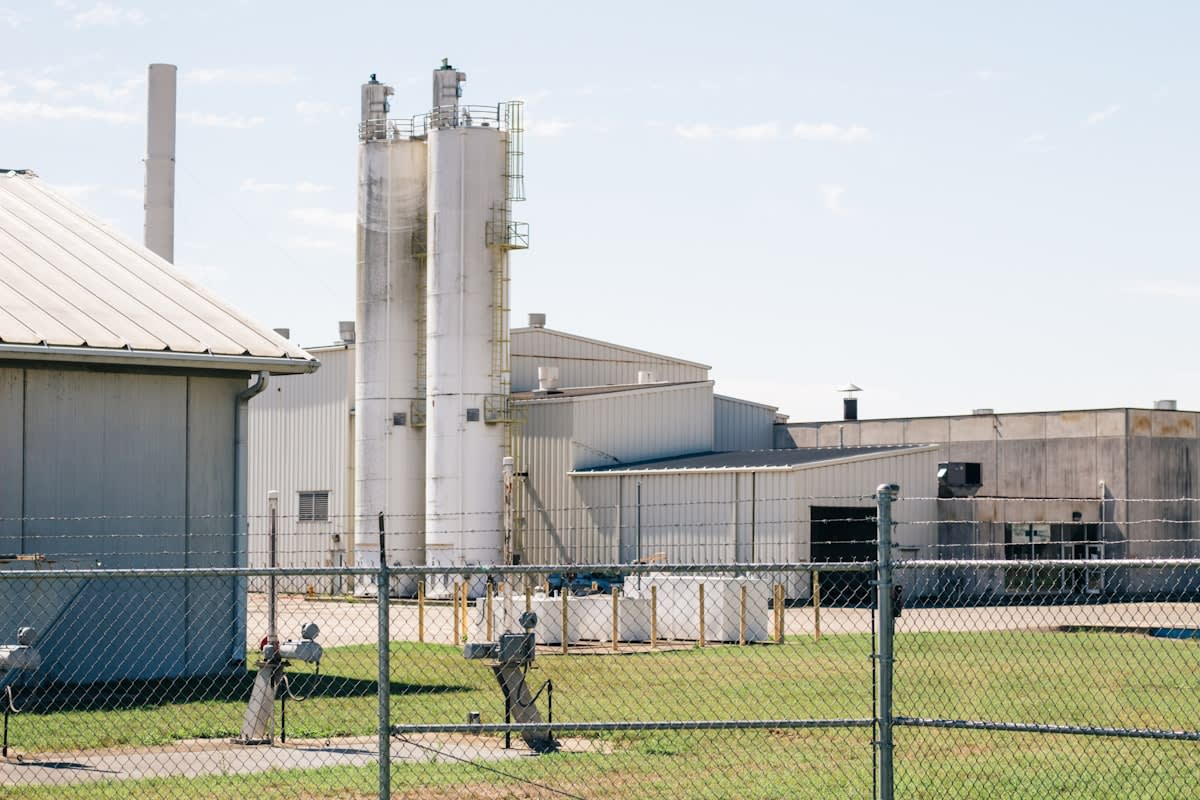
This shift is not just theoretical; it is manifesting in the physical infrastructure of the United States. LG Energy Solution and Honda recently began mass production of energy storage battery cells at their joint venture plant in Jeffersonville, Ohio. Crucially, this plant was originally designed for EV battery cells. The decision to pivot production toward ESS cells was a direct response to changes in the U.S. regulatory environment for EVs and the stronger growth prospects of the energy storage market. It is a clear signal that industrial strategy is moving away from the 'EV-first' mentality.
The Lithium Stronghold: Specialized High-Density Needs
Despite the rise of sodium for the grid, lithium is not exiting the stage; it is simply moving into more specialized, high-performance roles. A prime example is found in Indonesia's defense sector. PT PAL has accelerated the steel-cutting milestone for the country's Scorpene submarine programme to July 2026. These vessels are incorporating lithium-ion battery technology to replace earlier generations of air-independent propulsion systems. In the depths of the ocean, where energy density and weight are non-negotiable, lithium remains the only viable choice.
This creates a clear industrial dichotomy. On one end, you have the high-stakes, high-density requirements of naval warfare and luxury EVs, where lithium's performance justifies its cost and supply chain complexity. On the other end, you have the massive, stationary requirements of the global energy grid, where safety, cost, and resource abundance are the primary drivers. The 'Lithium Exit' is therefore not a disappearance, but a strategic retreat from the low-margin, high-volume grid market.
| Feature | Lithium-Ion (Specialized) | Sodium-Ion (Grid/BESS) |
|---|---|---|
| Primary Application | EVs, Submarines, Portable Electronics | Grid Storage, Commercial ESS |
| Market Driver | Energy Density & Weight | Resource Abundance & Safety |
| Current Trend | Bumpy EV Sales / Niche Defense | Rapid Commercial Maturity (1 GWh) |
| Supply Chain | Geographically Constrained | Globally Available |
The implications for the global energy grid are profound. As we move toward a future where renewable energy must be stored at a planetary scale, the reliance on a single mineral is a systemic risk. The transition to sodium-ion BESS allows for a more democratic distribution of energy infrastructure. When the building blocks of the grid are based on abundant resources available on every continent, the barrier to entry for developing nations drops significantly, accelerating the global transition away from fossil fuels.
Ultimately, the events of July 2026 suggest that the industry has reached a point of pragmatic realism. The attempt to power every device and every grid with lithium was an oversimplification. By embracing a twin-foundation approach, the energy sector is building a more resilient architecture. The shift seen in Munich and Ohio is a preview of the next decade: a world where the chemistry is matched to the application, and the grid is finally decoupled from the volatility of the lithium market.