
AI Executive Summary
"This article analyzes the strategic transition from extractive mining to urban resource recovery, highlighting the role of GenAI and biotechnology. It argues that securing critical minerals through circularity is essential for geopolitical stability and long-term industrial resilience."
For centuries, the global economy has operated on a primitive linear logic: extract, consume, discard. We have treated the earth's crust as an infinite vending machine and our landfills as bottomless pits. But this model is hitting a systemic wall. As the demand for lithium, cobalt, and rare earth elements (REEs) skyrockets to fuel the electrification of everything, the geopolitical fragility of traditional mining has become an unacceptable liability. When the bulk of your cobalt comes from the Democratic Republic of Congo and your lithium is concentrated in Chile, your entire energy transition is a hostage to regional stability and supply chain volatility.
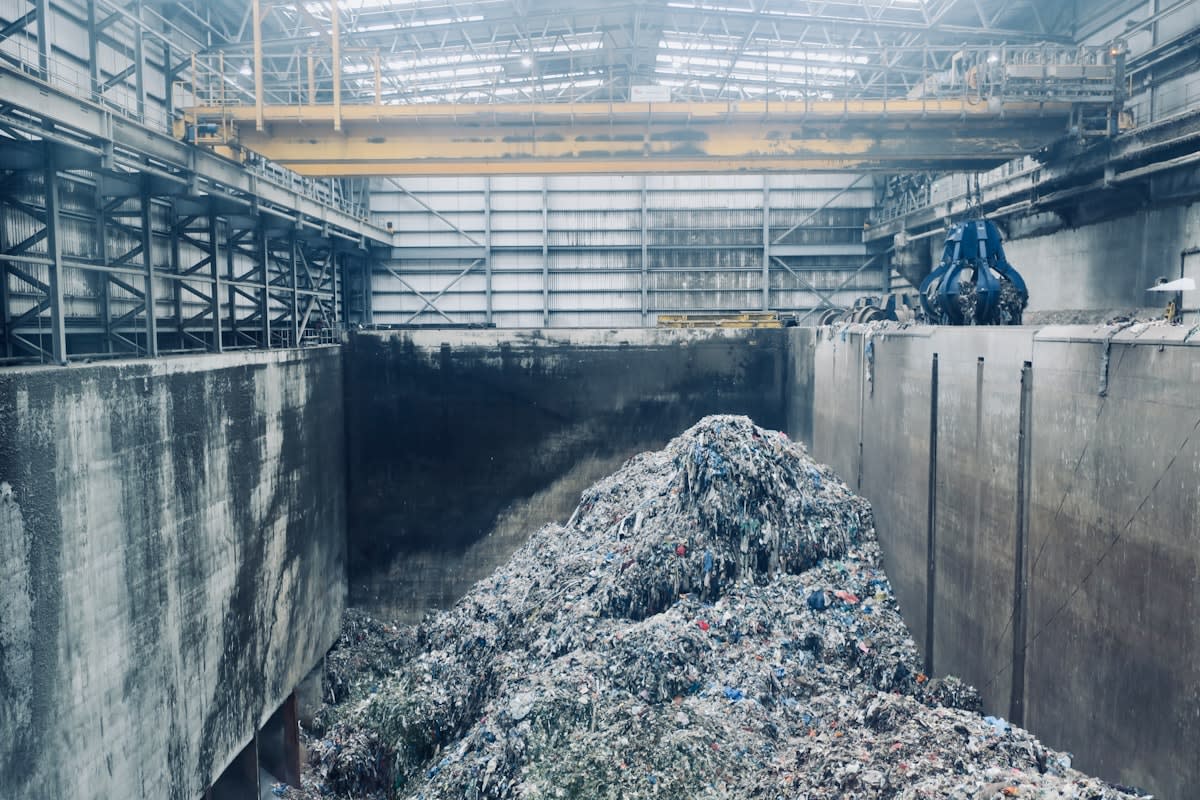
The real gold rush is not happening in the remote wilderness of the Andes or the jungles of Africa. It is happening in our wastewater, our tailings ponds, and our scrap heaps. We are witnessing a pivot from extractive mining to resource recovery. This is not a mere environmentalist's dream of recycling; it is a cold, hard strategic shift. The 'above-ground mine' represents a more stable, potentially more efficient, and significantly less destructive way to secure the materials required for the next century of technological growth.
The Biological Unlock: Algae as the New Miner
Traditional chemical leaching to recover metals is often as toxic as the waste it seeks to treat. Enter the biological approach. Recent research into microalgal and cyanobacterial systems is redefining how we view high-salinity industrial and mining wastewaters. Instead of using harsh acids, these biological systems utilize selective recovery mechanisms to pull lithium, cobalt, and REEs directly from waste streams. This is a fundamental shift in chemistry, moving from brute-force extraction to precision biological harvesting.

Why does this matter? Because these biological systems can operate in environments where traditional mining is either too expensive or too ecologically damaging. By integrating co-design strategies for sustainable metal recovery, researchers are turning toxic liabilities into asset columns. The ability to recover these materials from wastewater effectively turns every industrial discharge point into a potential mineral mine, decoupling resource security from the volatility of overseas mining concessions.
Strategic Insight
The strategic advantage of bio-recovery isn't just environmental; it's about removing the 'geopolitical premium' associated with minerals concentrated in a few global regions.
This transition is already manifesting in how industry leaders approach waste. In Australia, the Dowdens Group is shifting the paradigm by moving away from simple equipment distribution. They are now actively sourcing global technologies to solve local water and waste challenges in mining operations. This signals a broader trend: the industry is no longer looking for bigger shovels, but for smarter filters and more efficient pumping and treatment systems that can reclaim value from what was previously discarded as 'tailings'.
GenAI and the Digital Twin Revolution
If biotechnology provides the 'how' of recovery, Generative AI provides the 'where' and 'when'. The integration of GenAI with digital twins is transforming smart manufacturing from a buzzword into a systemic tool for the circular economy. By creating high-fidelity digital replicas of actual working environments, manufacturers can identify inefficiencies and waste points before a single piece of hardware is deployed. This allows for the optimization of the overall manufacturing process to drastically decrease excess material and rework.
Consider the scrapping of vehicles policy in India. This is not just about clearing old cars off the road; it is a massive exercise in urban mining. AI is being deployed to determine the most efficient methods of manufacturing using recycled or repurposed materials. When you can use GenAI to map the material composition of a million scrapped vehicles and optimize the recovery of those materials back into the production line, the need for virgin ore diminishes. The landfill becomes the warehouse.
This capability extends to energy efficiency. Digital twins provide unprecedented visibility into energy consumption across production processes. When manufacturers can see exactly where energy is wasted, they can refine their operations to meet net-zero targets not through carbon offsets, but through actual operational efficiency. The result is a leaner, more resilient manufacturing base that views waste not as a cost of doing business, but as a failure of design.
"The focus is shifting toward creating circular economies through the scrapping of vehicles... AI can be used to assist manufacturers determine the most efficient method of manufacturing with recycled or repurposed materials."— ET Edge Insights
But is this shift happening fast enough to stave off the supply shocks of the 2020s? The tension is evident in the stock market. While traditional gold producers like Endeavour Mining and Harmony Gold continue to react to bullion demand and regional operating realities in South Africa, the underlying value is migrating. The market is beginning to realize that the long-term winners won't be those who find the last remaining vein of ore, but those who master the chemistry of recovery.
The Systemic Shift: Extractive vs. Circular
To understand the magnitude of this shift, we must compare the risk profiles of the old world versus the new. Traditional mining is plagued by 'concentration risk'—the danger that a single political upheaval in a region like the DRC could paralyze global battery production. Urban mining, by contrast, distributes the resource across every city and industrial zone on earth. It replaces geopolitical risk with technological risk. The question is no longer 'Do we have the mineral?' but 'Do we have the technology to retrieve it?'
| Metric | Traditional Extractive Mining | Urban/Biological Recovery |
|---|---|---|
| Primary Resource Location | Geographically concentrated (e.g., Chile, DRC) | Distributed (Landfills, Wastewater, Scrap) |
| Key Technological Driver | Heavy Machinery & Chemical Leaching | GenAI, Digital Twins, Microalgae |
| Geopolitical Risk | High (Supply chain vulnerability) | Low (Localized resource recovery) |
| Environmental Impact | High (Habitat loss, toxic tailings) | Positive (Waste reduction, toxin removal) |
| Economic Logic | Linear (Extract $\rightarrow$ Use $\rightarrow$ Waste) | Circular (Recover $\rightarrow$ Reuse $\rightarrow$ Redesign) |
This transition is not without friction. The infrastructure for urban mining is currently fragmented. While companies like Dowdens Group are bridging the gap by bringing global technology to local Australian sites, the scale of implementation lags behind the scale of the need. We are in the 'infrastructure gap' phase, where the theoretical value of our waste is known, but the industrial capacity to harvest it is still being built.
However, the economic incentives are becoming undeniable. When the cost of traditional mining increases due to deeper pits and lower ore grades, the relative cost of biological recovery drops. Microalgal systems don't require massive open-pit mines; they require bioreactors and wastewater streams. The 'capex' of the next gold rush is not in diesel-powered excavators, but in algorithmic optimization and synthetic biology.
Will this lead to the obsolescence of the traditional mining giant? Not immediately, but it will force a metamorphosis. The companies that survive will be those that stop identifying as 'miners' and start identifying as 'material managers'. The goal is no longer to find the mineral in the ground, but to ensure that once a molecule of cobalt enters the economy, it never leaves it.
The convergence of GenAI and biotechnology is creating a new class of industrial assets. A landfill is no longer a liability to be managed; it is a strategic reserve. A wastewater stream is no longer a pollutant to be treated; it is a conveyor belt of critical minerals. This is the intellectual shift required to survive the coming resource crunch.
Ultimately, the next gold rush is an exercise in humility. It is an admission that we have already extracted enough from the earth and that the intelligence required to sustain our future lies in the waste of our past. By leveraging the precision of AI and the elegance of biology, we are finally closing the loop.