
AI Executive Summary
"This article provides a strategic framework for transitioning domestic food management from a linear waste model to a regenerative resource loop. It bridges the gap between industrial sustainability trends and individual action, emphasizing the role of food innovation in building systemic resilience."
Most modern kitchens are designed as linear pipelines: resources enter as packaged goods and exit as trash. This model is not just inefficient; it is an architectural failure. We have been conditioned to view food scraps as waste rather than raw materials. But what happens when we flip the script? By applying the principles of regenerative agriculture and closed-loop systems—concepts currently being scaled at an industrial level—we can transform the domestic kitchen into a resource loop. This is not about mere recycling; it is about systemic restoration.
The shift is already happening at scale. Consider the industrial landscape where giants like PepsiCo have already expanded regenerative and restorative practices across 4.7 million acres globally, aiming for 10 million by 2030. When the largest players in the food system recognize that soil health and resource loops are the only way to ensure long-term resilience, the home cook cannot afford to remain in a linear mindset. Why settle for a waste bin when you can manage a micro-ecosystem?
Prerequisites for the Regenerative Transition
Before you dismantle your waste system, you need the right infrastructure. Transitioning to a regenerative pantry requires a shift in both hardware and mindset. You aren't just 'throwing things away' anymore; you are diverting assets. This requires a basic understanding of your local waste infrastructure—specifically whether your municipality supports Fogo (food organics and garden organics) systems or if you must manage the loop independently.
- Diversion containers: Small, airtight bins for countertop organic collection.
- Processing hardware: A worm farm, a backyard compost bin, or access to a municipal Fogo system.
- Sourcing directory: A list of local producers who utilize regenerative practices or microbial nitrogen instead of synthetic fertilizers.
- Storage solutions: Glass or reusable containers to move away from single-use plastic inputs.
The Asset Mindset
The goal is to move from a 'disposal' mindset to a 'diversion' mindset. In Victorian communities, for example, the shift toward treating green waste as 'garden gold' has proven that organic matter is a high-value asset, not a liability.
Step-by-Step: Transitioning to a Resource Loop
- Audit your waste stream. Spend one week tracking every item that leaves your kitchen. Separate the 'true waste' (non-recyclables) from the 'misplaced resources' (organics, compostables). Note the volume of organic matter you produce; this determines whether you need a small worm farm or a full-scale composting system.
- Establish the organic diversion loop. If you live in an area with municipal Fogo bins, utilize them—these systems are increasingly valuable to waste managers who sell the resulting compost back to the community. If you are off-grid or in a non-supported area, implement a worm farm or composting bin. The objective is to divert 100% of your organic scraps from the landfill, mirroring the 62% diversion rates seen in progressive Victorian communities.
- Purge synthetic inputs from your sourcing. Look at the origin of your produce. The current global trend, highlighted by the US Advancing Regenerative Agriculture Executive Order, is a move away from synthetic chemical inputs. Prioritize foods grown using microbial nitrogen and other science-based regenerative practices. By choosing these products, you support a system that restores soil health rather than depleting it.
- Integrate biomass and cultivated innovations. A regenerative pantry isn't just about what you throw away, but what you bring in. Start incorporating foods derived from biomass fermentation—such as fungal, bacterial, or microalgal ingredients. These innovations, currently being scaled in the UK, offer protein-rich alternatives that require a fraction of the land and water of traditional livestock.
- Close the loop with domestic application. Use the 'garden gold' produced by your composting or worm farm to grow your own herbs or vegetables. This completes the circle: the food you eat becomes the fertilizer for the food you grow, eliminating the need for external synthetic inputs.
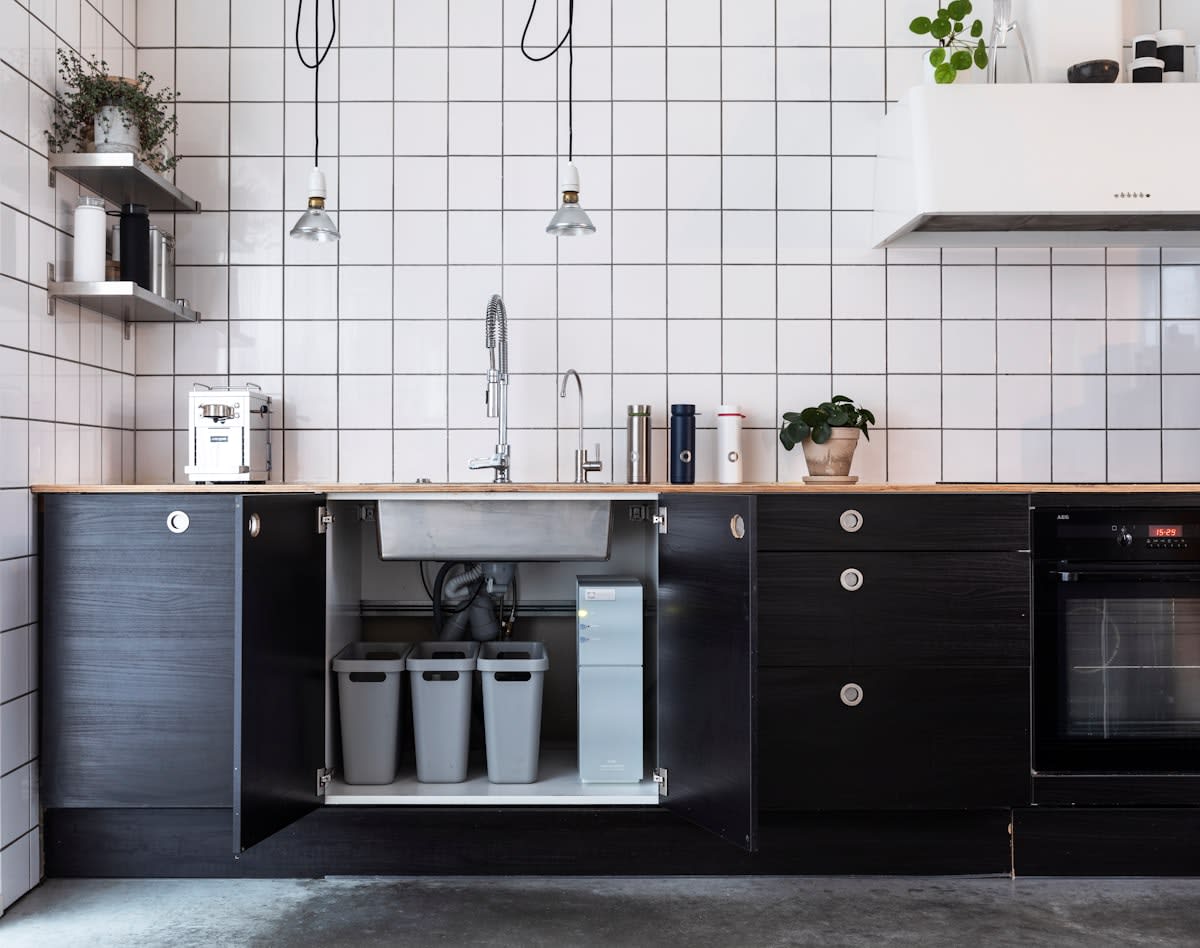
Does this sound like a lot of effort for a few bags of soil? Perhaps. But consider the systemic implications. When you shift your sourcing to support regenerative agriculture, you are participating in a global movement. PepsiCo's push to ensure 90% of its key ingredients are sourced sustainably by 2030 is a signal that the market is moving. The individual pantry is the frontline of this transition. By demanding products that avoid synthetic chemicals, you drive the demand for microbial nitrogen and other restorative technologies.
The Future of the Pantry: Beyond Traditional Produce
A truly regenerative pantry must embrace the evolution of food technology. We are entering an era where the 'farm' is no longer just a field. Molecular farming and gas fermentation are poised to transform diets over the next decade. These technologies allow for the production of essential nutrients without the heavy environmental toll of industrial monoculture. For the master practitioner, this means diversifying the pantry to include cultivated foods and micro-organism-based proteins.
Biomass fermentation, specifically using fungus and microalgae, is not just a novelty—it is a tool for resilience. These ingredients can improve the taste, texture, and functionality of plant-based foods, making the transition away from resource-heavy animal proteins more palatable. By integrating these into your diet, you reduce your reliance on a fragile global supply chain and move toward a more diversified, resilient resource loop.

Evaluating the Impact: Linear vs. Regenerative
| Metric | Linear Pantry (Waste Center) | Regenerative Pantry (Resource Loop) |
|---|---|---|
| Organic Waste | 100% to Landfill | 0% to Landfill (Diversion to Compost/Fogo) |
| Input Sourcing | Synthetic-heavy industrial | Regenerative/Microbial Nitrogen based |
| Protein Source | Resource-intensive livestock | Diversified (Biomass/Cultivated/Plant) |
| System Goal | Convenience & Disposal | Resilience & Restoration |
The data is clear: the systems that rely on synthetic inputs and landfill disposal are failing. Whether it is a community in Victoria diverting 62% of its organics or a federal executive order in the US pushing for a reduction in synthetic chemicals, the trajectory is toward regeneration. The question is no longer whether these systems work—the pilots are done and the resilience benefits are documented. The question is how quickly you can scale these practices within your own four walls.
Common Pitfalls in the Transition
Many attempt to transition their kitchen overnight and fail because they treat it as a chore rather than a system. The most common mistake is ignoring the 'input' side of the equation. You cannot have a regenerative pantry if you are still buying produce from systems that deplete the soil. Diversion is only half the battle; the other half is ensuring that the resources you bring into your home are restorative.
Another frequent error is the 'all-or-nothing' fallacy. Some homeowners feel that if they cannot maintain a perfect backyard compost heap, they should just stick to the trash bin. This ignores the middle ground. Utilizing municipal Fogo bins is a highly effective way to participate in the loop, as these materials are processed at scale and returned to the community as compost. Do not let the pursuit of perfection prevent the act of diversion.
"The question has shifted from ‘does this work’ to ‘how do we scale it.’"— Industry perspective on Regenerative Agriculture