
AI Executive Summary
"This article examines the critical insufficiency of Managed Aquifer Recharge in the Ganges basin and the resulting strategic pivot toward industrial water generation. It highlights the essential role of Small Modular Reactors in providing the energy density required to sustain future water-recovery infrastructure."
The Managed Aquifer Failure
Groundwater is vanishing. Analysis of Gravity Recovery and Climate Experiment-derived monthly groundwater depletion reveals a critical failure in natural replenishment across the world's most vital irrigated lands. This deficit creates a permanent resource gap that cannot be filled by traditional precipitation. Global screening of spreading-based Managed Aquifer Recharge (MAR) suggests a meager 4-6% offset of unsustainable irrigation on a worldwide scale. Such marginal gains prove that the current reliance on natural aquifer recovery is a losing strategy for high-density agricultural zones.
India faces a specific crisis. Data from Nature indicates that the Ganges basin is a primary hotspot for this failure, with MAR potential limited to a mere 3-7% offset. This figure stands in stark contrast to Southeast Asia and Europe, where hotspots can reach more than 50% offset. Local realities in the Ganges region are constrained by poor infiltration suitability and high evaporative competition. Consequently, the region cannot rely on intentional storage to buffer hydrologic extremes.
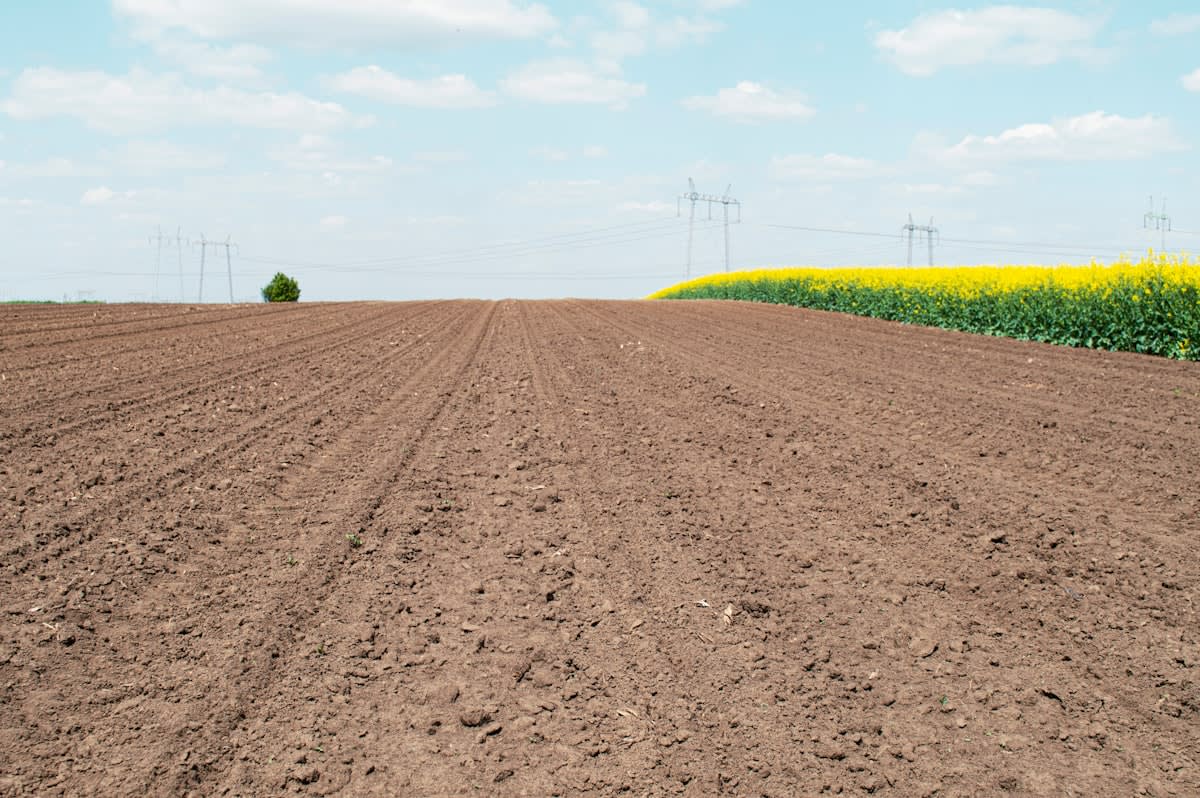
Feasibility coefficients dictate the outcome. These metrics integrate high-magnitude flow volumes under 90th and 95th percentile thresholds with off-season crop-area availability. In the Ganges basin, the intersection of these variables results in a failure to achieve sustainable irrigation levels. Most of the diverted high flows are lost to evaporation before they can infiltrate the soil. This physical constraint renders MAR an insufficient tool for solving the groundwater crisis in the Indian interior.
The Ganges Gap
The 3-7% offset potential in the Ganges basin creates a critical resource void that traditional environmental engineering cannot close.
Industrial intervention is the only remaining lever. Companies like A.O. Smith are already positioning themselves as leaders in water treatment and management products. Their focus on energy-efficient solutions suggests a market move toward closed-loop water systems. These technologies move the point of production from the aquifer to the atmosphere or the waste stream. Reliance on the earth's natural storage is being replaced by manufactured water security.
Water Tech is becoming the new economic baseline. AI projections for the next 250 years identify future urban centers, such as Rochester, as Water Tech Capitals. These cities will thrive not because of natural freshwater access, but because of their ability to implement advanced water infrastructure. Infrastructure bones from previous manufacturing eras are being repurposed for this purpose. The trend indicates a world where water is an industrial product rather than a natural resource.
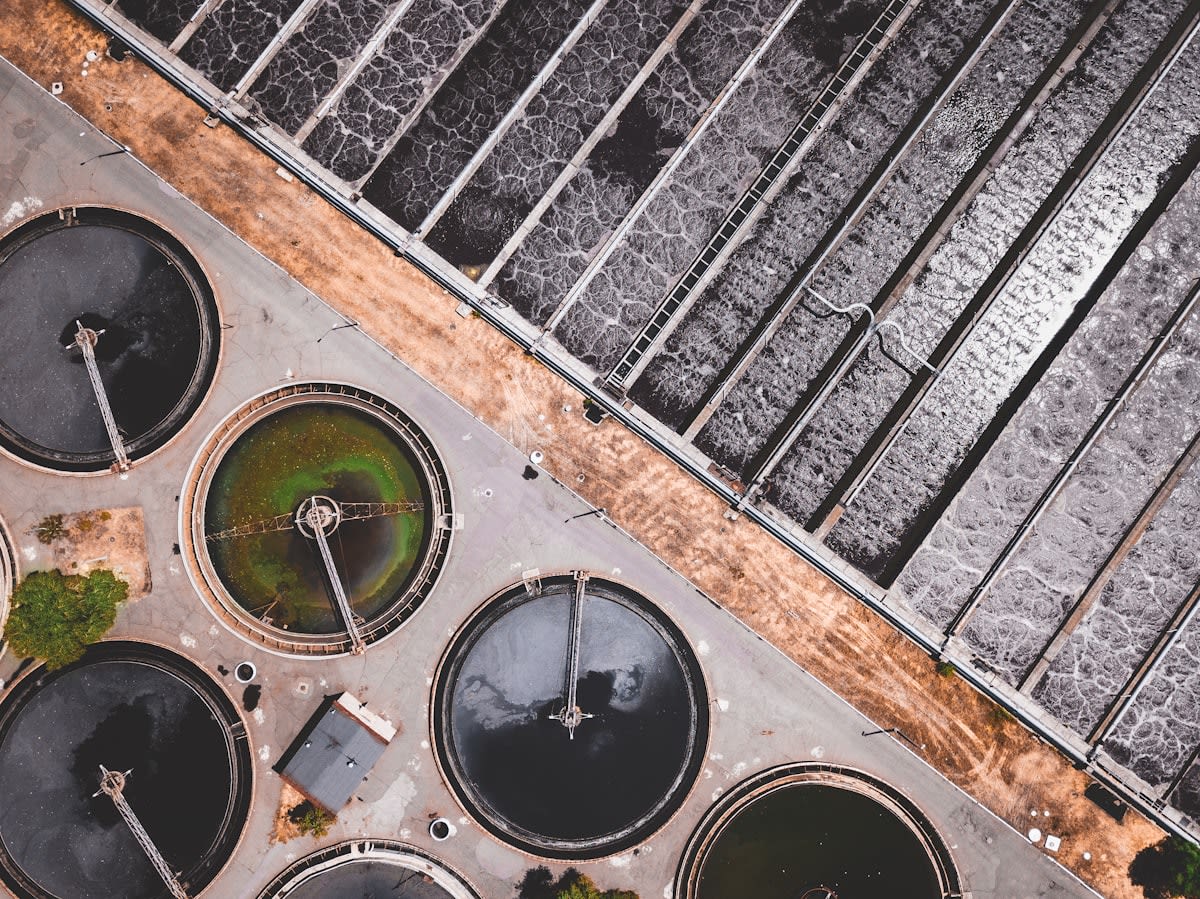
Energy costs will define the winners. Advanced water generation and treatment require massive power inputs that traditional grids cannot sustain. SGE's plan to build 14 small modular reactors (SMRs) in the UK for $46.5 billion highlights the necessary coupling of nuclear power and resource recovery. Modular energy is the only way to power the desalination and atmospheric extraction plants required to replace lost groundwater. Without $46.5 billion-scale energy investments, water tech remains a luxury for the few.
Contrast this with other global failures. A brownout in Kinshasa renders water pumps useless, whereas a firmware bug in Taipei might disrupt a smart-grid water distributor. Both scenarios highlight the precarious nature of tech-dependent water. However, for the Ganges basin, the alternative is total depletion. The choice is between an energy-intensive industrial solution and the complete collapse of agricultural viability.
Sustainability is now a function of energy density. The 4-6% global offset provided by MAR is a rounding error in the face of current depletion rates. High-magnitude flow diversion is a legacy tool for a world that no longer has enough water to divert. Intelligence suggests the second-order effect will be a massive capital flight toward regions that can integrate SMRs with water generation. Water security is now a power-grid problem.
| Region | MAR Offset Potential | Primary Constraint |
|---|---|---|
| Global Average | 4-6% | Unsustainable Irrigation |
| Europe/SE Asia | >50% | Infiltration Suitability |
| Ganges Basin | 3-7% | Evaporative Competition |
| Central Valley | 3-7% | Hydrologic Extremes |
Market valuations will reflect this shift. A.O. Smith's upcoming financial results will likely signal the demand for residential and commercial water management equipment. These products are no longer optional upgrades but essential survival hardware. The transition from 'treating' water to 'generating' water is the defining trend of the decade. This movement is driven by the hard physics of aquifer depletion.
Future urban planning is already adapting. The AI-driven vision of Rochester as a Water Tech Capital proves that the economic center of gravity is shifting. Access to freshwater is no longer the primary advantage; the ability to manage and generate it is. Infrastructure that once served the flour or flower industries is being converted into water-recovery hubs. This is the blueprint for the 23rd century.
Final analysis shows a clear trajectory. MAR is a buffer, not a solution, especially in the Ganges basin. Water Tech is the only scalable response to the Gravity Recovery and Climate Experiment findings. Energy-dense power sources, like SMRs, will be the catalyst for this transition. The groundwater crisis is not being solved by nature, but by the industrialization of the water cycle.