AI Executive Summary
"This article analyzes the intersection of high-end cultural trends and macro-geopolitical shifts in Eastern Europe. It argues that the return to tactile, analog production in Berlin's fashion scene is a cultural proxy for the regional drive toward military and industrial sovereignty."
The events of July 2026 have crystallized a paradox currently unfolding across Eastern Europe. While the region's geopolitical profile is becoming increasingly defined by hard power and military readiness, its cultural output is pivoting toward an almost defiant softness: the resurgence of analog craftsmanship. This is not a nostalgic retreat but a strategic reclamation of identity. In Berlin, the Spring 2027 collections showcased this week reveal a sector that has stopped chasing the efficiency of globalized fast-fashion and started investing in the friction of the handmade.
The Delta of Authenticity
The most striking evidence of this shift appears in the studio of Kasia Kucharska. For years, Kucharska operated within the logic of the modern era, developing machine-assisted methods to optimize the reproduction of her materials. However, the Spring 2027 collection marks a hard pivot. Kucharska has abandoned the efficiency of the machine to return to crafting each piece by hand with her team in Berlin. This transition from scalable reproduction to one-of-a-kind creation represents a fundamental change in the value proposition of luxury; authenticity is no longer a marketing term but a physical requirement of the production process.
"On the surface, things appear a certain way, but behind that façade, they are something else."— Kasia Kucharska
This philosophy of 'stability and collapse' mirrors the broader regional mood. Kucharska's use of latex to create optical impressions rather than literal surfaces questions the nature of reality itself. By rejecting the machine, she is not merely making clothes; she is constructing an alternative reality where the human hand is the only trusted arbiter of truth. This shift suggests that as digital replication becomes seamless, the only remaining scarcity—and therefore the only remaining luxury—is the tangible evidence of human labor.
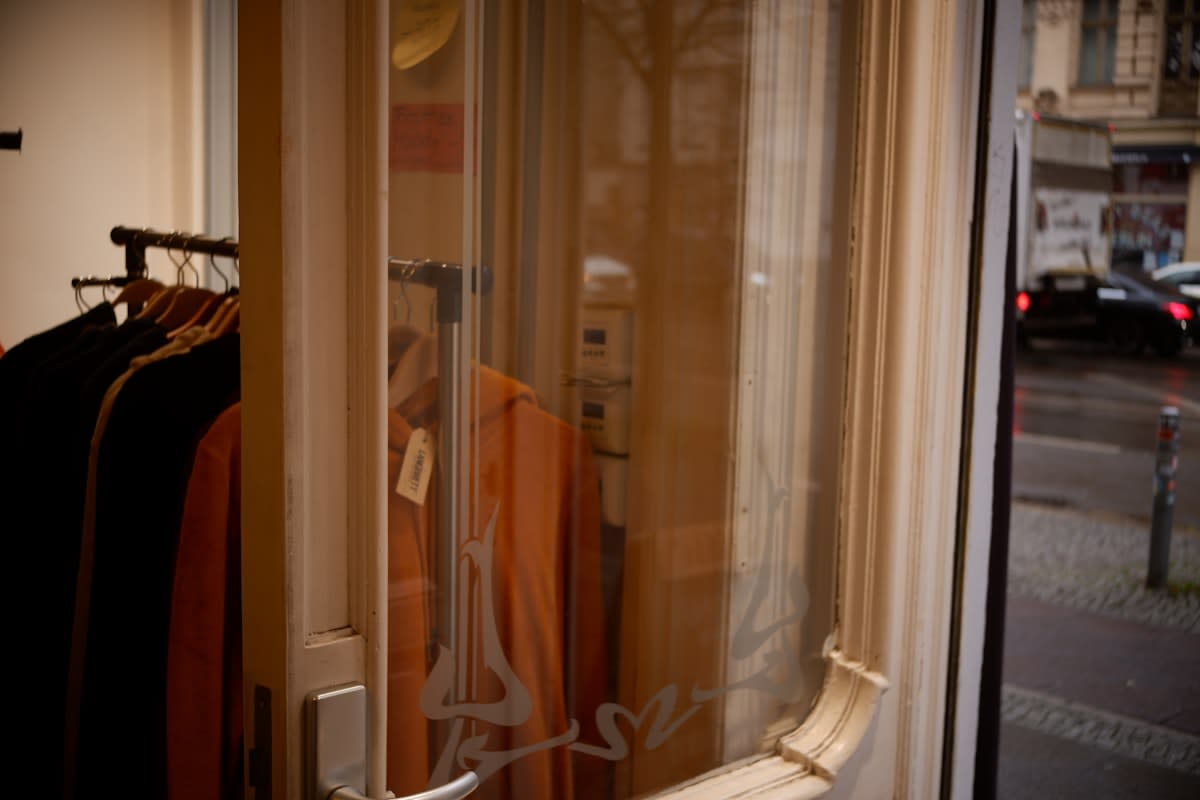
Parallel to this is the rise of GmbH, whose Spring 2027 collection emphasizes that Berlin's fashion history is a critical asset for its future. Serhat Işık and Benjamin A are not just designing garments; they are fighting a systemic erasure. For too long, the contribution of designers with migrant backgrounds in Germany has been sidelined in a field that lacked institutional value. The current resurgent appreciation for local design is a correction of an 80-year oversight, positioning Berlin not as a satellite of Paris or Milan, but as a sovereign hub of craftsmanship.
The Strategic Pivot
The shift is systemic: the region is moving from being a source of cheap labor for Western brands to becoming a center of high-value, artisanal intellectual property.
This cultural awakening does not happen in a vacuum. It is inextricably linked to the hardening of the Eastern Flank. As the region asserts its cultural identity, it is simultaneously asserting its physical security. The geopolitical center of gravity in Europe is shifting eastward, a movement reflected in both the art studios of Berlin and the defense ministries of Warsaw.
Hard Power and the Eastern Flank
The security data from July 2026 provides the necessary context for this analog revival. Poland has emerged as a primary anchor for NATO, spending a staggering 4.48 percent of its GDP on defense. This figure dwarfs the spending patterns of Western allies and signals a region that is no longer waiting for protection but is actively constructing its own shield. The commitment is not merely financial; it is existential.
| Metric | Eastern Flank (Poland) | NATO 2035 Target |
|---|---|---|
| Defense Spending (% of GDP) | 4.48% | 5.00% |
| Strategic Posture | Primary Responsibility | Shared Burden |
| US Force Movement | Increasing (Inbound) | Stabilizing |
The strategic implications were further underscored at the recent NATO summit in Ankara. The Pentagon's 2026 National Defense Strategy has explicitly called for Europe to take primary responsibility for its own conventional defense. This has triggered a physical reallocation of power, with Washington planning to shift forward-stationed forces from Germany to Poland. This movement of troops is the military equivalent of the movement in fashion: a shift away from the old centers of power toward the new, more resilient frontier.
Why does a defense budget in Poland relate to a hand-stitched dress in Berlin? Both are expressions of sovereignty. Whether it is the refusal to rely on machine-assisted reproduction or the refusal to rely on external security guarantees, the region is embracing a philosophy of self-reliance. The 'analog' revival is the cultural manifestation of the same drive that leads Poland to spend nearly 4.5% of its GDP on defense: a desire for tangible, controllable, and authentic strength.
Even the professional services sector is mirroring this trend toward high-touch expertise. As noted in the 2026 VAR 100 report, clients are no longer satisfied with traditional software implementation. They are demanding strategic, advisory partnerships that provide expert guidance on data governance and scalability. This shift from 'selling a product' to 'providing a craft' reflects a broader economic realization: in an era of AI-driven ubiquity, the only thing with lasting value is the specialized, human-led strategic asset.
The delta between 2024 and 2026 is clear. Two years ago, the region was often viewed as a peripheral player in both the global luxury market and the strategic defense architecture of the West. Today, the Eastern Flank is the engine of both. The transition from the machine-assisted efficiency of the past to the hand-crafted precision of the present is a signal that Eastern Europe is no longer playing by the rules of the West; it is writing its own.
Ultimately, the revival of analog craftsmanship is a symptom of a deeper psychological shift. When the world feels unstable, the human impulse is to return to the tactile. By investing in the slow, the difficult, and the handmade, designers like Kucharska and Işık are creating anchors of permanence in a volatile landscape. This is the new luxury: not the absence of effort, but the visible presence of it.