
AI Executive Summary
"This article provides a strategic blueprint for deploying precision agriculture in corrosive, high-heat urban environments. It emphasizes the critical transition from hobbyist gear to industrial-grade, hardened hardware to ensure operational longevity and ROI."
The Hardware Prerequisites
Chennai is a furnace. Humidity eats through cheap solder in weeks, leaving farmers with dead controllers and burnt-out pumps. Most urban growers buy a generic kit and wonder why their systems seize by July. This failure stems from a refusal to adapt hardware to the actual atmospheric conditions of the coast. You cannot run a precision farm on hobbyist gear when the salt air is actively dissolving your connections.
- Industrial-grade IoT sensors with IP67-rated corrosion resistance
- AI-integrated spraying hardware capable of plant-by-plant identification
- Dual-battery power systems to bypass unstable urban grids
- Data-fluent controllers capable of processing satellite and sensor telemetry
Equipment must be hardened before the first seed hits the soil. Cheap plastic housings crack under the relentless Tamil Nadu sun. You need UV-stabilized polymers and marine-grade wiring to prevent short circuits during the monsoon. Without these basics, your high-tech farm is just an expensive pile of scrap metal.
Tweak 1: Targeted Chemical Application
Blanket spraying is a waste of money and a disaster for urban runoff. Ecorobotix introduced the ARA595 Ultra-High Precision Sprayer to stop this bleeding. Their Plant-by-Plant AI identifies specific threats and treats only the areas that require attention. This targeted approach can reduce input costs by as much as 95%. Imagine the savings when you stop dousing every leaf in a small city plot just to kill a few pests.
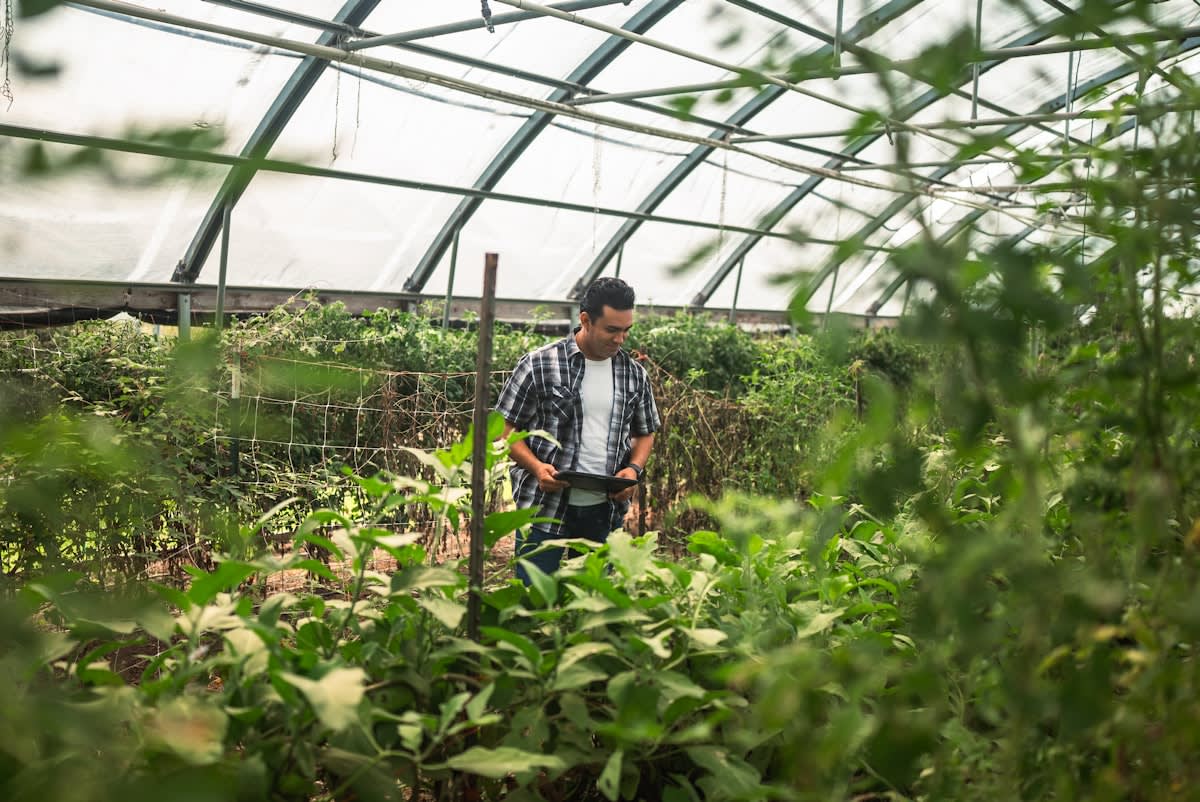
Traditional sprayers are blunt instruments. They saturate the soil and poison the groundwater in densely populated neighborhoods. Using AI-driven hardware allows for lettuce thinning and adjustable safety zones, which are critical when your farm is ten feet away from a residential wall. Failure to implement this level of precision leads to chemical drift and inevitable complaints from neighbors.
Cost is often the excuse for avoiding these upgrades. However, as reported by China Daily, agricultural tech costs are set to shrink as scale expands. Waiting for the price to drop while your crops die from inefficient treatment is a losing game. The immediate reduction in chemical spend usually offsets the hardware investment within a few harvest cycles.
Tweak 2: Battery Redundancy and Power Density
Battery life is the ultimate bottleneck in urban drone operations. DJI Agriculture launched the Agras T55 and T100 Dual Battery Spraying System on July 1, 2026, to solve the downtime crisis. Large-scale urban plots cannot afford a drone sitting idle for hours while a single battery pack charges. High-density farming requires constant coverage to keep pace with rapid pest cycles.
Power instability is a local reality. While a chip shortage in Hsinchu halts production, a power outage in Lagos or Chennai halts the harvest. Dual-battery systems provide the necessary buffer to complete a mission despite erratic charging infrastructure. If your drone dies mid-flight over a concrete rooftop, you aren't just losing a crop; you are risking a lawsuit.
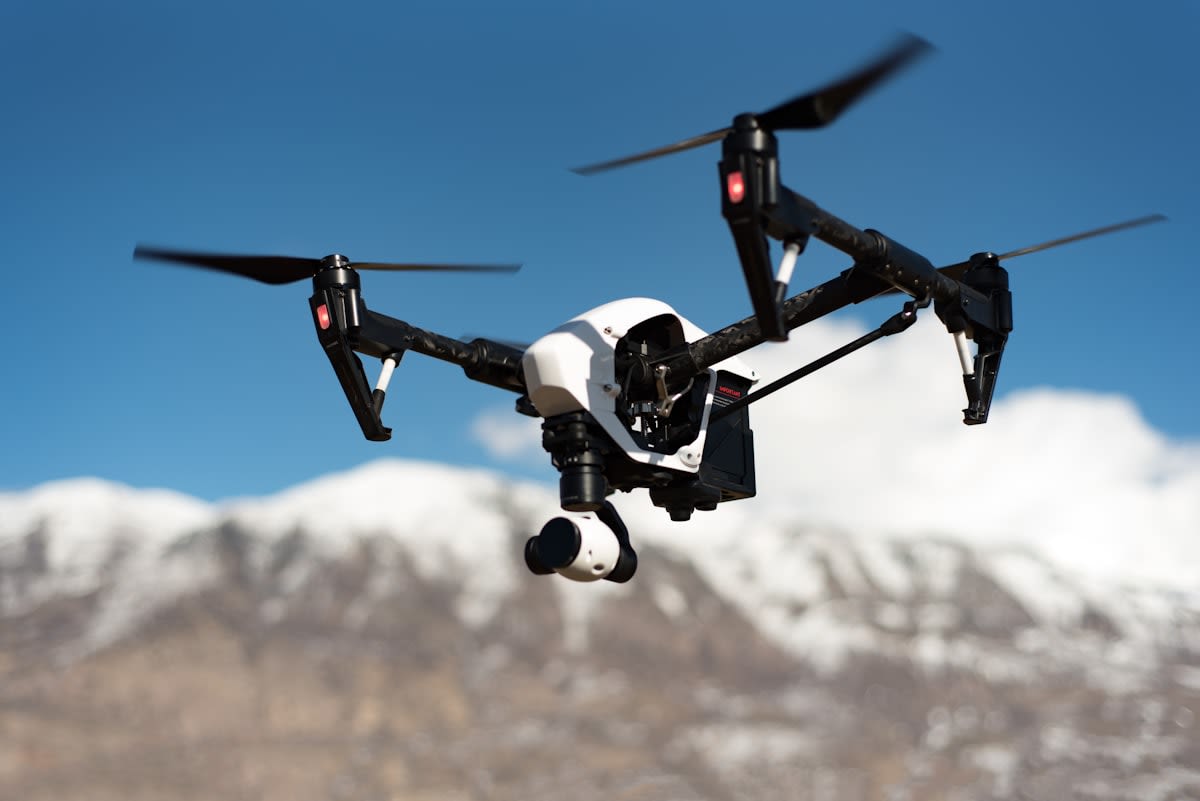
Productivity gains from these systems are not marginal. They are transformative for the operator who has to manage multiple small plots across a city. The T55, for instance, provides a streamlined setup that supports spraying, spreading, and lifting. This versatility means one piece of hardware replaces three, reducing the physical footprint of your logistics hub.
Tweak 3: Hardened IoT Sensor Arrays
Data is just noise without reliable sensors. IoT devices act as the eyes and ears of the operation, according to Inbound Logistics. In the salt-heavy air of Chennai, a standard sensor becomes a rusted brick in a month. You need hardware that can withstand high salinity and extreme temperature swings without drifting in its readings.
Agentic AI is the new buzzword, but it is useless if the input data is wrong. Sensors must be calibrated for local soil chemistry, not factory defaults from a temperate climate. When a sensor fails, it often fails silently, reporting a perfect environment while your roots are actually rotting. This is why physical redundancy—installing two sensors per zone—is the only way to ensure accuracy.
Monitoring inbound ETAs for nutrients is just as important as monitoring the plants. Logistics technologies now integrate IoT sensors to track supply chain execution in high-variability situations. If your nutrient delivery is delayed by Chennai traffic, your automated system needs to know instantly to adjust the feeding schedule. Hardware that doesn't talk to the logistics chain is a liability.
Tweak 4: The Analytics-Hardware Bridge
Degrees do not grow crops. IIT Mandi and ICAR are now pushing BTech programs in Agricultural Engineering with Data Analytics to fix the competency gap. A graduate who understands AI but cannot fix a leaking valve is a liability in the field. Real precision farming happens where the code meets the dirt, requiring hardware that is intuitive enough for a technician to repair.
Digital competency is no longer optional for the urban farmer. Satellite imagery and sensor-based crop monitoring provide the map, but the hardware provides the execution. If your controllers cannot handle the data fluency required for predictive analytics, you are just guessing with more expensive tools. The bridge between software and soil is a ruggedized PLC that doesn't crash when the temperature hits 40 degrees Celsius.
Complexity often masks poor design. Many systems claim to be AI-driven but are actually just timers with a fancy interface. True precision requires a feedback loop where the sensor triggers a specific hardware action in real-time. This requires low-latency hardware and a technician who knows how to debug a circuit board in the rain.
Implementation Steps
- Audit current hardware for salt-corrosion and UV degradation; replace all non-stabilized plastics.
- Install an AI-driven spraying system like the ARA595 to eliminate blanket chemical application.
- Upgrade drone fleets to dual-battery systems (e.g., Agras T100) to maximize flight windows.
- Deploy IP67-rated IoT sensor arrays across all growth zones for real-time telemetry.
- Integrate a data-analytics layer using graduates trained in agri-informatics to optimize hardware triggers.
| Hardware Tweak | Failure Mode (Old) | Outcome (New) | Key Metric |
|---|---|---|---|
| Precision Sprayer | Chemical runoff/waste | Targeted treatment | 95% cost reduction |
| Dual Battery | Mid-mission power loss | Continuous operation | Increased productivity |
| Hardened IoT | Sensor drift/corrosion | Accurate telemetry | Reduced crop loss |
| Analytics Bridge | Guesswork-based feeding | Predictive adjustment | Higher yield per sq ft |
Common Pitfalls
Over-reliance on AI is a fast track to failure. Software cannot smell a fungus or feel the texture of a dying leaf. Farmers who stop walking their rows because a dashboard says everything is green usually find their entire crop dead by morning. Hardware is a tool for the expert, not a replacement for the expert.
Ignoring the local grid is another fatal mistake. High-precision hardware is sensitive to voltage spikes common in urban Chennai. Without industrial-grade surge protection, a single power flicker can fry a thousand dollars worth of sensors. Buy the protector or prepare to buy the sensor twice.
The Practitioner's Rule
Never trust a sensor that hasn't been manually verified in the last 48 hours. In a coastal environment, calibration drift is not a possibility—it is a certainty.