
AI Executive Summary
"This article analyzes the strategic shift from Special Economic Zones to Private Governance Zones in Southeast Asia. It highlights the risks of outsourcing sovereignty to corporate entities and the emergence of 'contractual citizenship' as a tool for capital reallocation."
The Sovereignty Swap
Walk through the planned corridors of a modern Southeast Asian Special Economic Zone, and the first thing you notice is not the architecture, but the absence of the state. From the manicured lawns of Forest City in Malaysia to the neon-lit sprawls of Sihanoukville in Cambodia, the traditional relationship between the citizen and the state is being severed. These are not merely business parks or gated communities; they are Private Governance Zones (PGZs). In these spaces, the developer does not just build the roads and the sewers—they write the rules of conduct, manage the security apparatus, and often act as the sole arbiter of disputes. The city seal is being replaced by a corporate logo, and the social contract is being rewritten as a Terms of Service agreement.
This evolution marks a departure from the 20th-century model of the Special Economic Zone (SEZ). While the old SEZs were designed to attract foreign direct investment through tax holidays and reduced tariffs, the new PGZs seek something far more potent: jurisdictional autonomy. The goal is to create a 'regulatory sandbox' where the cumbersome laws of the host nation—labor protections, environmental standards, and zoning restrictions—simply do not apply. By carving out these legal islands, governments are essentially outsourcing the risk and administration of urban growth to private consortia, trading long-term sovereignty for immediate capital injections.
Defining the PGZ
A Private Governance Zone is a geographically defined area where the authority to regulate behavior, enforce rules, and provide public services is transferred from a public government to a private entity, typically through a long-term lease or a charter agreement.
The Twelve-Month Delta: From Infrastructure to Jurisdiction
If we look at the trajectory of these zones over the last year, a sharp pivot is evident. Twelve months ago, the discourse surrounding 'Smart Cities' in the region focused on the deployment of 5G, IoT sensors, and efficient waste management. The technology was seen as a layer added on top of existing law. Today, that conversation has shifted. The focus is now on the legal architecture itself. We are seeing a transition from 'Smart Infrastructure' to 'Smart Jurisdiction,' where the software managing the city also manages the legal standing of its inhabitants. The 'delta' is clear: the ambition has moved from optimizing the city to owning the law.
| Feature | Traditional SEZ (2010-2022) | Private Governance Zone (2023-Present) |
|---|---|---|
| Primary Incentive | Tax Holidays & Tariff Exemptions | Regulatory Autonomy & Custom Law |
| Law Enforcement | State Police / National Law | Private Security / Corporate Bylaws |
| Governance Model | State-led Administration | Corporate Board / Charter Management |
| Resident Status | National Citizens / Visa Holders | Contractual Residents / Shareholders |
This shift is driven by a growing frustration among global investors with the volatility of Southeast Asian political landscapes. By establishing a PGZ, an investor is no longer subject to the whims of a changing administration in Jakarta or Phnom Penh. Instead, they operate under a stable, privately negotiated charter that is often protected by international arbitration treaties. This effectively creates a legal fortress, shielding capital from the democratic process. The result is a fragmented urban landscape where the law changes the moment you cross a designated perimeter fence.
The Ghost of Forest City and the Sihanoukville Experiment
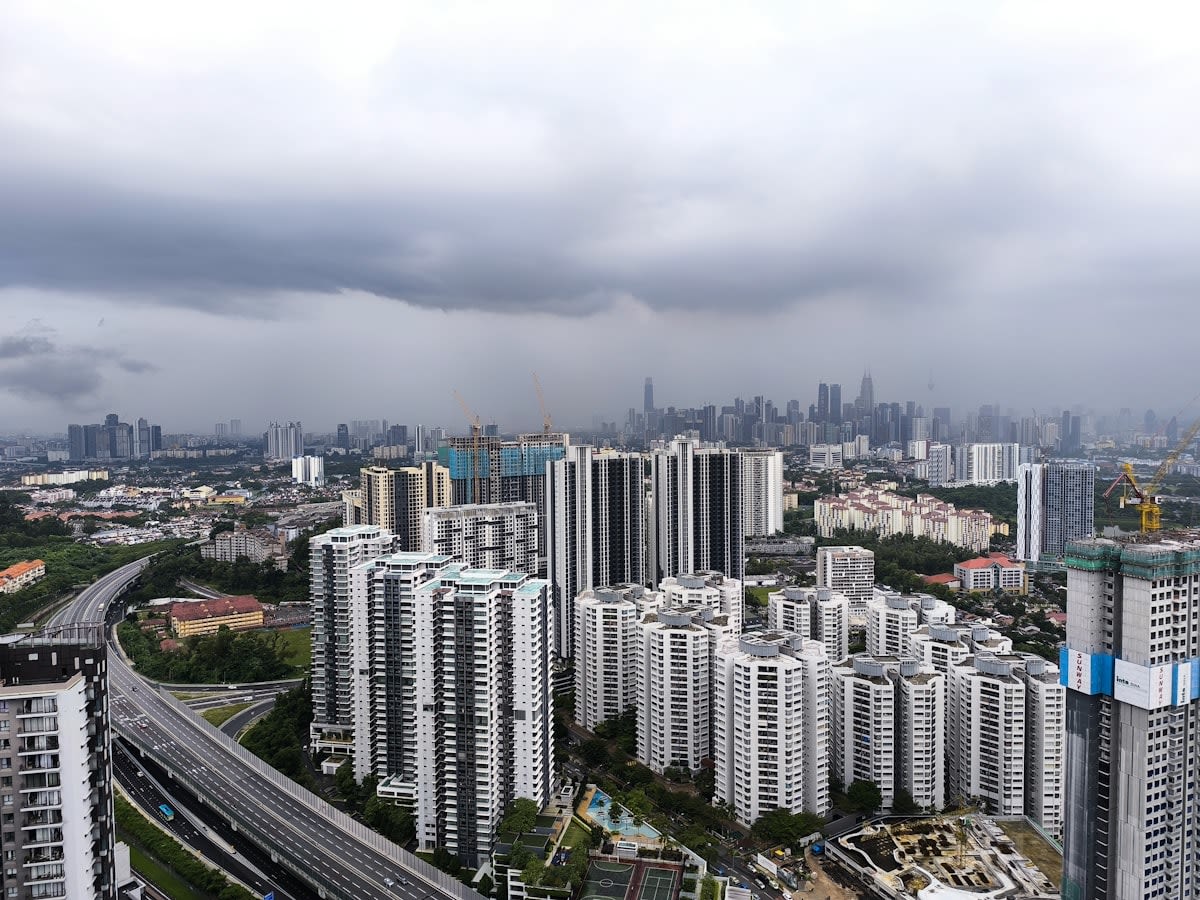
The dangers of this model are most visible in the case of Forest City in Malaysia. Designed as a high-tech utopia, it attempted to implement a level of private management that bypassed traditional municipal oversight. However, when the market cooled and the vision faltered, the residents found themselves in a legal limbo. Because the zone operated on a private management model, the standard avenues for municipal grievance were non-existent. The 'utopia' became a gilded cage where the developer's failure left residents with luxury apartments but no functional public governance to lean on.
Contrast this with Sihanoukville in Cambodia, where the PGZ model took a more aggressive, less planned form. Here, the rapid influx of foreign capital created a 'wild west' environment where private security firms effectively replaced the police. The governance was not a polished charter but a series of ad-hoc agreements between developers and local officials. This lack of transparent legal structure allowed for the proliferation of unregulated industries, proving that when the state abdicates its role in urban law, the vacuum is not filled by 'efficiency,' but by the highest bidder.
"We are witnessing the birth of the 'Contractual City.' In these zones, you are not a citizen with rights; you are a client with a service level agreement. When the agreement expires or the provider goes bankrupt, your rights vanish with the contract."— Dr. Aris Thorne, Urban Jurisprudence Expert
Who Polices the Company Town?
The most contentious aspect of these zones is the privatization of coercion. In a standard city, the police are theoretically accountable to a constitution and a judiciary. In a PGZ, the security force is an employee of the developer. This creates a profound conflict of interest: does the security force protect the resident, or does it protect the asset value of the developer? In many Southeast Asian PGZs, 'security' is used interchangeably with 'eviction' and 'surveillance,' ensuring that the zone remains an exclusive enclave for the wealthy and a controlled environment for laborers.
Furthermore, the labor laws within these zones are often stripped down to the bare minimum. By designating an area as a PGZ, governments often grant developers the right to set their own employment terms, effectively bypassing national minimum wage laws or unionization rights. This creates a two-tier legal system: one for the corporate executives and wealthy residents who enjoy the 'efficiency' of private law, and another for the service workers who are subjected to a stripped-down version of labor protections, all while living in a space where they have no political voice.

Estimated Growth of Private Governance Land-Use in SE Asia
Executive Insight
+18.4%
YTD Growth
The Future of the Urban Contract
The long-term implication of this trend is the erosion of the city as a public commons. When urban law becomes a product that can be bought, sold, and leased, the very idea of 'the public' disappears. We are moving toward a world of fragmented jurisdictions where your legal rights depend entirely on your GPS coordinates. If you are inside the zone, you are subject to the corporate charter; if you are outside, you are subject to the state. This creates a dangerous precedent where the wealthy can opt out of the social obligations of citizenship while still benefiting from the infrastructure and stability provided by the host nation.
The 'so what' is immediate: this is not just about real estate; it is about the future of governance. As these zones expand and integrate, they will begin to compete with each other, not on the quality of their parks or schools, but on the 'competitiveness' of their laws. We may see a 'race to the bottom' where zones compete to offer the least regulation to attract the most capital, effectively creating a series of corporate fiefdoms across Southeast Asia. The question is no longer whether these zones will exist, but whether the state will ever be able to reclaim the law once it has been sold to the highest bidder.
- Erosion of democratic accountability in urban planning.
- Creation of legal 'black holes' where national labor and environmental laws are void.
- Shift from citizenship-based rights to contract-based privileges.
- Increased risk of 'ghost jurisdictions' when private developers face insolvency.
- Normalisation of private security as the primary legal authority.