AI Executive Summary
"This article analyzes the strategic shift from frictionless UX to 'intentional difficulty' as a response to cognitive erosion and digital loneliness. It provides a framework for brands to design meaningful resistance to increase perceived value and human connection."
The tech industry has spent twenty years worshipping at the altar of seamlessness. The goal was total optimization: one-click purchases, algorithmic feeds that anticipate desire, and the eradication of every possible micro-barrier between a user and their dopamine hit. But a strange inversion is taking place. The generation born into this frictionless vacuum is now actively seeking out resistance. They are not merely nostalgic for a past they never experienced; they are strategically opting into difficulty because seamlessness has become a psychological dead end.
This is not a whimsical trend but a systemic reaction to cognitive erosion. According to Gloria Mark, author of Attention Span: Finding Focus for a Fulfilling Life, the average attention span on digital devices has plummeted to approximately 47 seconds. When the cost of interaction drops to zero, the value of the experience follows. The result is a state of brain rot where the absence of effort renders the output meaningless. In response, we are seeing the rise of attention-span-maxxing—a conscious effort to rebuild cognitive endurance through deep reading and long-form content, treating focus as a muscle that must be strained to grow.
The Architecture of Limitation
Consider the resurgence of the disposable camera. Fujifilm has recently expanded its QuickSnap lineup, introducing black-and-white and waterproof options. On paper, the product is an absurdity: it offers no screen, no instant preview, and a hard limit of 27 photos. It cannot post to Instagram. Yet, this intentional limitation is exactly why it is thriving among Gen Z. By removing the ability to iterate and delete in real-time, the act of photography regains its stakes. Each click of the shutter is a permanent decision, transforming a casual snapshot into an intentional act.

This craving for constraint extends beyond hardware into the very aesthetics of memory. In China, the emergence of Chinese Dreamcore sees Gen Z creators recreating the grainy, low-resolution vistas of the early 2000s. These creators use eerie mash-ups of childhood homes and urban landscapes to evoke a subconscious, hazy nostalgia. As Ms. Ai, a researcher who returned to China after studying in Britain, notes, the attraction lies in the simplicity of the dial-up era. It is a longing for a time when the internet was a destination you visited, rather than an atmosphere you permanently inhaled.
"The point of Chinese Dreamcore is not to criticize this current moment... but a longing for the simplicity of the dial-up era."— Ms. Ai, Researcher
When we analyze these behaviors globally, a pattern emerges: the rejection of the infinite. Whether it is the 27-shot limit of a QuickSnap or the lo-fi resolution of Dreamcore, the objective is to create a boundary. In a world of infinite scroll and endless cloud storage, boundaries are the only things that provide a sense of place and time.
The High Cost of Presence
The pivot toward friction is most evident in how the next generation allocates its most precious resources: time and money. We are seeing a massive shift toward sports-led travel, where the friction of physical distance is the primary draw. Data from Booking.com reveals a startling willingness to invest in high-stakes experiences. Approximately 91% of Gen Z and Millennials surveyed stated they would spend $5,000 or more to attend a once-in-a-lifetime sporting event, even if it meant postponing other major life events to fund the trip.
| Dimension | Seamless Digital Experience | Friction-Heavy Physical Experience |
|---|---|---|
| Access Cost | Near-Zero (Subscription/Free) | High ($5,000+ Travel/Tickets) |
| Cognitive Load | Passive (Algorithmic) | Active (Planning/Navigation) |
| Temporal Value | Infinite/Repeatable | Finite/Once-in-a-Lifetime |
| Attention Span | Fragmented (47 Seconds) | Sustained (Event-Duration) |
Why pay such a premium for an experience that could be streamed in 4K from a couch? Because the friction of the journey—the flights, the hotel logistics, the crowd noise, the physical exhaustion—is the very thing that validates the experience. The investment of $5,000 acts as a psychological anchor, signaling to the brain that this moment matters. In a seamless world, nothing is rare, and therefore, nothing is special. By introducing extreme financial and logistical friction, Gen Z is manufacturing rarity.
This behavior represents a strategic redefinition of discretionary spending. It is no longer about the convenience of the destination, but the intensity of the effort required to get there. The travel is not a means to an end; the travel is the filter that separates the meaningful from the mundane.
The Evolutionary Mismatch
To understand why this shift is happening now, we must look at the biological hardware. Researchers from the Singapore University of Technology and Design (SUTD) and James Cook University suggest that modern life has simply outpaced the human mind. Our instincts were shaped for small, close-knit groups and immediate, tangible threats. Now, those same instincts must navigate dense megacities and digital platforms characterized by constant social comparison. This creates an evolutionary mismatch, leading to chronic stress and a profound sense of loneliness.
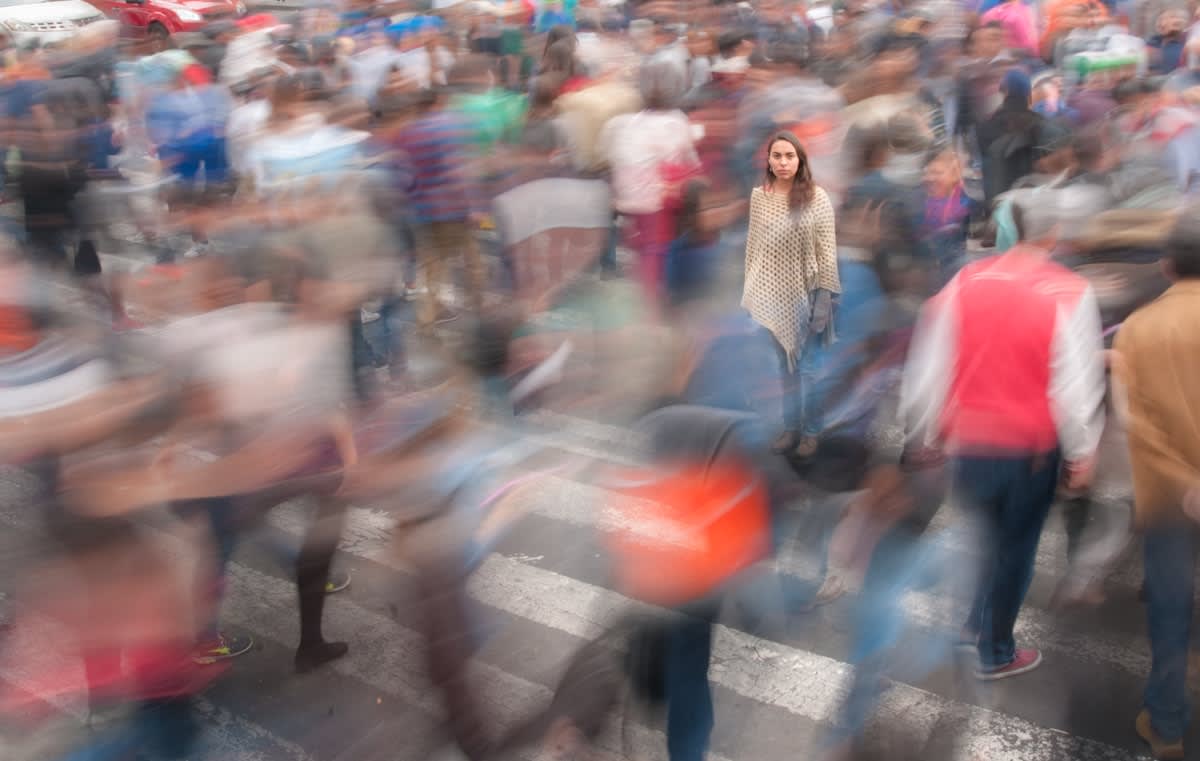
The digital environment is the ultimate expression of this mismatch. It provides the illusion of connection without the biological markers of community. This has resulted in a loneliness epidemic that persists even in the most connected populations. The response is a search for third places—physical social infrastructures that exist outside the home and the workplace. However, as Axios reports, many of these gathering places are shuttering, leaving a void that digital platforms cannot fill because they lack the necessary physical friction of real-world interaction.
Local Adaptation
In Shorewood, Wisconsin, the lack of gathering opportunities led to the creation of the Shorewood Women's Social. This come-as-you-are space bridges generational gaps, bringing together women from their 20s to their 70s to recreate the social infrastructure that seamless digital networking failed to replace.
The Shorewood example illustrates a critical point: the next generation is not rejecting society; they are rejecting the sanitized, frictionless version of it. They are seeking the awkwardness, the unplanned encounters, and the effort of physical presence. These are the elements that trigger the biological signals of belonging, signals that are muted in a seamless app interface.
The Strategic Opportunity of Resistance
We are entering an era where friction is no longer a bug to be fixed, but a feature to be designed. For brands and architects of social experience, the opportunity lies in creating intentional hurdles. If the last decade was about reducing the number of clicks, the next decade will be about increasing the quality of the effort. The value proposition is shifting from efficiency to efficacy. It is the difference between consuming a piece of content and achieving a state of flow.
This transition requires a fundamental rethink of the user experience. Instead of asking how to make a process faster, the question becomes: where can we introduce a meaningful pause? Where can we demand a higher level of cognitive or physical investment to ensure the outcome is valued? The success of Fujifilm's analog line and the growth of high-cost experience travel suggest that the market is already pivoting.
Ultimately, the Friction Renaissance is a survival mechanism. It is a way for the human mind to re-anchor itself in a world that has become too light, too fast, and too seamless. By choosing the difficult path—the limited film, the expensive trip, the deep read—the next generation is reclaiming its agency. They are proving that the most valuable experiences are not the ones that are easiest to access, but the ones that require us to show up, fully and with effort.