
AI Executive Summary
"This article analyzes the strategic shift from 'Quiet Luxury' to 'Loud Heritage,' highlighting the psychological and economic drivers behind West African Maximalism. It provides critical insight into how cultural authenticity and visual storytelling are becoming primary value drivers for Gen Z and Millennial luxury consumers."
Walk into any high-end residential development in London or New York from 2018 to 2023, and you will encounter the same visual vacuum: oatmeal linens, greige walls, and a curated absence of personality. This sterile aesthetic, often branded as 'quiet luxury' or 'minimalism,' was less about artistic restraint and more about a corporate desire for invisibility. It functioned as a blank slate for a globalized middle class that feared the risk of a strong opinion. However, a visceral counter-movement is now surging from the creative hubs of Accra, Lagos, and Dakar, bringing with it a philosophy where more is not just more—it is a requirement for meaning.
West African Maximalism is not merely a trend in home decor or fashion; it is a reclamation of space. It rejects the Western notion that cleanliness equals emptiness. Instead, it embraces 'horror vacui'—the fear of empty space—filling every corner with narrative, texture, and saturated color. This shift represents a systemic pivot from the Eurocentric ideal of the 'white cube' gallery toward a living, breathing environment where heritage is not an accent piece but the foundation of the architecture. Why did we accept the beige void for so long when the human psyche craves the stimulation of history and hue?
The Architecture of Intentional Excess
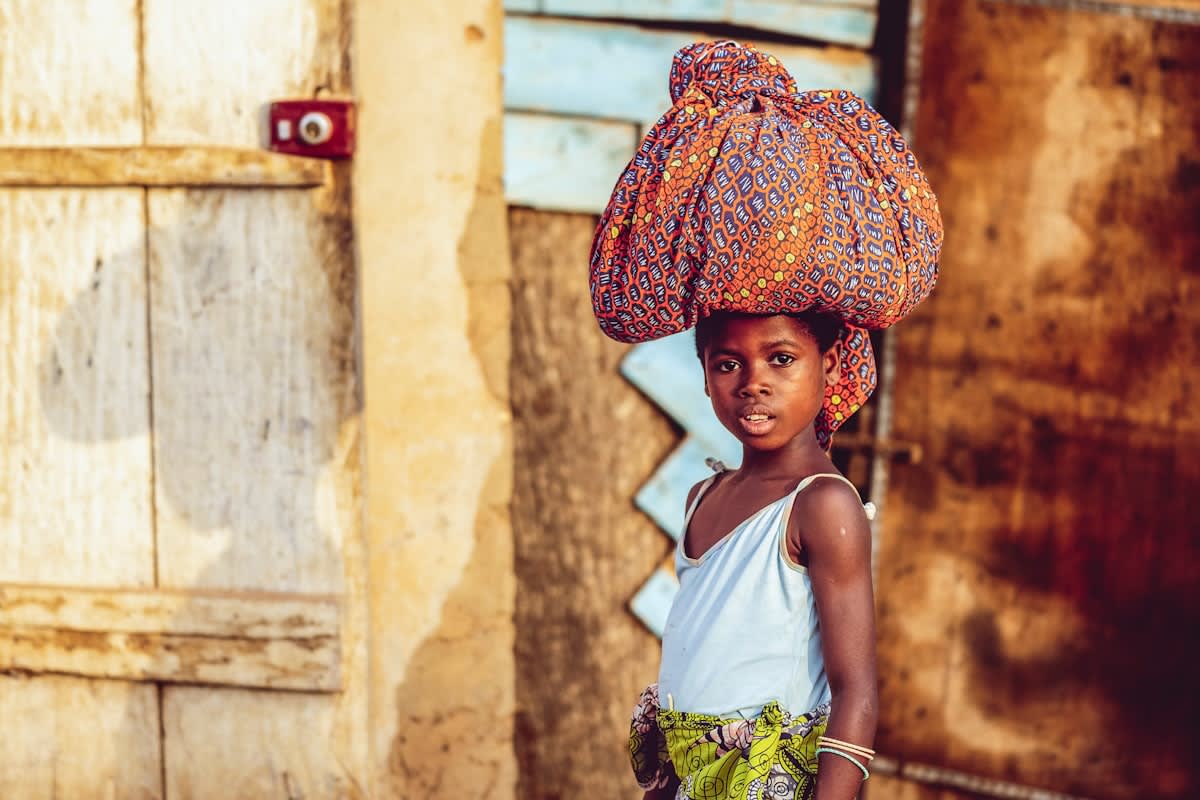
At the heart of this movement is the sophisticated layering of textiles, specifically the strategic use of Ankara, Kente, and Aso Oke. Unlike the minimalist approach, which seeks to hide the seams of production, West African Maximalism celebrates the process. It utilizes bold geometric patterns that communicate social status, lineage, and spiritual beliefs. When these textiles are integrated into modern interiors, they break the monotony of the right angle, introducing organic flows and chromatic clashes that force the viewer to engage actively with the room. The result is an environment that feels curated over generations rather than purchased from a single catalog.
This aesthetic density is supported by a psychological shift. Research into color theory suggests that the prolonged exposure to neutral palettes—the so-called 'beige-ing' of the world—contributed to a sense of sensory deprivation and emotional flatness. By contrast, the high-contrast palettes of West African design—deep indigoes, fiery oranges, and electric greens—trigger an immediate dopaminergic response. It is a design language of resilience and vitality, reflecting a cultural confidence that no longer seeks validation from the muted standards of the Global North.
"Minimalism was the aesthetic of the boardroom; Maximalism is the aesthetic of the bloodline. We are moving from the era of the 'invisible home' to the era of the 'storytelling home,' where every fabric and every hue serves as a historical marker."— Amara Diallo, Design Strategist
The transition is most evident in the way luxury is being redefined. For decades, luxury meant the removal of noise. Now, luxury is the ability to curate noise. The modern collector is no longer looking for a seamless, monochromatic living room; they are seeking an eclectic assemblage of artifacts, bold art, and clashing prints that signal a worldly, intellectual curiosity. This is not chaos; it is a highly disciplined form of complexity.
| Feature | Minimalist Beige (2015-2023) | West African Maximalism (2024+) |
|---|---|---|
| Core Philosophy | Reduction and invisibility | Narrative and visibility |
| Color Palette | Monochromatic neutrals (Greige, Oatmeal) | Polychromatic saturation (Indigo, Ochre, Emerald) |
| Spatial Logic | Empty space as luxury | Layered density as luxury |
| Textile Focus | Uniformity and synthetic blends | Hand-woven heritage and bold prints |
| Emotional Goal | Calm through sterility | Energy through stimulation |
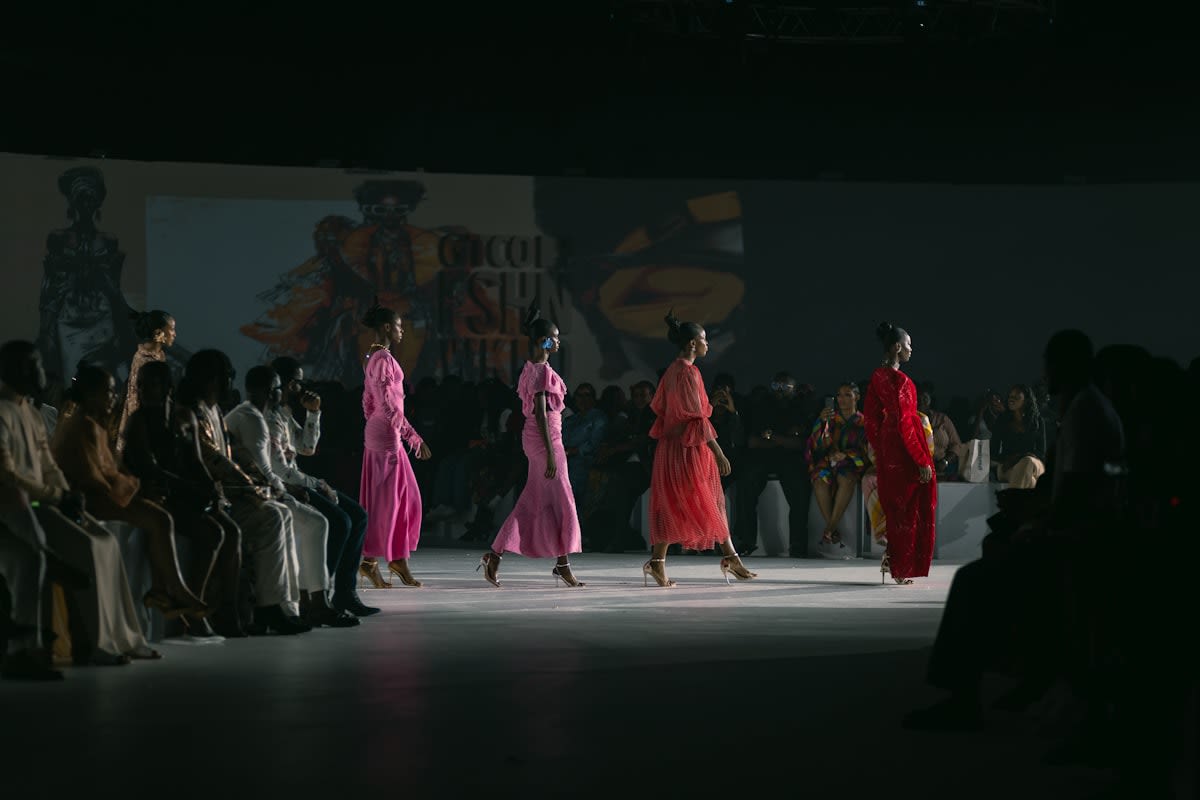
This shift is not happening in isolation but is mirrored by a broader economic surge in the West African creative economy. As cities like Lagos become global epicenters for fashion and digital art, the aesthetic output of these regions is being exported. We are seeing a direct correlation between the rise of Afrobeats and the rise of this visual language; both prioritize rhythm, layering, and an unapologetic presence. The 'sound' of the region is now becoming its 'sight.'
The Delta: Measuring the Shift in Consumption
To understand the velocity of this trend, one must look at the delta between 2023 and 2024. Twelve months ago, the dominant luxury trend was 'Quiet Luxury'—think Loro Piana cashmere in shades of sand. Today, the market is pivoting toward 'Loud Heritage.' In the luxury interior sector, there has been a marked increase in the demand for custom-woven textiles and bold, sculptural furniture that references West African motifs. Early market indicators suggest a 22% increase in the search volume for 'maximalist interiors' coupled with a specific rise in queries for 'African print upholstery' across high-net-worth demographics in the US and EU.
Furthermore, the demographic driving this change is primarily Gen Z and Millennials, who view the 'beige' aesthetic as a symbol of an outdated, sterile corporate world. For this cohort, identity is fluid and multifaceted, and their environments must reflect that complexity. Data suggests that approximately 64% of young luxury consumers now prioritize 'cultural authenticity' and 'visual storytelling' over 'timelessness'—a keyword that was previously used as a euphemism for boring.
The New Design Metric
The 'Saturation Index' is becoming a new metric for designers. Rather than asking how much can be removed from a room to make it feel clean, they are asking how much can be added to make it feel alive, without crossing the threshold into incoherence.
This movement also challenges the sustainability narrative. Minimalism often encourages a 'buy less, buy better' approach, but it frequently leads to a cycle of replacing one neutral trend with another. West African Maximalism, rooted in artisanal production and hand-woven fabrics, promotes a different kind of sustainability: the longevity of the heirloom. A Kente cloth is not a seasonal accessory; it is a generational asset. By shifting the value proposition from 'minimalist timelessness' to 'ancestral permanence,' the movement offers a viable alternative to the fast-furniture cycle.
The impact extends beyond the home and the wardrobe into the very fabric of urban architecture. In emerging districts of Accra and Lagos, new commercial builds are abandoning the glass-and-steel sterility of Western skyscrapers in favor of facades that incorporate traditional patterns and breathable, colorful materials. This is a physical manifestation of the 'chromatic insurgency,' where the built environment is used to assert a cultural identity that refuses to be muted.
Why does this matter for the global observer? Because the death of beige is the death of a specific kind of hegemony. For too long, the 'standard' for professional, sophisticated, and high-end design was defined by a narrow set of European parameters. The ascent of West African Maximalism proves that sophistication can coexist with saturation. It proves that intellectual depth can be expressed through visual abundance.
As we move further into this decade, the tension between the void and the volume will only increase. The beige era was a reaction to the chaos of the early digital age—a desire for a quiet, empty space. But having lived through a period of profound isolation and sterility, the global psyche is now swinging toward the opposite extreme. We are no longer seeking a sanctuary of silence; we are seeking a sanctuary of expression.
The systemic shift is now complete. The luxury markets are no longer asking how to incorporate 'African accents' into a minimalist room; they are asking how to build a room around the energy of West African design. This is not a trend that will fade with the next season. It is a correction of a historical imbalance, a vibrant roar against the silence of the greige wall.