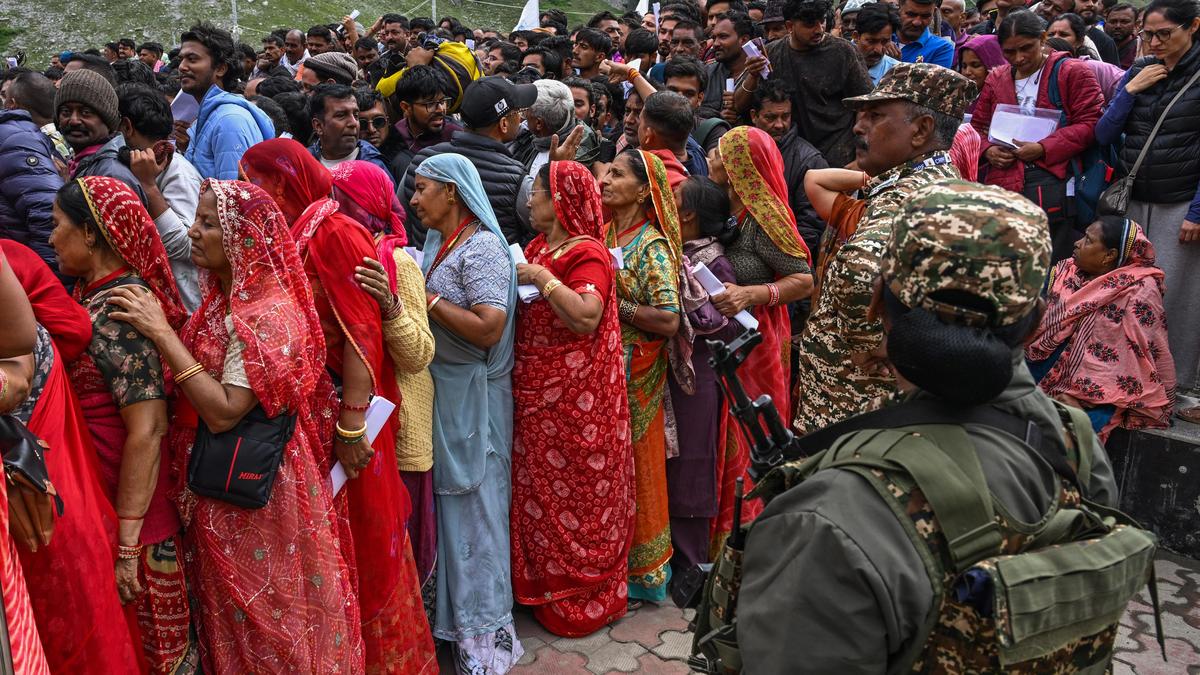
News in Frames | A sacred trail of faith and fellowship
Source Entity
India Latest News: Top National Headlines Today & Breaking News | The Hindu
Intelligence Synthesis
AI-Generated Core Insights
The Amarnath Yatra is a 57-day Hindu pilgrimage through the Himalayas that serves as a vital religious tradition, a driver of local livelihoods, and a symbol of communal harmony.
The Sacred Path: Understanding the Amarnath Yatra
The Amarnath Yatra represents one of the most profound spiritual undertakings in the Hindu tradition, a journey that transcends mere physical movement to become a test of faith and endurance. Set against the awe-inspiring yet unforgiving backdrop of the Himalayan mountains, this pilgrimage is a testament to the human spirit's ability to seek the divine amidst extreme natural challenges. The trek is not just a movement of people, but a movement of collective devotion.
Historical and Spiritual Significance
As a centuries-old tradition, the Yatra is deeply embedded in the cultural and religious fabric of the region. The journey to the sacred cave is viewed as a ritualistic passage that requires immense mental and physical fortitude. The "treacherous terrain" mentioned in reports highlights the physical toll the pilgrimage takes on devotees; this difficulty is often interpreted by pilgrims as a form of spiritual penance, making the eventual arrival at the destination a moment of profound religious catharsis.
Socio-Economic Dimensions of the Pilgrimage
Beyond its spiritual connotations, the 57-day pilgrimage serves as a vital economic engine for the surrounding Himalayan communities. The scale of the movement—thousands of pilgrims traveling over nearly two months—creates a complex ecosystem of commerce. From local guides and porters who navigate the difficult paths to small-scale vendors providing food and essential supplies, the Yatra sustains countless livelihoods, illustrating how sacred traditions can provide a critical backbone for regional economic stability.
A Beacon of Harmony in a Polarized Era
In an increasingly fragmented and polarized global landscape, the Amarnath Yatra offers a unique counter-narrative of unity. The "shared path" acts as a social equalizer, where individuals from diverse backgrounds, social strata, and geographic locations walk side-by-side toward a common goal. This collective experience fosters a sense of fellowship and compassion, demonstrating that shared spiritual purpose can bridge social divides that otherwise seem insurmountable.
Environmental and Logistical Realities
The logistical undertaking of managing a massive pilgrimage through high-altitude, volatile terrain is immense. The necessity of maintaining safety in such a sensitive environment requires meticulous planning and coordination. As the pilgrimage continues to draw large numbers, the intersection of religious devotion and environmental stewardship becomes a critical area of focus, ensuring that the sanctity and ecological integrity of the Himalayan mountains are preserved for future generations.
Conclusion
Ultimately, the Amarnath Yatra is far more than a religious event; it is a complex intersection of faith, economics, and social cohesion. By bringing people together through shared hardship and shared hope, it continues to provide a powerful message of compassion and resilience, proving that even in a divided world, the pursuit of the sacred can create lasting bonds of human fellowship.
Verification Required?