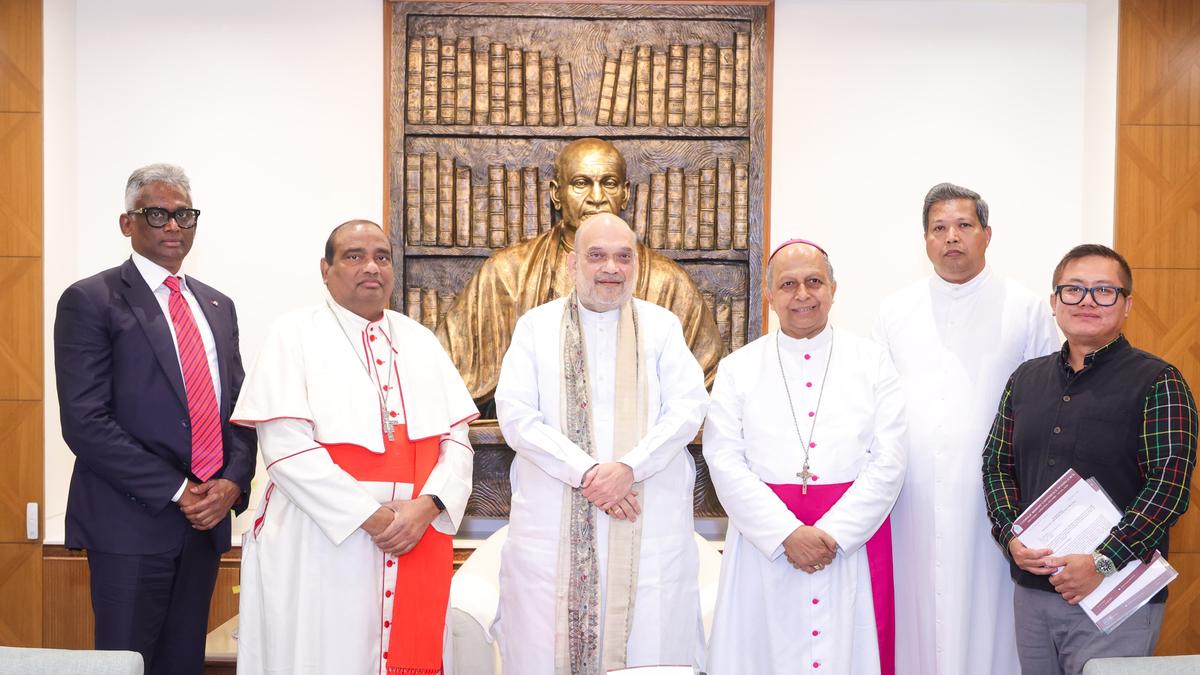
Amit Shah assures church leaders that FCRA Bill will not be applied retrospectively
Source Entity
India Latest News: Top National Headlines Today & Breaking News | The Hindu
Intelligence Synthesis
AI-Generated Core Insights
Home Minister Amit Shah met with church leaders to address concerns regarding the FCRA Bill, clarifying that the legislation will not be applied retrospectively and is not aimed at any specific religious group. He also urged the community to report instances of aggression through legal channels and requested their assistance in brokering peace in the conflict-ridden state of Manipur.
Strategic Engagement: Amit Shah’s Dialogue with Religious Leadership
In a significant move aimed at addressing communal anxieties and internal security challenges, India's Home Minister Amit Shah recently held a high-level meeting with prominent church leaders. This engagement serves as a critical touchpoint between the central government and religious institutions, seeking to navigate the complexities of legislative reform and regional instability. The meeting was characterized by a dual focus: providing clarity on the regulatory framework of the Foreign Contribution (Regulation) Act (FCRA) and seeking community cooperation to address the volatile situation in Manipur.
De-escalating Concerns Over the FCRA Bill
One of the most pressing issues discussed was the implementation of the FCRA Bill. There has been widespread apprehension among various non-governmental organizations and religious bodies regarding the potential for the government to apply new regulations retrospectively, which could jeopardize existing operations and funding streams. Minister Shah provided essential reassurance by clarifying that the Bill is not intended to be applied retrospectively. Furthermore, he explicitly stated that the legislation is not designed to target any specific religious community. By framing the Bill as a neutral tool for financial transparency and regulatory oversight rather than a mechanism for religious exclusion, the Ministry aims to mitigate fears of institutional bias.
Upholding the Rule of Law Against Aggression
Addressing the safety and security of religious communities, the Home Minister took a firm stance on the necessity of utilizing formal legal channels. He urged church leaders to ensure that all instances of aggression against their community are met with the filing of First Information Reports (FIRs). This directive is significant as it emphasizes the government's reliance on the established judicial and law enforcement machinery to handle communal grievances. By encouraging the community to document and report hostility through legal means, the administration seeks to prevent extra-judicial escalations and maintain the integrity of the rule of law in the face of social tension.
The Call for Peacebuilding in Manipur
Perhaps the most sensitive aspect of the meeting involved the ongoing unrest in Manipur. Recognizing the profound social and moral influence held by church leaders within the state, Minister Shah made a direct appeal for them to act as brokers of peace. The conflict in Manipur, driven by complex ethnic and communal fault lines, requires multi-dimensional resolution strategies. By inviting religious leaders to participate in peace-brokering, the government is attempting to leverage the community's grassroots influence to foster reconciliation and stabilize a region that has faced significant upheaval.
Broader Political and Social Implications
This interaction reflects a broader strategic approach by the Ministry of Home Affairs to manage communal relations through direct engagement and legislative clarification. The government's efforts to decouple regulatory tightening from religious identity are essential for maintaining social cohesion in a diverse democracy. Furthermore, the request for community involvement in the Manipur peace process highlights a shift toward inclusive security management, where religious and social leaders are viewed as vital stakeholders in national stability rather than mere subjects of regulation.
Conclusion and Future Outlook
In summary, the meeting between Amit Shah and church leaders represents a multifaceted attempt to balance strict regulatory oversight with community-based peacebuilding. While the assurances regarding the FCRA Bill may alleviate immediate fears of retrospective penalization, the long-term success of this engagement will depend on the consistent application of law and the effectiveness of the community's role in Manipur. Moving forward, the government's ability to maintain this balance between legislative rigor and inclusive dialogue will be a key determinant in managing India's diverse socio-political landscape.
Verification Required?