A.P. CM orders formation of Special Task Force to check social media abuse
Source Entity
India Latest News: Top National Headlines Today & Breaking News | The Hindu
Intelligence Synthesis
AI-Generated Core Insights
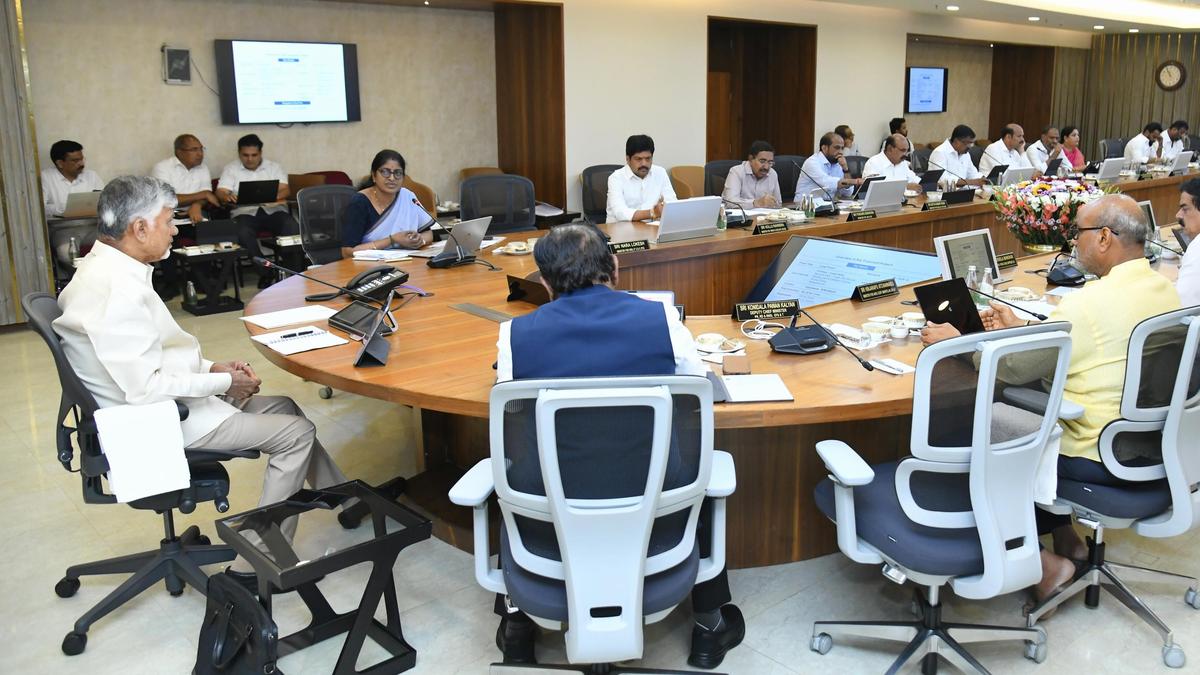
Andhra Pradesh Chief Minister N. Chandrababu Naidu has directed the formation of a Special Task Force (STF) led by an IG-rank officer to crack down on fake news, defamatory campaigns, and objectionable online content targeting political leaders and the state government.
Combating the Digital Front: Analysis of A.P.'s Special Task Force on Social Media Abuse
Chief Minister N. Chandrababu Naidu's recent directive to establish a Special Task Force (STF) to monitor and curb social media abuse marks a significant escalation in the state's approach to digital governance. By ordering a crackdown on defamatory campaigns and fake news targeting political leadership and the government, the administration is acknowledging that the digital sphere is no longer just a tool for communication, but a primary battlefield for political warfare. The appointment of an IG-rank officer to oversee these cybercrime issues underscores the gravity with which the government views online misinformation, elevating the issue from routine policing to a high-priority strategic operation.
The Evolution of Political Discourse in Andhra Pradesh
Historically, political rivalry in Andhra Pradesh has been characterized by intense rhetoric and grassroots mobilization. However, the transition to a digitally-driven ecosystem has shifted this conflict to platforms like X (formerly Twitter), Facebook, and WhatsApp. The proliferation of "IT cells"—organized groups dedicated to shaping narratives—has led to an environment where misinformation can spread faster than official rebuttals. The CM's move to form an STF is a direct response to this trend, aiming to create a deterrent against the systemic use of fake news to destabilize government credibility or malign individual leaders.
Institutional Oversight and Cyber-Forensics
The decision to place an Inspector General (IG) rank officer at the helm of this initiative is a critical detail. This ensures that the task force has the necessary bureaucratic weight to coordinate between different police districts and central intelligence agencies. From a technical standpoint, the STF will likely need to deploy advanced cyber-forensics to trace the origins of anonymous accounts and bot networks. In an era of encrypted messaging and VPNs, identifying the actual architects of defamatory campaigns requires a sophisticated infrastructure that goes beyond standard police capabilities, necessitating a specialized unit with dedicated technical expertise.
The Tension Between Security and Free Expression
While the goal of curbing "fake news" is ostensibly to protect the truth, this move inevitably raises questions regarding the boundary between legitimate political criticism and "objectionable content." In a democratic framework, the ability to criticize government policy is paramount. The challenge for the newly formed STF will be to define "defamation" and "abuse" with surgical precision to avoid the risk of stifling dissent. If the criteria for "objectionable content" are too broad, there is a risk that the task force could be perceived as a tool for political censorship rather than a mechanism for factual integrity.
Technological Challenges and Future Implications
The STF faces a daunting uphill battle against the evolving nature of digital deception. The rise of AI-generated deepfakes—both audio and video—means that the "fake news" the government seeks to combat is becoming increasingly indistinguishable from reality. Future trends suggest that the STF will need to move beyond reactive policing (taking down posts) to proactive monitoring using AI-driven sentiment analysis and early-warning systems. This shift could set a precedent for other Indian states to centralize their cyber-defense mechanisms against political disinformation.
Conclusion: A New Era of Digital Policing
In summary, the formation of the Special Task Force in Andhra Pradesh is a decisive step toward reclaiming the narrative in an increasingly volatile digital landscape. By integrating high-level police oversight with a specific mandate to target defamatory campaigns, the Naidu administration is attempting to professionalize the fight against misinformation. The success of this initiative will ultimately depend on the STF's ability to balance the enforcement of the law with the protection of free speech, ensuring that the crackdown on fake news does not inadvertently silence the voice of the electorate.
Verification Required?