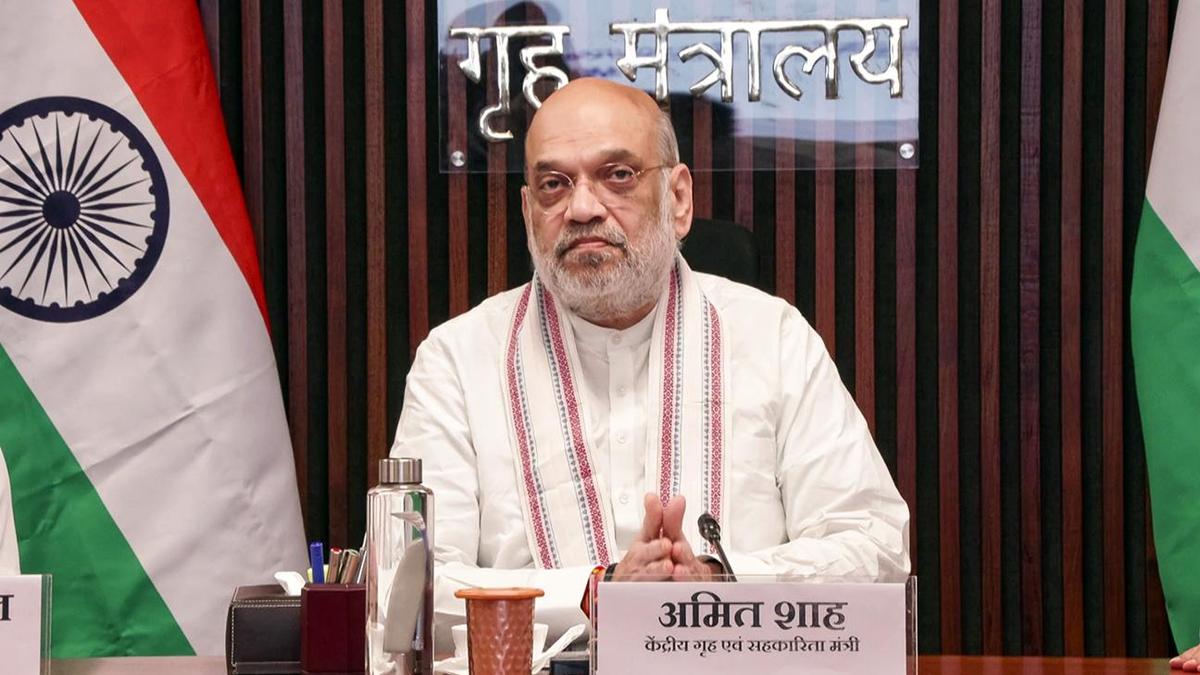
Catholic body meets Amit Shah, flags concerns over FCRA Bill
Source Entity
India Latest News: Top National Headlines Today & Breaking News | The Hindu
Intelligence Synthesis
AI-Generated Core Insights
A delegation from the Catholic Bishops' Conference of India (CBCI) met with Home Minister Amit Shah to express concerns over the Foreign Contribution (Regulation) Act (FCRA) rules, specifically arguing that restrictions on proselytization unfairly stigmatize faith-based charitable and humanitarian work.
Analysis of the CBCI-Amit Shah Meeting Regarding FCRA Regulations
Introduction to the Diplomatic Encounter
The recent meeting between a delegation from the Catholic body, specifically the Catholic Bishops' Conference of India (CBCI), and Union Home Minister Amit Shah marks a critical juncture in the ongoing dialogue between the Indian state and faith-based organizations. At the heart of this meeting is the Foreign Contribution (Regulation) Act (FCRA), a piece of legislation that governs how non-profit organizations receive and utilize foreign funding. The CBCI's decision to engage directly with the Home Ministry highlights a growing anxiety within the Christian community regarding the government's tightening grip on the financial lifelines of religious NGOs.
The FCRA Framework and State Sovereignty
To understand the gravity of this meeting, one must look at the broader context of the FCRA. The Indian government has historically utilized the FCRA to prevent foreign interference in domestic political affairs and to ensure that foreign funds are not used for activities detrimental to the national interest. In recent years, the administration has significantly tightened these rules, leading to the cancellation of thousands of FCRA licenses. From the government's perspective, these measures are essential for national security and transparency. However, for faith-based organizations, these regulations often feel like a mechanism for systemic surveillance and restriction of their operational autonomy.
The Contention Over 'Proselytization'
The core of the CBCI's grievance lies in the specific language of the new rules, which explicitly bar 'proselytization.' The CBCI argues that the inclusion of this term is not merely a legal formality but a qualitative judgment that degrades the nature of their work. By linking foreign funding to the prohibition of proselytization, the state creates a precarious environment where legitimate charitable, educational, and healthcare services may be viewed through a lens of suspicion. The Church contends that their humanitarian efforts—often reaching the most marginalized sections of society—are being unfairly conflated with forced or induced conversions, thereby stigmatizing their altruistic intentions.
Impact on Faith-Based Humanitarian Infrastructure
Faith-based organizations have historically filled critical gaps in India's social infrastructure, particularly in rural and underserved regions where state presence is minimal. The Catholic Church, in particular, manages an extensive network of hospitals, schools, and orphanages. The threat of losing FCRA certification due to vague clauses regarding proselytization could lead to a significant decline in the quality and availability of these services. If funding is frozen or licenses are revoked based on subjective interpretations of 'proselytization,' the primary victims will be the impoverished communities that rely on these institutions for basic healthcare and education.
Legal and Constitutional Implications
This conflict reflects a deeper tension between the state's regulatory power and the constitutional guarantees of freedom of religion and the right to form associations. The CBCI's approach to Amit Shah suggests a preference for diplomatic resolution over immediate litigation, yet the underlying issue remains a legal minefield. The challenge for the government is to define 'proselytization' in a way that is legally precise and does not infringe upon the fundamental right to practice and propagate religion, as guaranteed under the Indian Constitution. Without such clarity, the FCRA rules risk becoming a tool for arbitrary administrative action.
Future Trends and Potential Outcomes
Looking forward, the outcome of these discussions will likely set a precedent for how other religious and social organizations interact with the Home Ministry. If the government shows flexibility in the wording or application of the FCRA rules, it could signal a period of reconciliation. Conversely, if the rules remain rigid, we can expect an increase in legal challenges in the High Courts and the Supreme Court. Furthermore, this situation may influence international perceptions of India's commitment to religious freedom, potentially impacting diplomatic relations with nations that have strong ties to the global Catholic community.
Conclusion
The meeting between the CBCI and Amit Shah is more than a bureaucratic consultation; it is a clash of narratives. While the state emphasizes security and the prevention of foreign influence, the Catholic body emphasizes the intrinsic link between faith and service. The resolution of this dispute will depend on whether the government can decouple the regulation of foreign funds from the stigmatization of faith-based social work, ensuring that the pursuit of national security does not come at the cost of essential humanitarian services.
Verification Required?