Centre’s panel backs ‘Satluj’ ban, cites sovereignty, security concerns
Source Entity
Latest News: Today's Latest News Headlines from India & World | Hindustan Times | Hindustan Times
Intelligence Synthesis
AI-Generated Core Insights
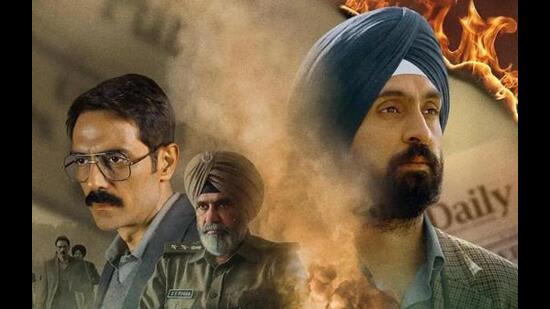
A government-backed panel has recommended a ban on the film 'Satluj', directed by Honey Trehan, citing national security and sovereignty concerns. The movie focuses on the life of Jaswant Singh Khalra, a human rights activist who uncovered the mass cremation of thousands of unidentified individuals in Punjab between 1984 and 1994.
State Sovereignty vs. Artistic Expression: The Ban on 'Satluj'
The recent recommendation by a Centre-backed panel to ban the film Satluj marks a significant intersection of cinema, historical trauma, and national security. Directed by Honey Trehan, the film seeks to chronicle the life of Jaswant Singh Khalra, a pivotal figure in the human rights movement in Punjab. By citing 'sovereignty and security concerns,' the panel has effectively positioned the film's narrative as a potential threat to the state's stability, highlighting a recurring tension in Indian governance where the documentation of state excesses is often viewed through the lens of national risk.
The Historical Shadow of Punjab (1984-1994)
To understand the gravity of this ban, one must look at the decade the film depicts. Between 1984 and 1994, Punjab experienced a period of intense insurgency and subsequent counter-insurgency operations. This era was characterized by extreme violence, including the aftermath of Operation Blue Star and the subsequent unrest. The core of Satluj revolves around the dark underbelly of this conflict: the disappearance of thousands of youths and the subsequent secret cremations of unidentified bodies by security forces. This period remains one of the most sensitive chapters in modern Indian history, with deep-seated grievances that continue to influence regional politics.
The Legacy of Jaswant Singh Khalra
Jaswant Singh Khalra, the protagonist of the film, was not merely an observer but a meticulous investigator. His work involved identifying the victims of these mass cremations, providing closure to thousands of grieving families and exposing the scale of human rights violations. By focusing on Khalra, Honey Trehan's film does not just tell a story of violence, but a story of accountability. The decision to ban a film centered on a man who sought the truth about the 'disappeared' suggests a reluctance by the current establishment to allow a public, cinematic reckoning with the methods used to quell the Punjab insurgency.
Analyzing the 'Security and Sovereignty' Justification
The panel's invocation of 'sovereignty' and 'security' is a broad legal umbrella often used to curtail content that might incite public disorder or embarrass the state. In the context of Satluj, these concerns likely stem from the fear that depicting state-sponsored violence could reignite separatist sentiments or damage the image of the security forces. By framing the ban as a matter of national security rather than a disagreement over historical facts, the state moves the conversation from the realm of artistic freedom to the realm of existential threat, making it harder for the filmmakers to challenge the decision in court.
Broader Implications for Freedom of Speech
This move reflects a broader trend of increasing censorship regarding 'sensitive' historical narratives. When the state suppresses a film that documents human rights abuses, it risks creating a 'chilling effect' across the creative industry. Filmmakers may begin to self-censor, avoiding topics that intersect with the military or intelligence agencies to avoid the bureaucratic nightmare of bans and legal battles. This erosion of cinematic autonomy limits the public's ability to engage with a holistic version of their own history, replacing critical analysis with a sanitized state narrative.
Future Trends and the Digital Frontier
Looking forward, the ban on Satluj may paradoxically increase the film's visibility through the 'Streisand Effect.' In an era of global streaming platforms and digital piracy, a government ban often acts as a catalyst for underground viewership and international attention. We can expect a legal battle to follow, potentially reaching the higher courts to determine if 'security concerns' outweigh the fundamental right to free speech. Furthermore, this event may push more independent filmmakers toward international co-productions to ensure their work reaches an audience despite domestic restrictions.
Conclusion
The ban on Satluj is more than a regulatory decision; it is a reflection of the ongoing struggle to reconcile national security with historical truth. By silencing the story of Jaswant Singh Khalra, the state avoids a difficult conversation about the cost of order and the necessity of accountability. While the panel may believe they are protecting sovereignty, the suppression of historical memory often leaves the underlying societal wounds unhealed, ensuring that the ghosts of 1984-1994 continue to haunt the political landscape.
Verification Required?