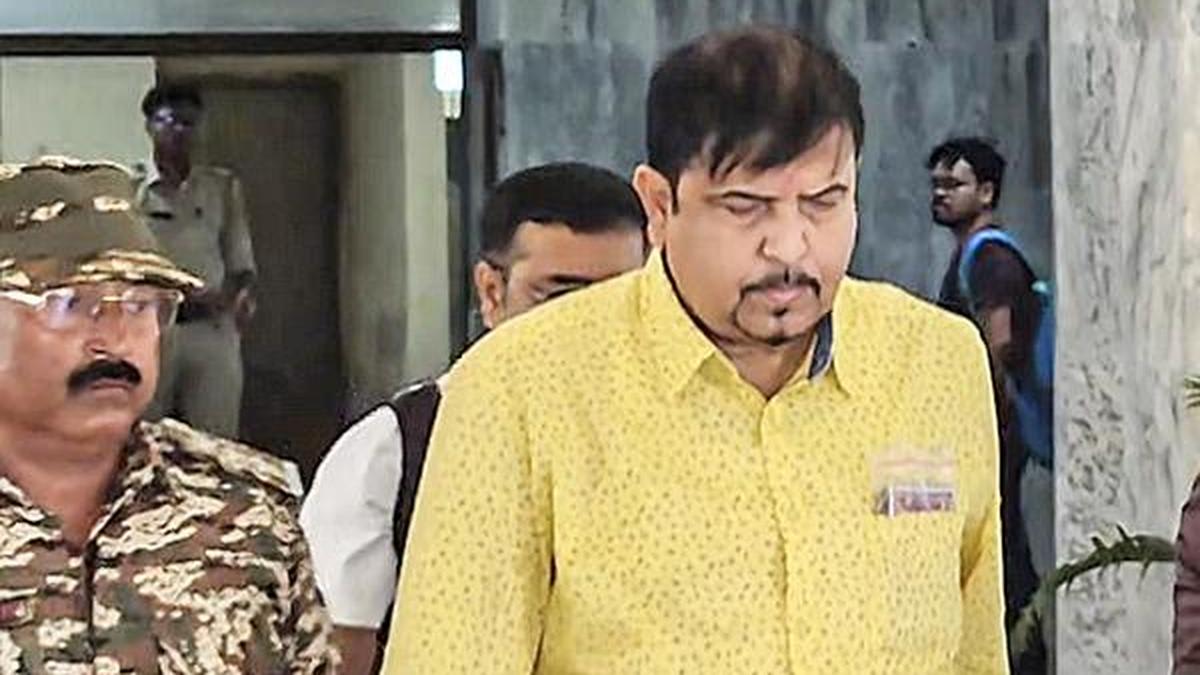
Ex-WB Minister Sujit Bose funnelled municipality ‘scam’ funds into his restaurant, bar, flats: ED
Source Entity
India Latest News: Top National Headlines Today & Breaking News | The Hindu
Intelligence Synthesis
AI-Generated Core Insights
The Enforcement Directorate (ED) has alleged that former West Bengal Minister Sujit Bose misappropriated municipal funds to acquire personal assets, including restaurants, bars, and flats. The investigation reveals a recruitment scam where Bose allegedly recommended 340 candidates for municipal posts, 284 of whom were successfully appointed between 2014 and 2022.
Analysis of the Sujit Bose Municipal Recruitment and Asset Scam
Overview of the Allegations
The Enforcement Directorate (ED) has brought to light a sophisticated financial irregularity involving Sujit Bose, a former minister in West Bengal. The core of the allegation is that Bose leveraged his political influence to orchestrate a recruitment scam within the municipality, subsequently funneling the proceeds of this illicit activity into a diversified portfolio of personal assets. According to the ED, these assets include high-value real estate in the form of flats, as well as commercial ventures such as restaurants and bars. This case represents a classic instance of the intersection between political patronage and money laundering, where public office is utilized as a vehicle for private wealth accumulation.
The Mechanics of the Recruitment Fraud
At the heart of the scandal is the manipulation of the municipal hiring process between 2014 and 2022. The ED claims that Sujit Bose acted as a gatekeeper for employment, illegally recommending 340 candidates for various municipal positions. The efficiency of this influence is startling: 284 of these candidates—approximately 83%—secured appointments. This suggests a systemic collapse of the merit-based recruitment process, indicating that the hiring authority was either coerced or complicit in Bose's schemes. In such 'pay-to-play' models, candidates typically pay substantial bribes to secure guaranteed employment, creating a massive stream of untraceable cash for the political intermediary.
Money Laundering and Asset Integration
Once the illicit funds were collected from the candidates, they were allegedly integrated into the legal economy through 'layering' and 'integration'—the two primary stages of money laundering. By investing this 'black money' into restaurants, bars, and residential flats, Bose attempted to legitimize the wealth. Real estate and hospitality businesses are frequently used for this purpose because they allow for the inflation of costs and the mixing of illicit cash with legitimate business revenue. The ED's focus on these specific assets indicates that they have traced the financial trail from the bribes paid by municipal recruits to the capital expenditures used to establish these businesses.
Broader Political and Regional Context
This investigation does not exist in a vacuum but is part of a larger trend of high-profile corruption probes in West Bengal. In recent years, the state has seen a surge in ED and CBI investigations targeting government officials and ministers across various sectors, including education (the SSC scam) and trade. This pattern highlights a period of intense scrutiny regarding the governance and financial transparency of the state administration. The recurring theme in these cases is the alleged use of government machinery to create patronage networks, where loyalty and financial kickbacks are prioritized over administrative competence.
Implications for Local Governance
Beyond the financial crime, the appointment of 284 individuals based on political recommendations rather than merit has profound implications for urban governance. Municipalities are responsible for critical public services, including sanitation, water supply, and urban planning. When a significant portion of the workforce is hired through a scam, the quality of public service delivery inevitably declines. The installation of an incompetent or unqualified workforce undermines the institutional integrity of the municipality, leading to inefficiency and a lack of accountability in the management of public resources.
Legal Trajectory and Future Trends
Moving forward, the legal battle will likely center on the Prevention of Money Laundering Act (PMLA). The ED is expected to move toward the provisional attachment of the restaurants, bars, and flats identified as 'proceeds of crime.' Under PMLA, the burden of proof often shifts, requiring the accused to prove that the assets were acquired through legitimate means. Politically, this case will likely serve as ammunition for opposition parties to demand deeper audits of municipal hiring practices across the state. We can expect a trend of increased auditing of 'discretionary' appointments in local government bodies to prevent similar occurrences.
Conclusive Summary
The case against Sujit Bose is a stark illustration of how political power can be weaponized to bypass institutional checks and balances. By turning public employment into a tradable commodity, the accused not only enriched himself through the acquisition of luxury assets but also compromised the integrity of local governance. The ED's investigation underscores the critical importance of financial intelligence in uncovering the hidden assets of corrupt officials and the necessity of implementing transparent, automated recruitment systems to eliminate human interference in public hiring.
Verification Required?