How many astronauts should live on the moon? New study points to ideal number
Source Entity
The Indian Express
Intelligence Synthesis
AI-Generated Core Insights
A new study analyzes the optimal number of astronauts required for a sustainable lunar base at the moon's south pole, aiming to balance resource constraints with the operational and psychological needs of the Artemis program.
Determining the Human Scale of Lunar Habitation
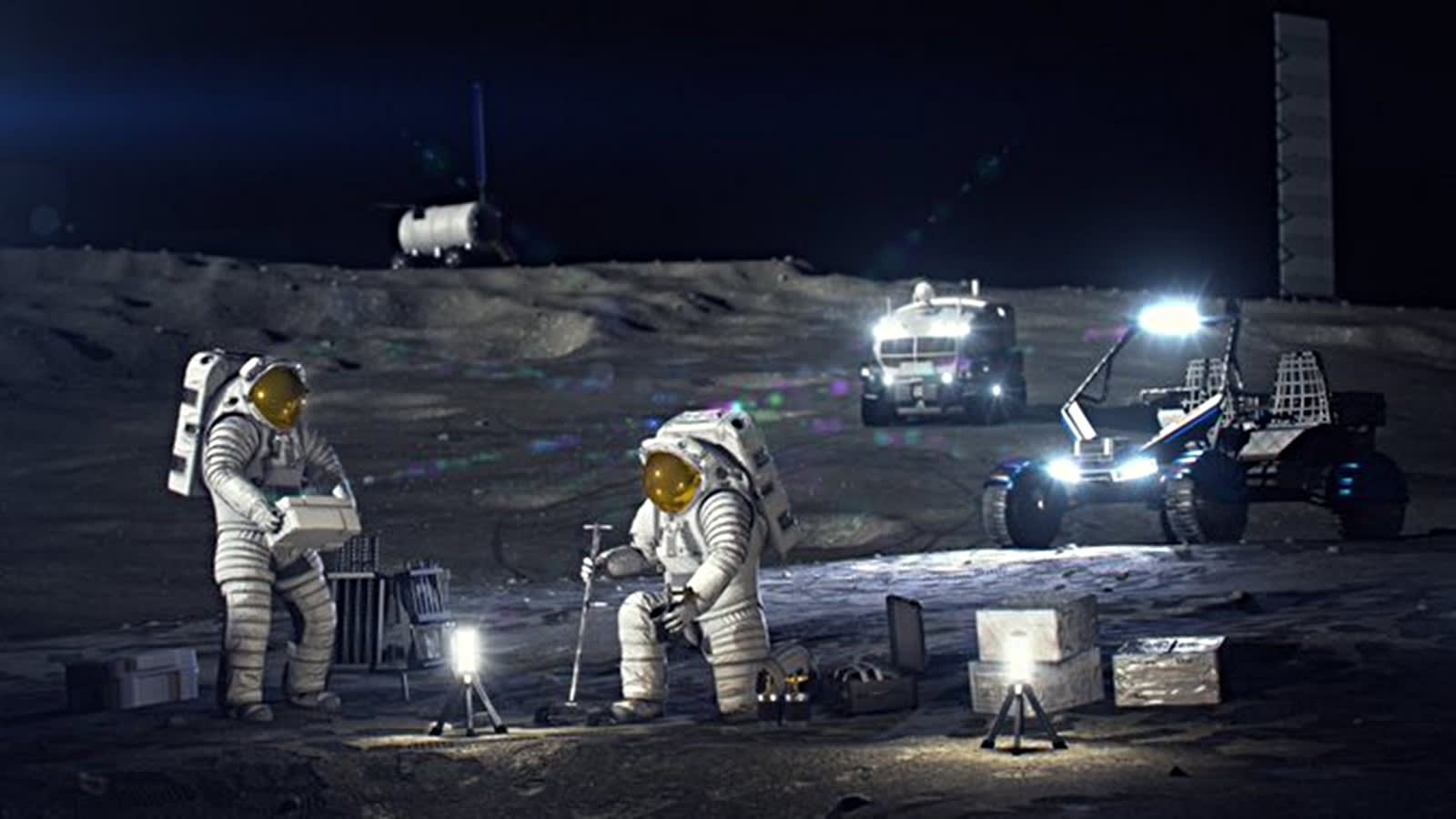
As NASA advances its ambitious Artemis program, the transition from short-term exploration to a sustainable human presence on the moon marks a pivotal shift in space history. The core challenge is no longer just reaching the lunar surface, but determining the precise scale of the population required to maintain a functional base. A new study highlights that the success of a lunar outpost, particularly at the south pole, hinges on finding a "Goldilocks" number of inhabitants—enough to ensure safety and psychological stability, but few enough to avoid depleting critical life-support resources.
The Strategic Importance of the Lunar South Pole
The focus on the moon's south pole is not arbitrary; it is a strategic decision based on the presence of permanently shadowed regions (PSRs) that are believed to contain significant deposits of water ice. This ice is the "gold mine" of lunar colonization, as it can be processed into drinking water, breathable oxygen, and liquid hydrogen for rocket fuel. The study's findings regarding crew size are intrinsically linked to the rate at which these resources can be extracted and processed. If the population exceeds the production capacity of the local In-Situ Resource Utilization (ISRU) systems, the base becomes dangerously dependent on costly resupply missions from Earth.
Balancing Operational Redundancy and Resource Strain
From an operational standpoint, the "ideal number" of astronauts must account for critical redundancy. In the harsh environment of the lunar surface, a crew that is too small faces catastrophic risk; if one or two members become incapacitated, the remaining staff may be unable to perform essential maintenance or emergency protocols. However, increasing the population introduces exponential strain on the closed-loop life support systems (ECLSS). Every additional human increases the demand for calories, oxygen, and waste management, necessitating larger habitats and more complex energy grids, which in turn increases the risk of systemic failure.
The Psychological Dimension of Deep Space Isolation
Beyond the physics of survival, the study likely addresses the sociological and psychological requirements of long-term isolation. History from the International Space Station (ISS) and Antarctic research stations suggests that extreme isolation can lead to "winter-over syndrome," characterized by depression and interpersonal friction. A minimum social threshold is required to maintain mental health and cognitive function. Determining the ideal number of astronauts involves calculating the smallest group size that can maintain a healthy social dynamic and emotional support network without overwhelming the physical infrastructure of the base.
Future Trends in Lunar Demographics
Looking forward, the population of a lunar base is expected to evolve in phases. We will likely see an initial phase of small, rotating crews of specialists focused on infrastructure setup, followed by a gradual increase as commercial partners like SpaceX and Blue Origin integrate their capabilities. The long-term trend will likely shift toward a permanent civilian presence, including scientists and engineers, moving the lunar base from a military-style outpost to a scientific village. This evolution will require a dynamic scaling of the population based on the efficiency of lunar mining and the development of additive manufacturing (3D printing) using lunar regolith.
Conclusion
The quest to find the ideal number of astronauts for a lunar base is a complex optimization problem that blends astrophysics, logistics, and psychology. By anchoring the population size to the capabilities of the Artemis program and the resource availability of the south pole, NASA can mitigate the risks of colony collapse. Ultimately, the success of the moon as a stepping stone to Mars depends on our ability to create a balanced, sustainable human ecosystem on the lunar surface.