Protests over Ken-Betwa river link project resume in Madhya Pradesh
Source Entity
India Latest News: Top National Headlines Today & Breaking News | The Hindu
Intelligence Synthesis
AI-Generated Core Insights
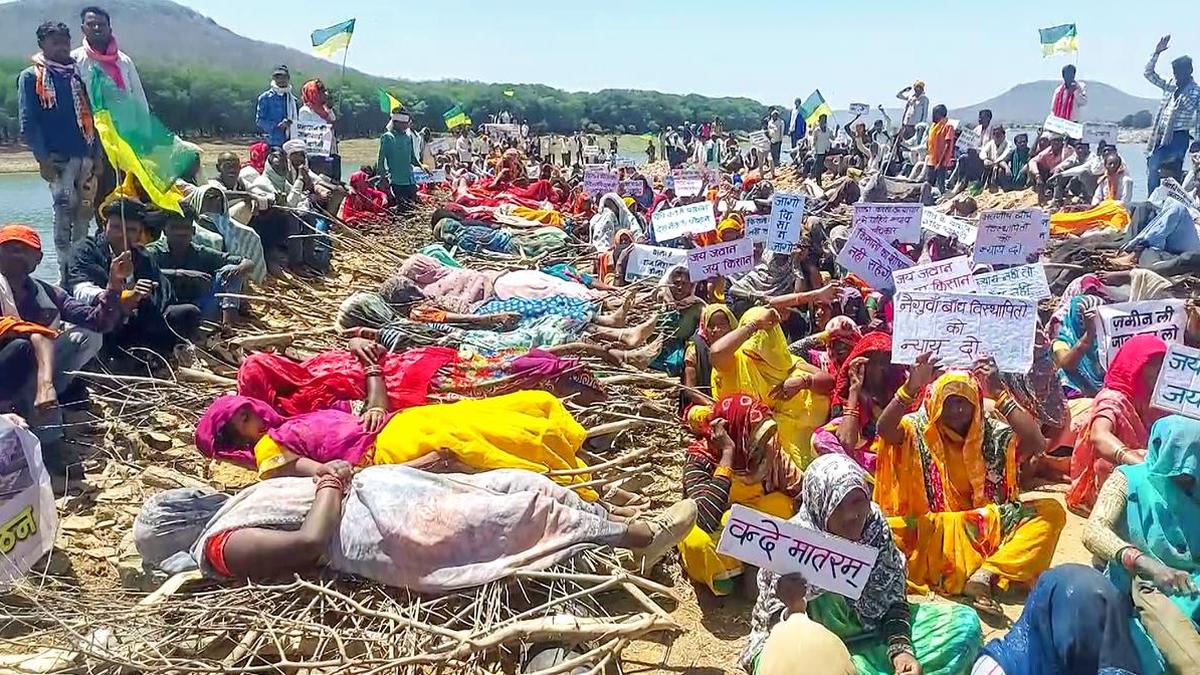
Protestors, predominantly women, have entered their fifth day of symbolic protests using hanging nooses on the banks of the Barana River near Kupi village in Madhya Pradesh to oppose the Ken-Betwa river link project.
Desperation on the Banks of the Barana: The Ken-Betwa Conflict
In a stark display of desperation and defiance, a group of protestors—most of whom are women—have occupied the banks of the Barana River near Kupi village in Madhya Pradesh. Now entering their fifth consecutive day of demonstration, the protestors have employed a harrowing symbolic gesture: placing hanging nooses around their necks. This act serves as a poignant metaphor for the perceived 'death sentence' the Ken-Betwa river link project imposes on their livelihoods, ancestral lands, and the local ecosystem. The intensity of this protest highlights a deepening rift between the state's developmental ambitions and the survival instincts of the rural populace.
The Ambition of the Ken-Betwa Link Project
To understand the roots of this unrest, one must examine the scope of the Ken-Betwa Link Project (KBLP). As India's first major river-interlinking initiative, the KBLP is designed to transfer surplus water from the Ken river to the water-stressed Betwa basin. The primary objective is to provide irrigation to the drought-prone Bundelkhand region, which spans across Madhya Pradesh and Uttar Pradesh. While the government frames this as a critical intervention for water security and agricultural stability, the implementation has sparked fierce resistance from those living in the project's direct path, who view the 'surplus' water narrative as a fallacy that ignores local ecological needs.
Environmental Costs and the Panna Tiger Reserve
Central to the controversy is the significant environmental toll associated with the project. The construction of dams and reservoirs is expected to submerge vast tracts of forest land, including a substantial portion of the Panna Tiger Reserve. This not only threatens the habitat of endangered wildlife but also disrupts critical wildlife corridors. For the residents of Kupi village and surrounding areas, the destruction of the forest is not just an ecological loss but an economic one, as many depend on non-timber forest produce for their daily sustenance. The symbolic nooses worn by the protestors represent the strangulation of the natural environment in the name of industrial-scale engineering.
The Gendered Dimension of Rural Resistance
Notably, the leadership of these protests by women underscores a critical sociopolitical dynamic in rural Madhya Pradesh. In many agrarian societies, women are the primary managers of household water and small-scale farming. When land is seized or water sources are diverted, women often bear the brunt of the resulting hardship, facing increased labor and decreased food security. By taking the forefront of this protest, the women of Kupi village are asserting their role as stakeholders in land governance, challenging the patriarchal top-down approach of infrastructure planning that often excludes the voices of the most affected residents.
Displacement and the Crisis of Compensation
Beyond the environmental impact, the specter of forced displacement looms large. The Ken-Betwa project requires the relocation of thousands of families. Historically, river-linking projects in India have been marred by inadequate compensation and poor rehabilitation efforts, leaving displaced populations in a state of perpetual precariousness. The protestors' use of nooses signals a belief that the promised compensation is insufficient to replace the holistic value of their homes and community ties. This sense of betrayal by the state has transformed a policy disagreement into a human rights struggle, where the protestors feel they have no recourse other than extreme symbolic gestures to garner national attention.
Future Implications and the Path Forward
Looking ahead, the persistence of these protests suggests that the government may face increasing volatility if a more inclusive dialogue is not established. The KBLP serves as a litmus test for future river-interlinking projects across India. If the state continues to prioritize engineering goals over social and ecological safeguards, it risks fostering a legacy of systemic unrest in rural heartlands. The resolution of the Kupi village standoff will likely depend on whether the administration can move beyond symbolic concessions and provide concrete, legally binding guarantees regarding land rights and environmental restoration.
Summary
The protests in Madhya Pradesh are more than a local dispute; they are a manifestation of the tension between macro-level developmental goals and micro-level human rights. The symbolic use of nooses by women on the Barana River reflects a profound fear of erasure—socially, economically, and environmentally—driven by the Ken-Betwa river link project.
Verification Required?