Man hurls papers at Supreme Court Bench after incoherent submissions
Source Entity
India Latest News: Top National Headlines Today & Breaking News | The Hindu
Intelligence Synthesis
AI-Generated Core Insights
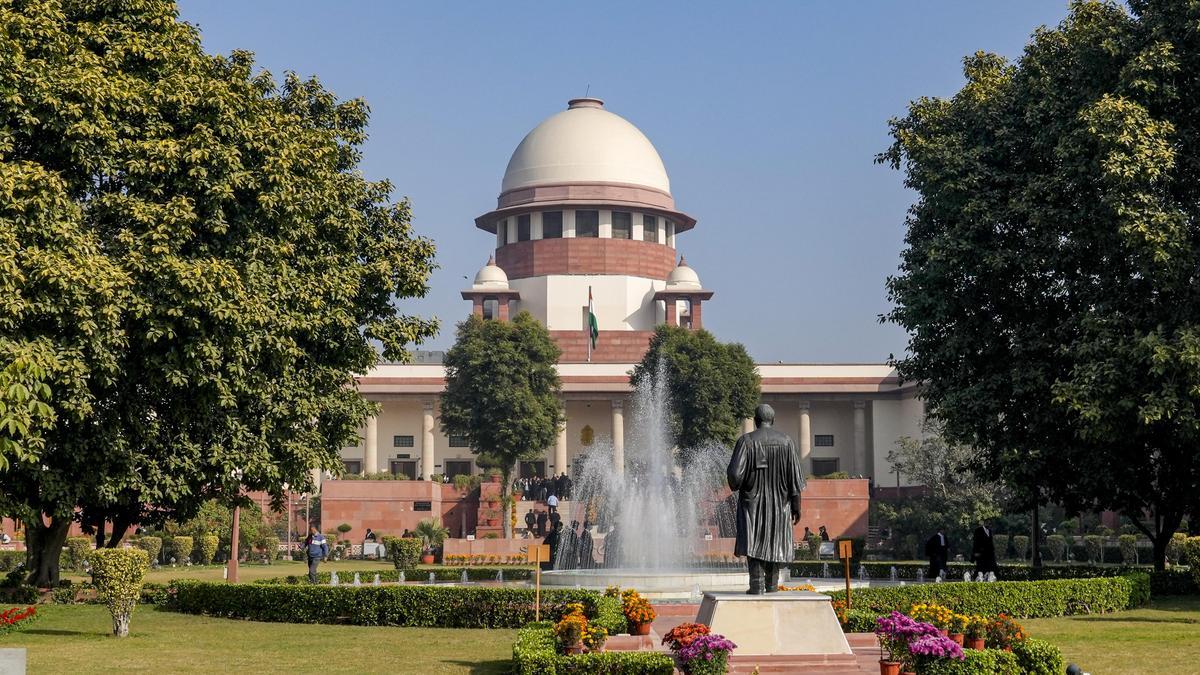
A litigant was escorted out of the Supreme Court after disrupting proceedings by hurling papers at the bench and making incoherent, unparliamentary submissions. Despite the breach of decorum, the court decided not to pursue formal action against the individual.
Court Decorum Challenged: Analysis of Supreme Court Disruption
In a striking breach of judicial protocol, a litigant was recently removed from a Supreme Court session after a series of erratic behaviors. The incident culminated in the individual hurling papers at the Bench following a sequence of submissions that the court characterized as "incoherent." This event highlights the fragile intersection between the public's right to access the highest court of the land and the necessity of maintaining a disciplined environment for the administration of justice.
The Nature of the Disruption
The disruption was marked by two primary failures in court etiquette: the delivery of incoherent legal arguments and the use of "unparliamentary utterances." In a legal context, unparliamentary language refers to speech that is deemed offensive, improper, or disrespectful to the dignity of the institution. When a litigant bypasses professional legal representation—acting as a litigant in person—the court typically grants a degree of latitude. However, the act of physically throwing documents at the judges represents a transition from verbal instability to physical aggression, which typically triggers immediate security intervention.
Judicial Leniency and the Human Element
One of the most analytical points of this event is the court's decision to forgo formal punitive action. Ordinarily, contempt of court is a serious charge that can lead to fines or imprisonment to preserve the authority of the judiciary. The decision to let the individual go without penalty suggests that the Bench may have perceived the man's "incoherent" state as a sign of mental distress or a lack of capacity rather than a calculated attempt to obstruct justice. By choosing leniency, the court avoided escalating a situation that likely stemmed from personal instability, thereby prioritizing compassion over strict adherence to punitive protocols.
The Sanctity of the Bench
Historically, the Supreme Court serves as the ultimate arbiter of law, and its authority is derived not just from statutes, but from the perceived sanctity and solemnity of its proceedings. Incidents of this nature, while isolated, underscore the challenges faced by the judiciary in an era of increasing public volatility. The requirement for litigants to maintain a specific standard of behavior is designed to ensure that legal arguments are weighed on their merits rather than being overshadowed by theatrical or aggressive outbursts.
Implications for Future Proceedings
Looking forward, this incident may prompt a subtle shift in how security and court staff manage pro se litigants. There is a growing need for a screening process that can identify individuals who may be emotionally or mentally unfit to present their own case, ensuring they receive the necessary support or representation before entering the courtroom. This prevents the judiciary from being forced into the role of managing behavioral crises, allowing them to remain focused on the interpretation of the law.
Conclusion
While the act of hurling papers at a Supreme Court Bench is a severe violation of court rules, the judiciary's restrained response reflects a nuanced approach to justice. By escorting the man out without pursuing contempt charges, the court maintained its dignity while acknowledging the potential instability of the litigant, ultimately balancing the need for order with a pragmatic understanding of human frailty.
Verification Required?