Meerut student's death: Police used excessive force against protesters, says Chandrashekhar Azad
Source Entity
India Latest News: Top National Headlines Today & Breaking News | The Hindu
Intelligence Synthesis
AI-Generated Core Insights
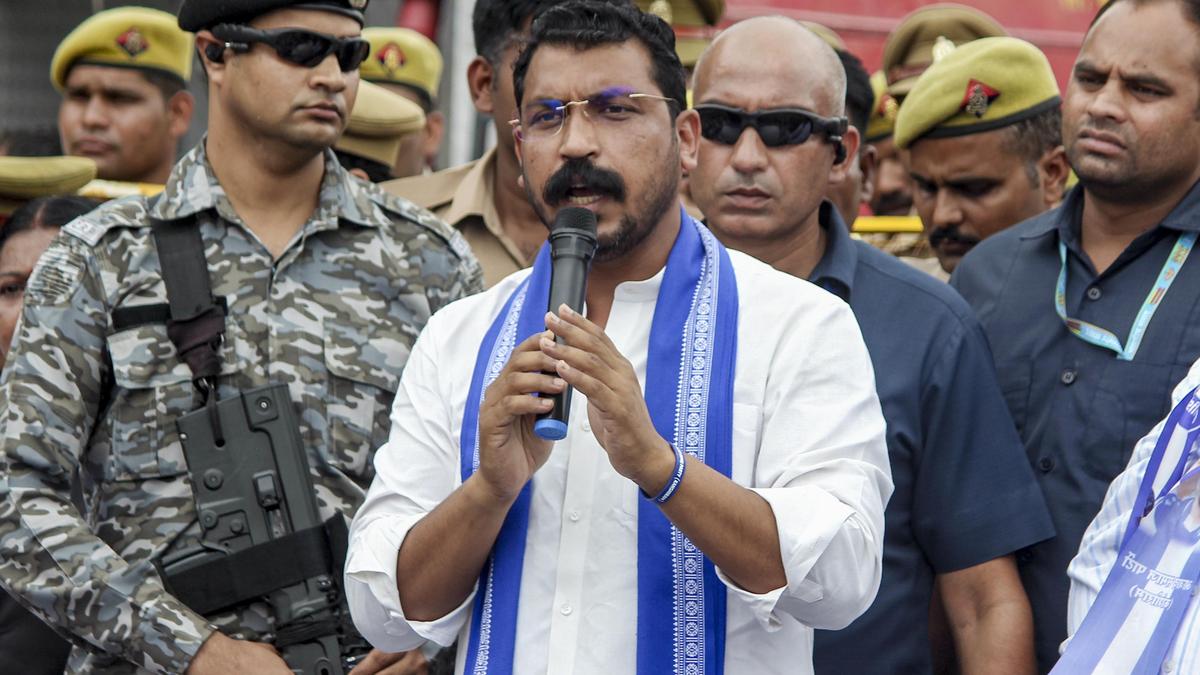
Chandrashekhar Azad of the Azad Samaj Party has accused law enforcement of using excessive force against protesters following the death of a student in Meerut, resulting in prolonged tension at a local toll plaza.
Analysis of Protests Following Student Death in Meerut
The Incident and Immediate Aftermath
The death of a student in Meerut has sparked significant unrest, escalating into a political confrontation between the state's law enforcement and supporters of the Azad Samaj Party. The core of the conflict centers on allegations made by Chandrashekhar Azad, a prominent Dalit leader and politician, who claims that the police employed excessive and disproportionate force to quell protests. This escalation reached a peak at a local toll plaza, where a large gathering of supporters created a volatile environment, disrupting traffic and causing hours of tension. The event underscores the fragile relationship between student activists and security forces in the region.
Political Mobilization and the Role of Chandrashekhar Azad
Chandrashekhar Azad's involvement transforms a local tragedy into a broader political statement. As the leader of the Azad Samaj Party, Azad often champions the rights of marginalized communities and students, positioning himself as a watchdog against state overreach. By publicly accusing the police of brutality, Azad is not only seeking justice for the deceased student but is also highlighting a systemic pattern of how the state handles dissent. The gathering at the toll plaza is a tactical choice; toll plazas are critical infrastructure points, and occupying them ensures maximum visibility for the cause and forces a response from higher administrative authorities.
Dynamics of State Response and 'Excessive Force'
The claim of "excessive force" is a recurring theme in Indian protest narratives, particularly in Uttar Pradesh. When police use lathis (batons) or other crowd-control measures, it often fuels further resentment and validates the protesters' claims of state oppression. From a security perspective, the police likely viewed the gathering at the toll plaza as an illegal assembly that threatened public order and economic flow. However, the optics of force used against grieving students and political activists often backfire, turning a law-and-order issue into a human rights concern that attracts national attention.
Broader Socio-Political Implications
This event reflects a deeper trend of student-led activism in India, where educational institutions often become hubs for political awakening and social justice movements. The death of a student, regardless of the cause, frequently serves as a catalyst for wider grievances regarding educational infrastructure, employment opportunities, or social inequality. When these grievances intersect with the leadership of a figure like Azad, the protests evolve from a demand for a specific investigation into a broader critique of governance and police accountability.
Future Trends and Potential Escalation
Looking forward, the situation in Meerut is likely to remain tense until a transparent investigation into the student's death is conducted and publicized. If the allegations of police brutality are substantiated, it could lead to further mobilization and legal challenges against the officers involved. Conversely, a perceived cover-up could trigger more widespread protests across the district. We can expect the Azad Samaj Party to use this incident to strengthen its grassroots support, framing the struggle as one of the "common citizen" against an "unaccountable state machine."
Conclusion
The clash in Meerut is more than a localized protest; it is a manifestation of the ongoing tension between civil liberties and state security. The intersection of a student's death and political leadership has created a flashpoint that tests the local administration's ability to manage dissent without resorting to violence. The resolution of this event will likely depend on the balance between maintaining law and order and ensuring genuine accountability for the loss of life.
Verification Required?