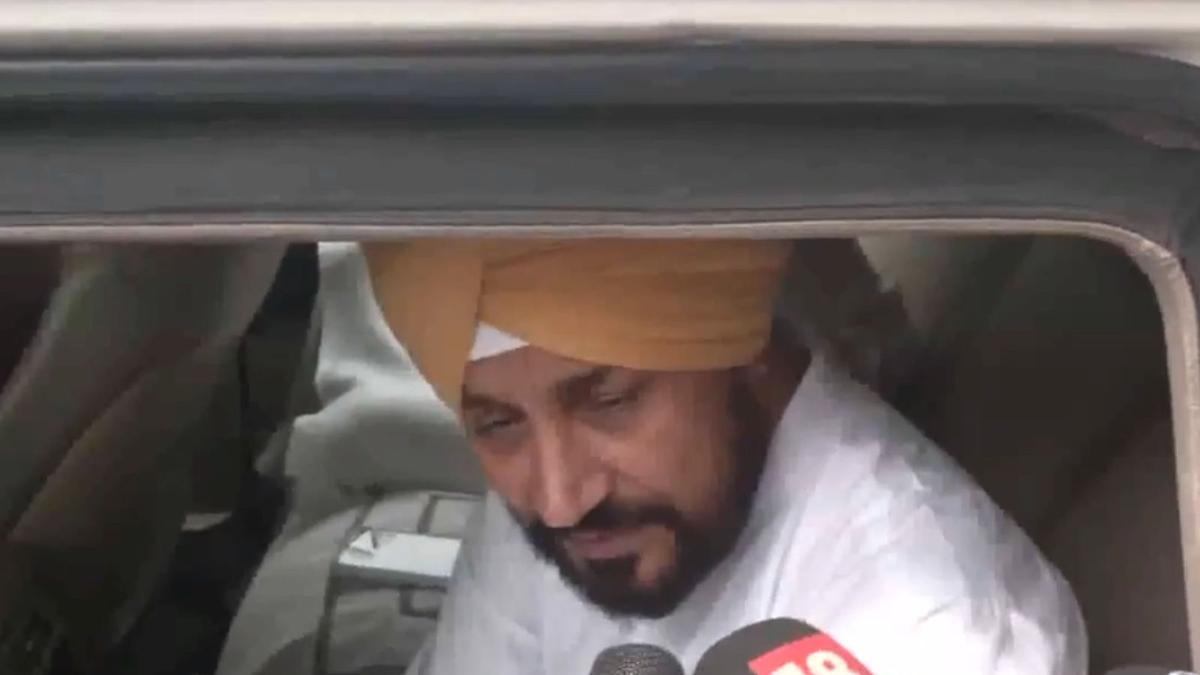
Tussle for Punjab Congress chief post: Leaders from Channi camp arrive to meet Baghel
Source Entity
India Latest News: Top National Headlines Today & Breaking News | The Hindu
Intelligence Synthesis
AI-Generated Core Insights
Leaders from former Punjab CM Charanjit Singh Channi's camp, including Gurpreet Kangar, have met with Bhupesh Baghel to contest the leadership of Amrinder Singh Raja Warring as Punjab Congress chief, despite Baghel's previous refusal to change the state party leadership.
Internal Friction Within Punjab Congress: The Struggle for Leadership
The Punjab Pradesh Congress Committee (PPCC) is currently facing a period of significant internal volatility as factionalism resurfaces regarding the state's leadership. The recent movement of leaders associated with former Chief Minister Charanjit Singh Channi to meet with Bhupesh Baghel underscores a deep-seated divide within the party. This tussle is not merely a personal rivalry but a strategic battle over the direction and representation of the Congress party in a state where it has struggled to maintain its footing against rising political competitors.
The Core Conflict: Channi Camp vs. Raja Warring
At the heart of this dispute is the acceptability of Amrinder Singh Raja Warring as the party chief. Former Minister Gurpreet Kangar, acting as a representative for the Channi camp, has explicitly stated that the purpose of the meeting with Bhupesh Baghel was to evaluate whether Warring's leadership is sustainable or acceptable to a significant section of the party's grassroots and senior leadership. This suggests a lack of confidence in Warring's ability to unify the party or lead it toward electoral success, highlighting a rift that has persisted since the party's previous tenure in power.
The Role of the High Command and Bhupesh Baghel
Bhupesh Baghel, acting in his capacity as a key figure for the All India Congress Committee (AICC), finds himself in the role of a mediator and disciplinarian. The fact that Baghel had already ruled out any changes in the state party leadership prior to this meeting indicates that the central leadership is prioritizing stability over the demands of local factions. By resisting the push for a leadership change, the AICC is attempting to prevent a cycle of constant upheaval, which often characterizes regional party units during periods of electoral decline.
Historical Context and Political Stakes
To understand the intensity of this leadership battle, one must consider the broader political landscape of Punjab. Following the sweeping victory of the Aam Aadmi Party (AAP) and the historical volatility involving the SAD and BJP, the Congress party is in a precarious position. The friction between the Channi and Warring camps is symptomatic of a larger struggle to redefine the party's identity in Punjab. When a party is out of power, internal conflicts often intensify as different factions compete to be the primary vehicle for the party's eventual comeback.
Broader Implications of Party Factionalism
If this leadership tussle remains unresolved, the implications for the Congress party in Punjab could be severe. Public displays of dissent, such as the Channi camp formally questioning Warring's leadership, can alienate the electorate and project an image of a party in chaos. Furthermore, such divisions often lead to 'sabotage' during elections, where rival factions within the same party work against each other, further eroding their vote share and making it nearly impossible to mount a cohesive challenge against the ruling administration.
Future Trends and Predictive Outlook
Looking ahead, it is likely that the AICC will continue to stand by Raja Warring in the short term to avoid the appearance of instability. However, if the Channi camp continues to mobilize dissent, the party may be forced to implement a structural compromise, perhaps by creating more inclusive decision-making bodies within the PPCC. The long-term survival of the party in Punjab depends on whether these leaders can pivot from internal power struggles to a unified strategy focused on grassroots revival.
Conclusion
In summary, the meeting between Gurpreet Kangar and Bhupesh Baghel is a critical indicator of the ongoing tension within the Punjab Congress. While the central leadership seeks to maintain the status quo under Raja Warring, the persistent dissatisfaction from the Channi camp suggests that the party's internal wounds remain unhealed. The resolution of this conflict will be a decisive factor in whether the Congress can reorganize itself effectively or continue to spiral into factional irrelevance.
Verification Required?