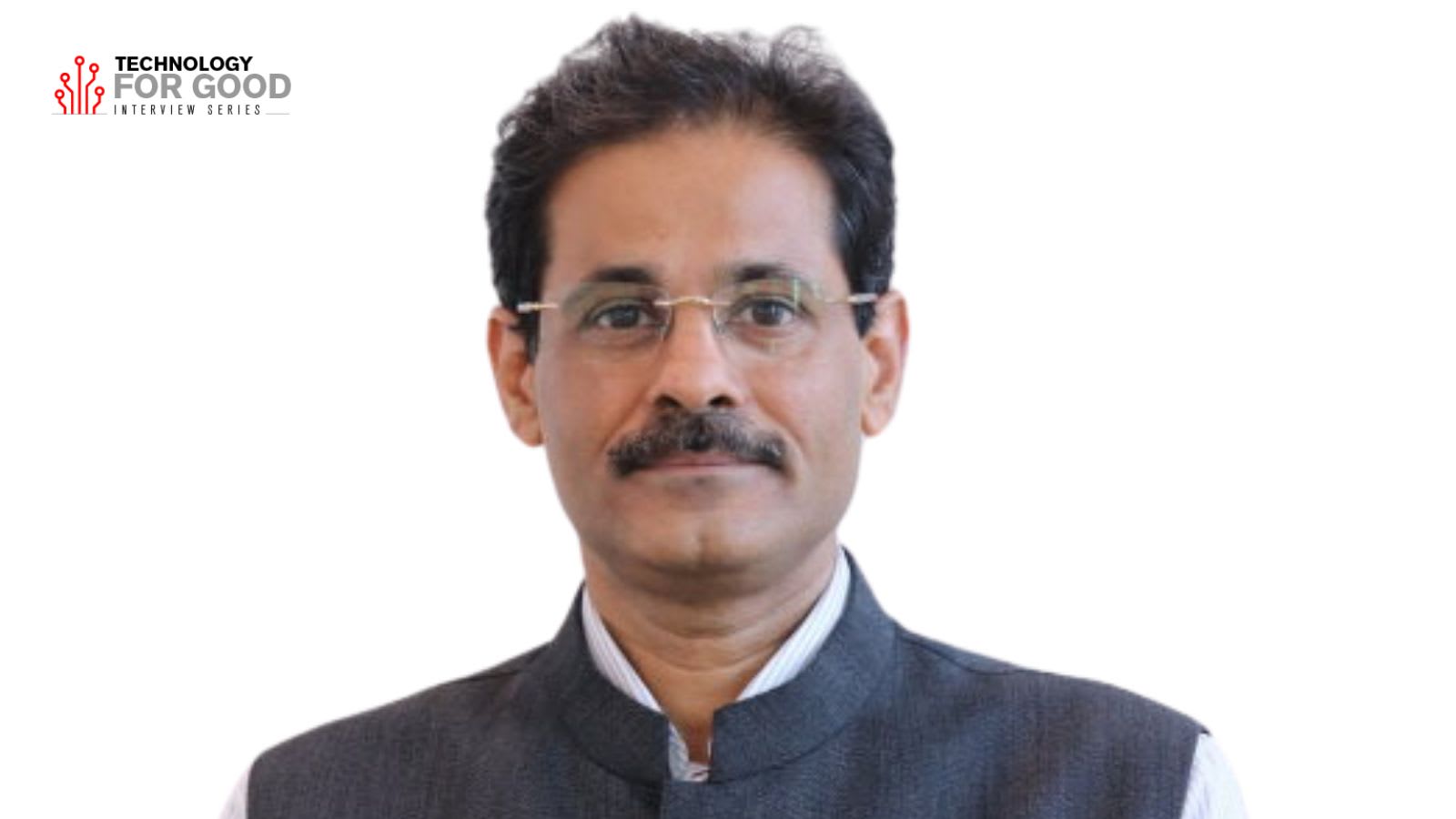
Implementing digital and AI in healthcare is fundamentally more complex: Rizwan Koita, co-founder, Koita Foundation
Source Entity
Venkatesh Kannaiah
Intelligence Synthesis
AI-Generated Core Insights
Rizwan Koita, co-founder of the Koita Foundation, highlights the fundamental complexities involved in integrating artificial intelligence and digital technology into the healthcare and social sectors, specifically within the context of India's government-led initiatives.
Navigating the Complexity of Digital Transformation in Healthcare
In a recent discourse on the intersection of technology and public welfare, Rizwan Koita, the co-founder of the Koita Foundation, emphasized that the implementation of digital tools and Artificial Intelligence (AI) in healthcare is fundamentally more complex than in other sectors. The Koita Foundation, which focuses on leveraging technology for social good in India, operates at the critical junction of government policy and grassroots execution. Koita's assertion underscores a vital truth: while AI offers transformative potential, its application in a medical context is fraught with ethical, systemic, and operational hurdles that do not exist in purely commercial tech environments.
The Inherent Challenges of Healthcare AI
Healthcare is a high-stakes environment where the margin for error is virtually non-existent. Unlike AI applications in retail or entertainment, where a wrong recommendation is a minor inconvenience, a failure in a healthcare AI system can lead to misdiagnosis or improper treatment, directly impacting patient survival. This inherent risk necessitates a level of rigor in validation and testing that far exceeds standard software development lifecycles. Furthermore, the complexity is compounded by the fragmented nature of medical data. Health records are often siloed across different providers, formats, and legacy systems, making the creation of a unified, clean dataset—essential for training effective AI—an uphill battle.
The Indian Context and Government Synergy
Operating within India presents a unique set of challenges and opportunities. The sheer scale of the population and the diversity of healthcare infrastructure—ranging from state-of-the-art urban hospitals to under-resourced rural clinics—means that a "one size fits all" digital solution is impossible. By working closely with the government, the Koita Foundation acknowledges that systemic change requires institutional buy-in. However, integrating AI into government-run health schemes involves navigating complex bureaucratic layers and ensuring that technology is accessible to healthcare workers who may have varying levels of digital literacy. The goal is not just to deploy technology, but to ensure it is usable and sustainable within the existing public health framework.
Addressing the Digital and Human Divide
Beyond the technical architecture, the human element remains the most significant variable. For AI to be effective in healthcare, there must be a foundation of trust between the technology, the practitioner, and the patient. Many medical professionals are hesitant to rely on "black box" algorithms that provide a result without a clear, explainable reasoning process. Koita's focus on the "complexity" of implementation likely refers to this necessary cultural shift. Transitioning from traditional diagnostic methods to AI-augmented care requires comprehensive training and a paradigm shift in how medical expertise is viewed and applied.
Broader Implications for Global Health
The lessons learned from the Koita Foundation's efforts in India have global implications. Many developing nations face similar struggles with infrastructure and data standardization. If a framework can be established to successfully deploy AI in India's complex social sector, it provides a blueprint for other Global South nations. The shift toward digital health is not merely about automation; it is about democratizing access to quality care. AI can bridge the gap in specialist shortages by providing primary care workers with advanced decision-support tools, potentially saving millions of lives through earlier detection and more accurate triage.
Future Trends and Predictive Healthcare
Looking forward, the trajectory of digital health is moving toward predictive and personalized medicine. The ultimate goal of integrating AI, as suggested by the work of the Koita Foundation, is to move from a reactive "sick-care" model to a proactive "health-care" model. By analyzing population-level data, AI can help governments predict disease outbreaks or identify high-risk cohorts before they become critical. However, this future depends entirely on solving the current complexities of data privacy, interoperability, and ethical governance that Koita highlights.
Conclusion
In summary, Rizwan Koita's perspective serves as a necessary caution against techno-optimism that ignores operational reality. The integration of AI into healthcare is not a simple plug-and-play exercise but a deeply complex sociotechnical challenge. Success requires a multidisciplinary approach that combines cutting-edge data science with a deep understanding of public policy and human behavior. By acknowledging these complexities, the Koita Foundation is positioning itself to build resilient systems that can truly scale and improve health outcomes for the underserved.