'Be your own hero': Sonam Wangchuk rejects 'modern Gandhi' tag amid hunger strike
Source Entity
TOI NEWS DESK
Intelligence Synthesis
AI-Generated Core Insights
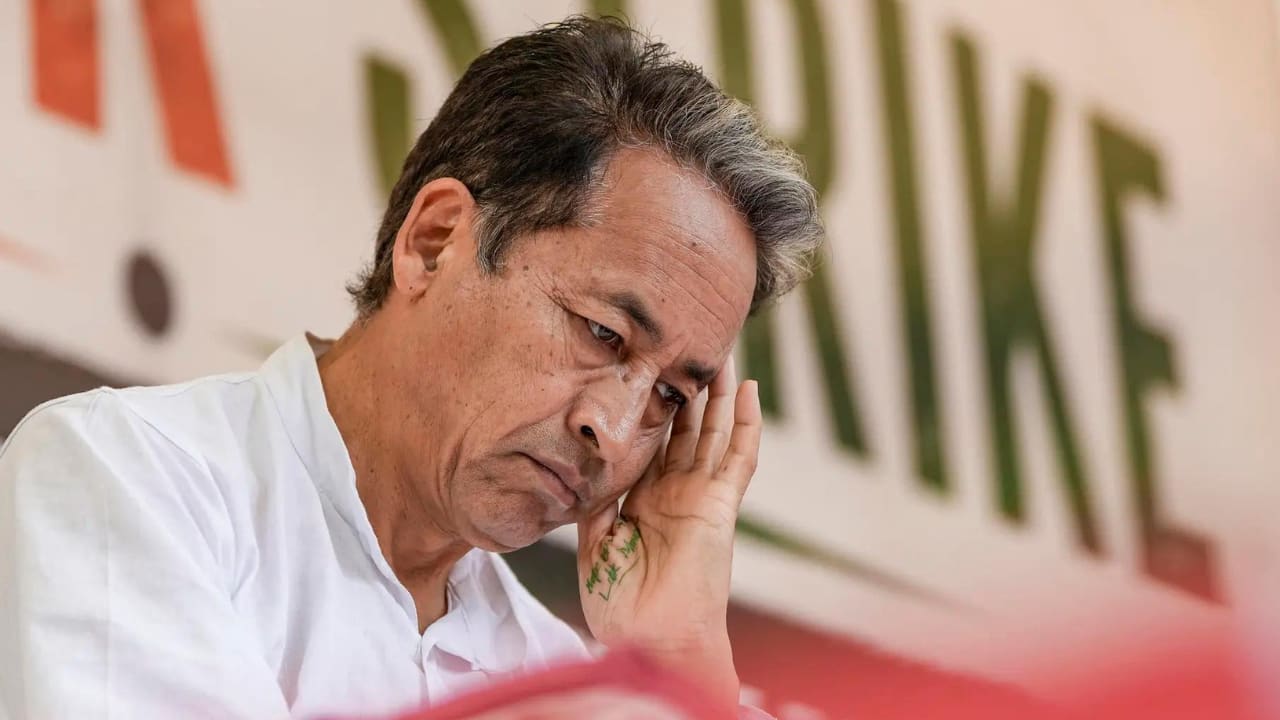
Educator Sonam Wangchuk is conducting a 14-day hunger strike at Jantar Mantar to demand government accountability regarding examination irregularities, while urging citizens to take personal responsibility instead of labeling him a hero.
The Weight of Accountability: Analyzing Sonam Wangchuk’s Hunger Strike
A Stand Against Systemic Irregularity
The ongoing protest led by educator Sonam Wangchuk at Jantar Mantar marks a significant moment of civil dissent centered on the integrity of institutional processes. By initiating an indefinite hunger strike, Wangchuk is directly challenging the government to address deep-seated examination irregularities. These irregularities represent more than just administrative errors; they strike at the heart of meritocracy and the fundamental trust that students and citizens place in state-run examination systems. The demand for accountability is not merely about correcting specific mistakes but about ensuring that the mechanisms governing academic and professional advancement are transparent and incorruptible.
Rejecting the "Hero" Narrative
In a move that distinguishes his approach from typical political movements, Wangchuk has explicitly rejected the "modern Gandhi" label and other heroic descriptors. His philosophy, encapsulated in the phrase "Be your own hero," serves as a profound critique of passive citizenship. By refusing to be cast as a singular savior, he is attempting to shift the burden of social change from a single individual to the collective responsibility of the citizenry. This stance suggests that true reform cannot be achieved through the cult of personality, but must instead emerge from a widespread, conscientious engagement by the public with the issues that affect their collective future.
The Physical Toll and Moral Commitment
As the hunger strike enters its 14th day, the physical reality of the protest has become increasingly stark. Reports indicate that Wangchuk has experienced significant weight loss and persistent fatigue, underscororing the extreme measures taken to garner attention for his cause. This physical deterioration serves as a powerful, albeit harrowing, testament to his determination. In the context of political protest, the use of one's own body as a site of resistance is a high-stakes strategy intended to force a moral confrontation with authorities, demonstrating that the issues at hand are perceived as worth the ultimate personal sacrifice.
Mobilization and the Path Forward
The movement is not static; it is actively evolving through calls for public support and the planning of an upcoming march. This transition from a solitary hunger strike to a broader organized march indicates a strategic attempt to scale the protest from an individual act of defiance to a mass movement. The success of this phase will likely depend on the ability to translate the sympathy generated by Wangchuk's physical sacrifice into sustained political pressure. The upcoming march represents a critical juncture where the momentum of the protest will be tested against the government's willingness to engage in meaningful dialogue and institutional reform.
Broader Implications for Governance
The implications of Wangchuk’s protest extend far beyond the immediate concerns of examination reform. It highlights a growing tension between governing institutions and the public regarding transparency and systemic fairness. When citizens feel that the foundational rules of competition—such as examinations—are being compromised, it erodes the social contract. Wangchuk’s demand for accountability is a demand for the restoration of that contract, signaling that the public is increasingly unwilling to overlook institutional lapses that undermine the principles of justice and equal opportunity.
Conclusion: A Call to Civic Duty
Ultimately, Sonam Wangchuk’s protest is a dual-pronged attack on both systemic failure and civic apathy. By fighting against examination irregularities while simultaneously demanding that citizens "be their own heroes," he is attempting to spark a renewal of civic engagement. Whether the government responds with substantive reforms or continues to stall, the movement has already succeeded in framing the debate around the necessity of accountability and the vital role of individual responsibility in a functioning democracy.