'I order you to order ...' : High drama in SC as petitioner uses cuss words for CJI
Source Entity
TOI NEWS DESK
Intelligence Synthesis
AI-Generated Core Insights
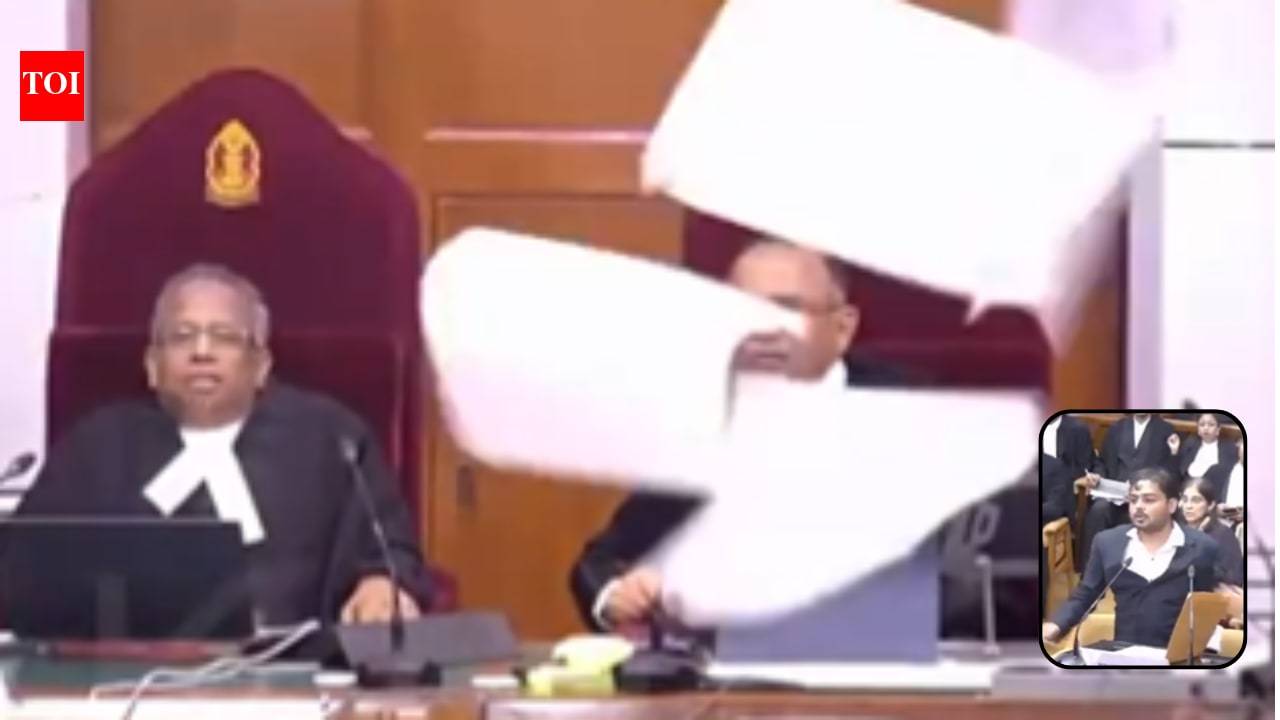
A petitioner appearing in person caused significant disruption in the Supreme Court of India by using abusive language toward the Chief Justice of India (CJI) and throwing papers in the courtroom.
Unprecedented Outburst in the Supreme Court of India
In a rare and startling breach of judicial decorum, the Supreme Court of India recently witnessed a scene of high drama when a petitioner, appearing in person, directed abusive language toward the Chief Justice of India (CJI). The incident escalated beyond verbal aggression, as the individual reportedly threw papers within the courtroom, creating a chaotic atmosphere in the nation's highest judicial forum. Such an event is highly irregular given the strict protocols and the inherent gravity associated with the Supreme Court's proceedings, where respect for the bench is not merely a courtesy but a legal requirement.
The Legal Implications of Contempt of Court
This incident directly intersects with the legal doctrine of 'Contempt of Court.' In the Indian legal system, the judiciary possesses the power to punish individuals for behavior that scandalizes the court or lowers its authority. By using cuss words against the CJI—the highest judicial officer in the land—the petitioner has potentially committed criminal contempt. This mechanism exists to ensure that the administration of justice is not obstructed by intimidation or disrespect. The court's reaction to such an outburst is typically swift, often resulting in immediate detention or a formal contempt notice to maintain the sanctity of the judicial process.
The Challenge of 'Petitioner-in-Person' Dynamics
An important detail in this event is that the individual was appearing 'in person,' meaning they were representing themselves without a licensed advocate. While the Indian judiciary allows this to ensure access to justice for those who cannot afford legal representation, it often creates a volatile dynamic. Professional lawyers act as a buffer, translating a client's grievances into legal language and ensuring courtroom etiquette is followed. When a litigant interacts directly with the bench without this mediation, emotional volatility can lead to outbursts, as seen in this case, where personal frustration manifested as an attack on the CJI.
Broader Implications for Judicial Sanctity
This event highlights a concerning trend regarding the intersection of public frustration and institutional respect. The Supreme Court is viewed as the final arbiter of law and the guardian of the Constitution; any act that diminishes its dignity can be perceived as an attack on the rule of law itself. When such incidents are reported in the media, they can inadvertently embolden other disgruntled litigants or signal a decline in the perceived authority of the judiciary. The balance between allowing citizens to voice their grievances and maintaining a disciplined environment is critical for the functioning of a democratic legal system.
Historical Context and Future Trends
Historically, the Indian Supreme Court has maintained a stern stance against courtroom disruptions, though it has also shown leniency to those suffering from mental health crises or extreme desperation. Moving forward, this incident may prompt the court to reconsider the screening process for petitioners appearing in person. We may see the introduction of more rigorous preliminary hearings or the mandatory appointment of 'Amicus Curiae' (friend of the court) for individuals exhibiting volatile behavior to prevent direct confrontations with the bench. This would ensure that the right to be heard is preserved without compromising the security and dignity of the judges.
Conclusion
The outburst in the Supreme Court serves as a stark reminder of the tensions that can arise when personal grievances clash with formal legal structures. While the right to petition the court is fundamental, it is not absolute and must be exercised within the bounds of law and decorum. The resolution of this specific case will likely reinforce the boundaries of acceptable behavior in the courtroom, reaffirming that regardless of the grievance, the dignity of the judicial office remains inviolable.