White House taps the guy who keeps crying ‘aliens’ to run UFO group
Source Entity
Terrence O’Brien
Intelligence Synthesis
AI-Generated Core Insights
The White House has appointed Harvard astrophysicist Avi Loeb to lead the UAP Science Advisory Council, a high-level collaborative effort involving the Pentagon, FBI, and the intelligence community to scientifically investigate and resolve the nature of Unidentified Anomalous Phenomena.
A Paradigm Shift in UAP Investigation: The Appointment of Avi Loeb
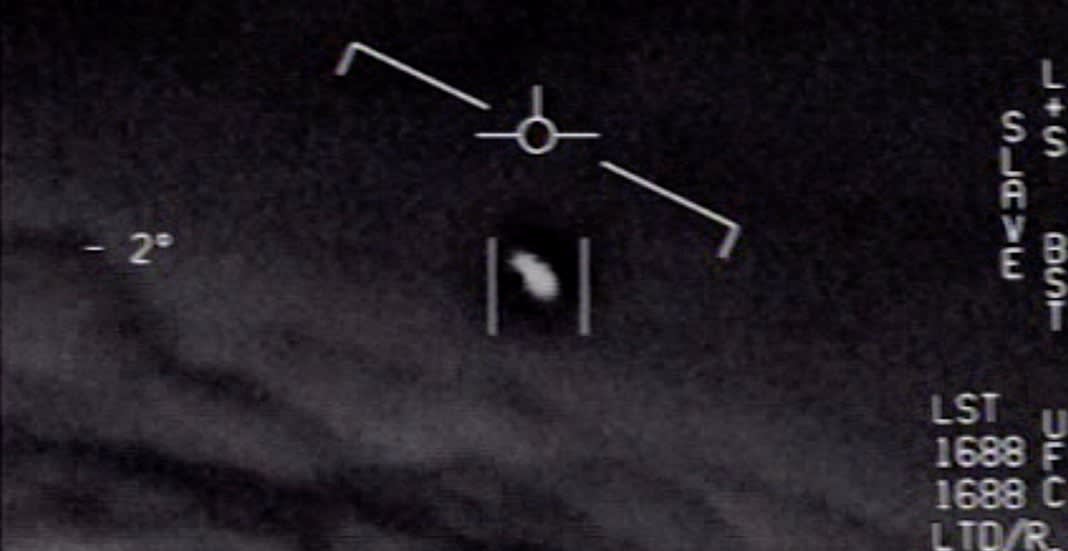
In a move that signals a dramatic shift in the United States government's approach to Unidentified Anomalous Phenomena (UAP), the White House has appointed Harvard astrophysicist Avi Loeb to lead the newly established UAP Science Advisory Council. This council represents a massive inter-agency collaboration, bringing together the White House, the Pentagon, the Office of the Director of National Intelligence (ODNI), the FBI, and the broader intelligence community. The primary objective of this body is to provide rigorous scientific reports and advisory guidance to the UAP Governing Board, with the ultimate goal of resolving the nature of these mysterious aerial phenomena.
The Bold Choice of Avi Loeb
The selection of Avi Loeb is particularly noteworthy due to his reputation within the scientific community. Unlike many of his peers who maintain a strictly conservative stance on extraterrestrial hypotheses, Loeb has become a polarizing figure for his willingness to entertain the possibility that some UAPs may be of non-human origin. His previous work, most notably his analysis of 'Oumuamua—the first interstellar object detected passing through our solar system—suggested that the object's anomalous acceleration could be explained by artificial origins. By placing a scientist known for challenging the status quo at the helm of this council, the U.S. government is moving away from a culture of reflexive dismissal and toward a culture of active, open-minded inquiry.
Inter-Agency Synergy and National Security
The composition of the UAP Science Advisory Council reveals the high stakes involved in this investigation. The involvement of the FBI and the intelligence community suggests that the search for answers is not merely an academic exercise in astronomy, but a matter of national security. Historically, UAP data has been siloed within classified programs, leading to public distrust and scientific stagnation. By integrating the Pentagon's sensor data with the FBI's investigative capabilities and Loeb's academic rigor, the government is attempting to create a comprehensive pipeline for data collection and analysis. This structure aims to bridge the gap between the secretive world of intelligence and the transparent world of peer-reviewed science.
Overcoming the 'Stigma' of UAP Research
For decades, the study of UAPs was shrouded in stigma, often dismissed as the realm of conspiracy theorists or science fiction. This appointment marks a critical turning point in the institutionalization of UAP research. By appointing a Harvard professor, the government is effectively "legitimizing" the field of UAP studies. This shift is likely to encourage other scientists and defense contractors to come forward with data and observations without fear of professional ridicule. The challenge for Loeb will be to maintain this scientific credibility while navigating the political pressures of the White House and the inherent secrecy of the Pentagon, ensuring that the council's findings are based on empirical evidence rather than speculative narratives.
Future Implications and Scientific Trajectory
Looking forward, the work of the UAP Science Advisory Council could lead to one of two divergent paths: a definitive debunking of UAP myths through rigorous data analysis, or the discovery of technology that transcends current human understanding. If Loeb can implement a standardized framework for reporting and analyzing UAPs, it could lead to the development of new sensor technologies and a deeper understanding of atmospheric or astrophysical phenomena. Furthermore, this initiative may set a global precedent, encouraging other nations to treat UAPs as a legitimate scientific priority rather than a fringe curiosity.
Conclusion
The appointment of Avi Loeb to lead the UAP Science Advisory Council is more than just a personnel change; it is a strategic pivot in how the United States handles the unknown. By combining the resources of the intelligence community with the provocative intellectual curiosity of a top-tier astrophysicist, the government is positioning itself to finally resolve the nature of UAPs. Whether the results prove to be mundane or extraordinary, the process of scientific inquiry led by Loeb promises to bring unprecedented transparency to a subject that has remained in the shadows for over half a century.