
AI Executive Summary
"This article analyzes the strategic shift from data hoarding to data excision as a means of optimizing AI agent performance. It highlights how purging legacy 'noise' reduces token expenditure and prevents hallucinations in RAG pipelines."
The Hoarding Paradox
For nearly fifteen years, the corporate mantra was simple: capture everything, discard nothing. The rise of the Data Lake was predicated on the belief that storage was cheap and that future analytical tools would eventually find the signal within the noise. Companies built monolithic repositories of every email, log, and spreadsheet generated since the early 2000s, treating data as a dormant asset. This hoard was intended to be a goldmine for predictive analytics, but it has instead become a swamp of contradictory information.
The arrival of Large Language Models (LLMs) and autonomous agents has flipped this logic on its head. When a firm feeds an AI agent its entire legacy archive via Retrieval-Augmented Generation (RAG), the agent does not inherently know which document is the current truth. If a 2014 policy on employee travel is stored alongside a 2023 update, the agent may synthesize a hybrid response that is factually incorrect but linguistically confident. This is not a failure of the model, but a failure of the source material.
We are seeing a systemic shift from 'Big Data' to 'Smart Data.' The objective is no longer volume, but veracity. Firms are realizing that the cost of cleaning data after it is ingested by an AI is exponentially higher than the cost of purging it before. The strategic imperative has shifted from accumulation to excision.
The Architecture of Noise
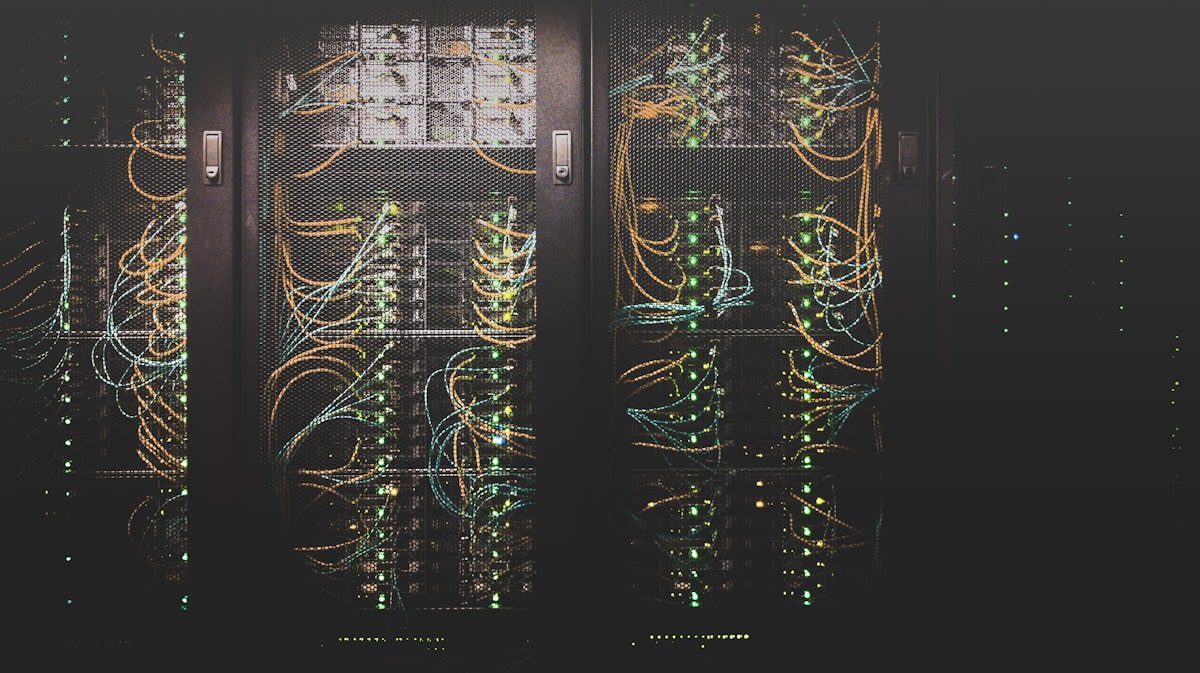
Dark data—the unindexed, untagged, and forgotten digital exhaust of a corporation—is the primary enemy of the AI agent. In Southeast Asia, particularly within Singapore's fintech hubs, firms are discovering that legacy KYC (Know Your Customer) records from a decade ago are actively poisoning their current AI compliance agents. These agents frequently pull obsolete regulatory requirements, leading to 'hallucinations' that are actually just accurate retrievals of outdated laws.
The technical debt associated with legacy data is not just about accuracy; it is about the 'context window.' Every token processed by an LLM costs money and increases latency. Feeding a model thousands of pages of redundant or contradictory legacy documentation wastes precious compute resources. When an agent must sift through five versions of the same project charter to find the final decision, the efficiency of the system collapses.
| Attribute | Legacy Data Lake (2015-2022) | AI-Ready Knowledge Base (2024+) |
|---|---|---|
| Primary Goal | Maximum Retention | Maximum Veracity |
| Storage Logic | Store now, analyze later | Curate now, retrieve instantly |
| Quality Control | Schema-on-read (Loose) | Strict Governance (Rigid) |
| Retrieval Method | Keyword/SQL Search | Semantic Vector Search |
| Liability Profile | Passive Risk | Active Hallucination Risk |
This transition requires a ruthless auditing process. Companies are now deploying 'data cleaners'—specialized AI agents whose sole purpose is to identify and flag redundant, obsolete, or trivial (ROT) data. Once flagged, this data is not just archived; it is permanently deleted. The goal is to create a high-density 'Gold Dataset' that serves as the single source of truth for the enterprise agent.
Technical Note: The RAG Trap
Data poisoning in a corporate context occurs when outdated or incorrect legacy documents are indexed into a vector database, causing an AI agent to prioritize an obsolete fact over a current one due to semantic similarity.
The shift toward leaner datasets is also driven by the rise of Small Language Models (SLMs). Unlike their massive predecessors, SLMs can achieve near-frontier performance if trained or tuned on extremely high-quality, domain-specific data. For a firm in the energy sector in Norway, for instance, a smaller model trained on a curated set of the last three years of sensor logs is far more predictive than a giant model struggling with twenty years of noisy, inconsistently formatted history.
The Economics of Excision
The financial incentive for purging data is immediate. Tokenization is the currency of the AI era, and noise is an expensive tax. Every irrelevant paragraph retrieved by a RAG pipeline increases the cost per query. When scaling an agent to thousands of employees, the difference between a 2,000-token context and a 10,000-token context represents millions of dollars in annual API spend.
"The competitive advantage has shifted from who has the most data to who has the cleanest data. We are moving from the era of the library to the era of the encyclopedia."— Chief Data Officer, Global Logistics Firm
Beyond compute costs, there is the hidden cost of human verification. In Brazil's rapidly evolving retail sector, firms are purging duplicate customer personas to prevent AI agents from providing contradictory offers to the same individual. When an agent relies on fragmented legacy data, the human-in-the-loop must spend more time correcting the AI than using it. This 'verification tax' kills the productivity gains that AI promised.

We are also seeing a convergence between data purging and regulatory compliance. Under frameworks like GDPR and LGPD, retaining data without a clear purpose is a legal liability. By purging legacy data to feed AI agents, companies are simultaneously reducing their attack surface for data breaches and their exposure to regulatory fines. The purge is as much a legal strategy as it is a technical one.
The Strategic Path Forward
The organizations that will dominate the next decade are those that treat their knowledge base as a living garden rather than a warehouse. This requires a permanent governance layer that continuously prunes information. The process is not a one-time event but a systemic operational shift. Companies must implement automated expiration dates for internal documentation, ensuring that data expires naturally unless explicitly renewed.
This creates a new corporate role: the Knowledge Curator. Unlike the traditional Data Engineer who focuses on the pipeline, the Curator focuses on the substance. They decide what is 'truth' and what is 'noise.' The power shift is palpable; the ability to define the corporate memory is now the most critical lever for ensuring AI reliability.
Ultimately, the purge is an admission of a failed philosophy. The 'more is better' approach to data was a byproduct of an era where humans did the filtering. Now that we have delegated the filtering to AI, we have discovered that AI is a mirror—it reflects the chaos we have spent twenty years accumulating. To get a clear answer, we must first clear the room.