
AI Executive Summary
"This article provides a strategic framework for transitioning from fragile global supply chains to resilient local industrial hubs. It emphasizes the synergy between additive manufacturing, logistics consolidation, and raw material security to ensure operational continuity."
The Cost of Distance
Global shipping is broken. With Asia-Europe ocean container rates climbing because Suez and Red Sea routing remains unsafe, the physics of distance now dictate profit. Logistics management reports that international transportation management grew 7.7 percent to 85.9 billion dollars in 2025, yet this growth is a symptom of instability, not efficiency.
Field-Tested Reality
The operational friction of 2026 is defined by a simple reality: if you cannot print it or store it locally, you do not own your supply chain.
The Tooling Kit
Infrastructure requires more than capital. You need a specific stack of hardware and legal shielding to avoid total collapse when the next strait closes.
- Multi-technology additive manufacturing hardware for on-demand component production
- Contract logistics footprint including high-density warehousing
- Direct access to critical mineral reserves via state-backed partnerships
- Diversified procurement queues to compete with hyperscale data center demand
Lagos proves the point. Arridex has moved beyond theory by commissioning the Omnifactory, West Africa's first multi-technology industrial additive manufacturing facility.
Localizing Industrial Output
- Secure institutional grounding through government certifications, similar to Arridex obtaining Pioneer Status from the Nigerian Investment Promotion Commission.
- Target high-failure sectors like oil, gas, and defense where the cost of downtime outweighs the cost of local production.
- Establish joint ventures with state entities, such as the partnership with the Defence Industries Corporation of Nigeria, to ensure military-grade output.
- Integrate diverse manufacturing technologies to handle aerospace and maritime components in a single facility.

Manufacturing is useless without a way to move the product. Scaling requires an aggressive consolidation of the last mile.
Scaling the Distribution Engine
CMA CGM is playing the long game. Their 1.4 billion dollar acquisition of FedEx Supply Chain is a blatant land grab for North American logistics dominance.
| Metric | CMA CGM / CEVA Post-Acquisition |
|---|---|
| Enterprise Value | 1.4 Billion USD |
| Warehouse Count | Approximately 150 |
| Staffing Level | 20,000 employees |
| Location Footprint | Over 240 locations |
Warehouses are the new gold. This expansion allows for end-to-end control, removing the reliance on third-party intermediaries who fail during geopolitical shocks.
Securing the Mineral Base
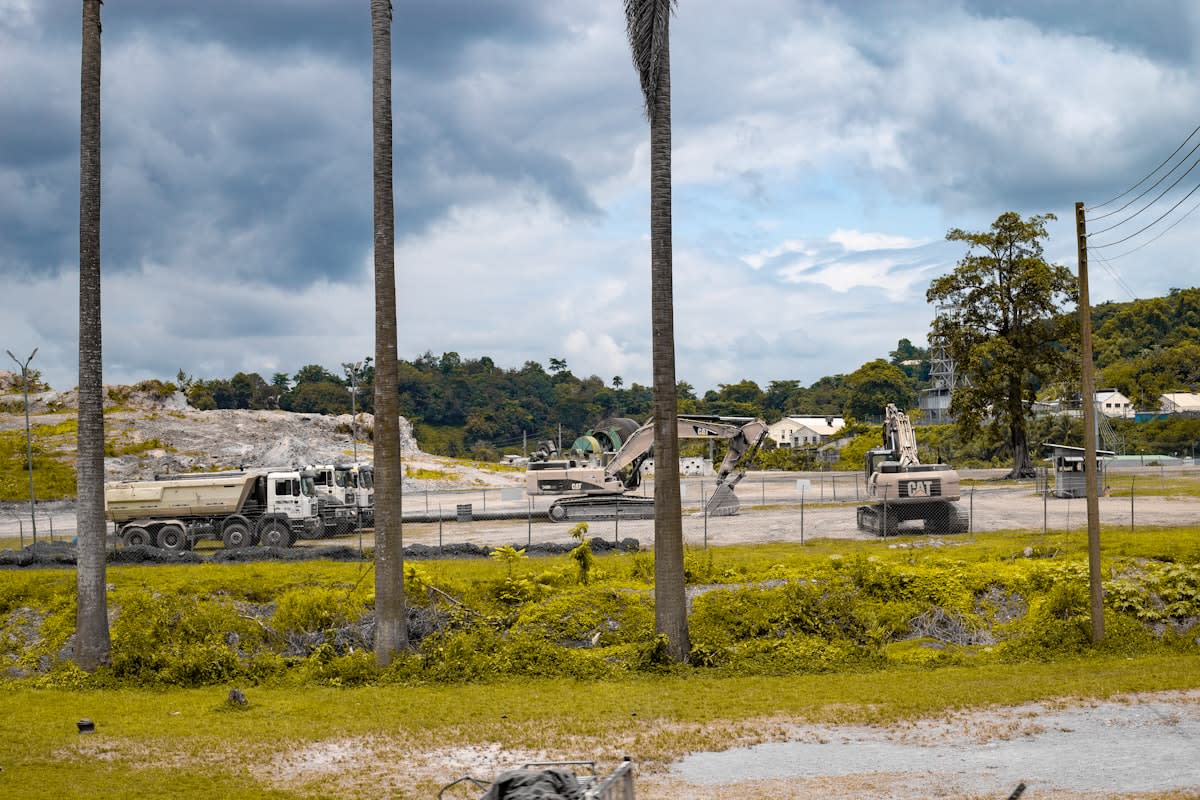
Raw materials are the ultimate bottleneck. Africa holds an estimated 8.5 trillion dollars in untapped mineral resources, and state-owned enterprises are now moving to lock these down.
"The trend comes as the continent seeks to unlock an estimated US$8.5 trillion in untapped mineral resources... while reducing its dependence on raw mineral exports."— African National Mining Companies Forum
Guinea's Simandou 2040 strategy is a prime example. Liberia is following suit with a national mining company to secure iron ore and critical minerals.
Even with minerals, the queue is a nightmare. In the UK, hospital construction is fighting for the same copper and electrical steel as hyperscale data centers.
Common Pitfalls
Ignoring the physics of procurement leads to failure. Many firms treat disruption as an anomaly rather than the baseline.
- Over-reliance on single-route shipping (e.g., the Suez Canal blockage or Strait of Hormuz escalations)
- Underestimating the competition for electrical steel from the data center boom
- Assuming that digital supply chain tools can replace physical warehouse capacity
- Neglecting the necessity of state-level partnerships in mineral-rich regions
Failure is expensive. A February 2026 escalation in the Strait of Hormuz reverberated through UK construction within days, proving that lean inventories are a liability.