
AI Executive Summary
"This article provides a strategic framework for transitioning from simple LLM prompting to scalable agentic workflows. It emphasizes the critical role of context engineering and infrastructure over raw model selection to drive enterprise-grade AI productization."
Most enterprises are still treating generative AI like a fancy search engine. They send a prompt, hope for the best, and manually fix the hallucinations. That is a hobbyist's approach. The real winners—the ones shifting from 20% to 80% agent-driven work as Andrej Karpathy has done—are building agentic workflows. They don't just prompt; they engineer the context.
Prerequisites: Your AI Stack
You cannot build a high-performance agent on a shaky foundation. Whether you are optimizing a farm in the Midwest or a fintech hub in Singapore, your infrastructure determines your ceiling. You need three core components before you write a single line of agentic logic.
- Compute Power: Access to a scalable environment. This could be a preferred NVIDIA Cloud Partner like Bitdeer AI, which earned AI Cloud Platform of the Year in 2026 for its integrated full-stack environment.
- A Frontier Model: A capable LLM such as Claude, ChatGPT, Gemini, or Deepseek.
- A Context Layer: A system for retrieval and storage, such as Elastic's context-driven framework, to feed the model real-time data.
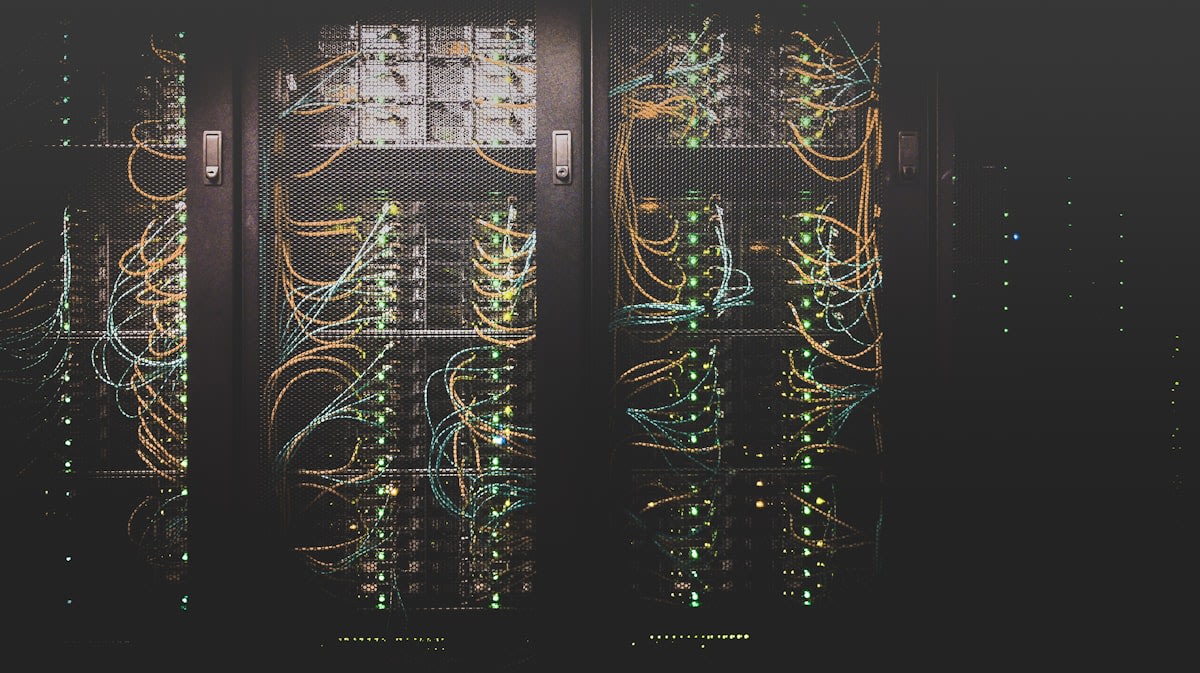
Hardware is a brutal battleground. While Cerebras offers a wafer-scale chip with a 21x speed advantage over Nvidia, the software moat is real. Most LLM frameworks natively optimize for CUDA, making Nvidia's 75% gross margins a testament to the power of the software ecosystem over raw speed.
The Execution Roadmap
Building an agent is not about writing a better prompt. It is about designing a loop. Follow these steps to move from a chat interface to an autonomous agent.
- Implement Context Engineering: Stop relying on basic RAG. As Tim Brophy of Elastic noted at Money20/20 in Amsterdam, the challenge is providing precise, highly relevant context into an agentic process so the LLM can make decisions based on the specific workflow scenario.
- Establish a Self-Check Protocol: Adopt a 'CLAUDE.md' style approach. Use a set of rules—like the ten rules attributed to Andrej Karpathy—that teach the agent to monitor its own reasoning rather than just spitting out code.
- Create a Feedback Loop: Ensure the agent can iterate. If the first output fails a self-check, the agent must analyze the failure and re-attempt the task without human intervention.
- Build a Prompt Library: For recurring tasks, such as semi-annual income diversification brainstorming on a farm, store both the prompts and the results to ensure consistency and longitudinal improvement.
- Integrate Human-in-the-Loop Validation: Especially in high-stakes fields like law, implement a mandatory verification step to catch hallucinations before they reach a client or a court.
"The real challenge is not the model, but the context behind it."— Tim Brophy, Principal Solutions Architect at Elastic
But speed and autonomy are dangerous without a safety rail. The legal industry is currently the canary in the coal mine for AI failure.
The Hallucination Trap
The New York State Bar Association has highlighted the danger of 'hallucinations'—false case citations and reasoning. In some instances, this has led to sanctions in New York State courts. Never let an agent submit legal or financial documents without a human audit.
Hardware vs. Software Moats
| Feature | Cerebras Systems | Nvidia |
|---|---|---|
| Raw LLM Speed | 21x Advantage | Baseline |
| Software Ecosystem | Custom Engineering Required | CUDA (Industry Standard) |
| Financial Position | Negative Operating Margins | 75% Gross Margins |

Common Pitfalls
- Model Obsession: Spending weeks choosing between Claude and ChatGPT instead of focusing on the context engineering that makes either model work.
- Ignoring the 'Software Trap': Buying the fastest hardware but failing to account for the costly custom engineering needed if it doesn't support standard frameworks like CUDA.
- Blind Trust: Assuming a 'self-checking' agent is 100% accurate. As seen in the NYSBA reports, AI can hallucinate with absolute confidence.
- Ephemeral Prompting: Failing to archive prompts and results, which prevents the system from evolving over time.