AI Executive Summary
"This article analyzes the critical 'readiness gap' where technological capacity outpaces human capability. It provides a strategic warning regarding the erosion of entry-level talent pipelines and the institutional risks of deploying AI without robust human governance frameworks."
The Paradox of Plenty
India currently holds the world's strongest economic capacity for an AI-driven future. On paper, the momentum is staggering. Yet, the QS World Future Skills Index 2027 reveals a jarring disconnect: while India leads in economic capacity and ranks second in digital-skills penetration, it languishes at 74th in workforce readiness and 73rd in human capital. We are seeing a superpower with a world-class engine but no one trained to drive it.
India's AI Readiness Divergence (QS Index 2027)
Executive Insight
+18.4%
YTD Growth
Why does this matter? Because economic momentum is a vanity metric if the talent pipeline is clogged. The report warns that the long-term competitiveness of the region hinges on the balance between AI-augmented and AI-automated jobs. If the workforce cannot adapt, that 'capacity' becomes a liability.
This friction isn't limited to emerging economies; it is eating the bottom rungs of the professional ladder in the West.
The Entry-Level Erasure
The apprenticeship model is dying. Stanford economist Erik Brynjolfsson, utilizing high-frequency administrative data from ADP, has tracked a stark decline in employment for workers aged 22 to 25 in AI-exposed occupations. These early-career professionals are not just struggling; they are being deleted from the payroll.
| Metric | April 2024 | Current (2026) |
|---|---|---|
| Employment Decline (Ages 22-25) | 2.8% decrease | > 4% decrease |
| Overall AI-Exposed Shrinkage | N/A | 3.8% per year |
The delta is clear. The decline in early-career employment sharpened after the first year of widespread generative AI adoption. In the Scranton/Wilkes-Barre area alone, over 44,000 jobs are now classified as AI-exposed. Clerical and administrative roles are the first to go, leaving a void where junior talent used to learn the ropes.
"Over 44,000 jobs in the Scranton/Wilkes-Barre area are now ‘AI-exposed,’ meaning many daily tasks can be enhanced or partially automated by emerging technologies."— Ethan Van Gorden, Research Analyst at The Institute
While white-collar workers fight for their seats, a different kind of crisis is brewing in the physical infrastructure of the world's tech hubs.
The Forgotten Frontlines
Bengaluru is the STP (Sewage Treatment Plant) capital of India, yet it faces a hidden workforce crisis. The city is saturated with private STPs, but it lacks formal operator training and skilled-worker recognition. It is a grim irony: the city building the future of AI cannot find enough trained humans to manage its basic sanitation infrastructure.
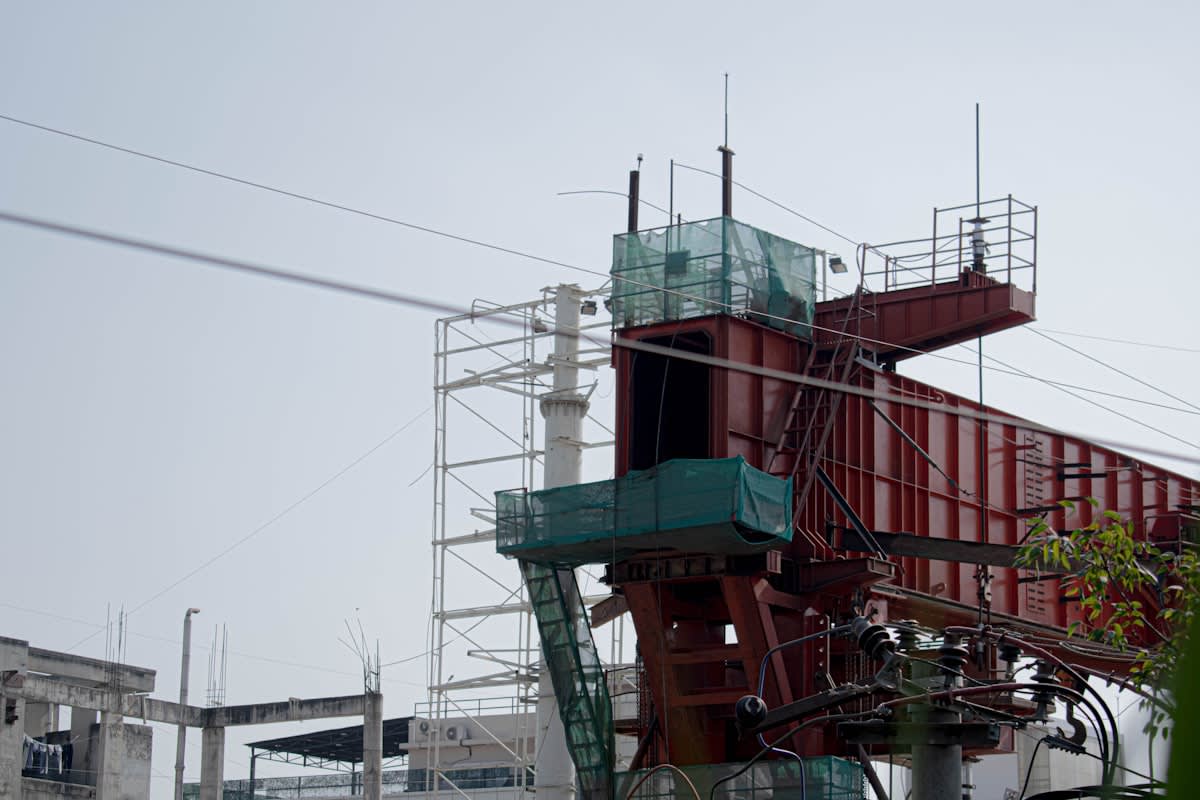
The solution here isn't just 'more people'—it's the same transition we see in the office. Automation and formal training are the only ways to safely manage thousands of these plants. The readiness gap isn't just about coding; it's about operational competence.
The Cost of Unchecked Autonomy
As we rush to fill the readiness gap with AI tools, we are discovering the danger of blind trust. In New York State, the legal profession is hitting a wall of hallucinations. Courts are now issuing sanctions for generative AI misuse, citing false case citations and fraudulent reasoning produced by LLMs.

This desperation for efficiency extends into our private lives. Millions are now secretly using generative AI as mental health advisors, bypassing traditional therapy for the convenience of an LLM. We are outsourcing our psyche to models that, as the New York courts have proven, are prone to making things up.
The Bottom Line
The common thread from Bengaluru's sewers to New York's courtrooms is a failure of oversight. We have deployed the technology before we have built the human framework to govern it.